Lead Hook
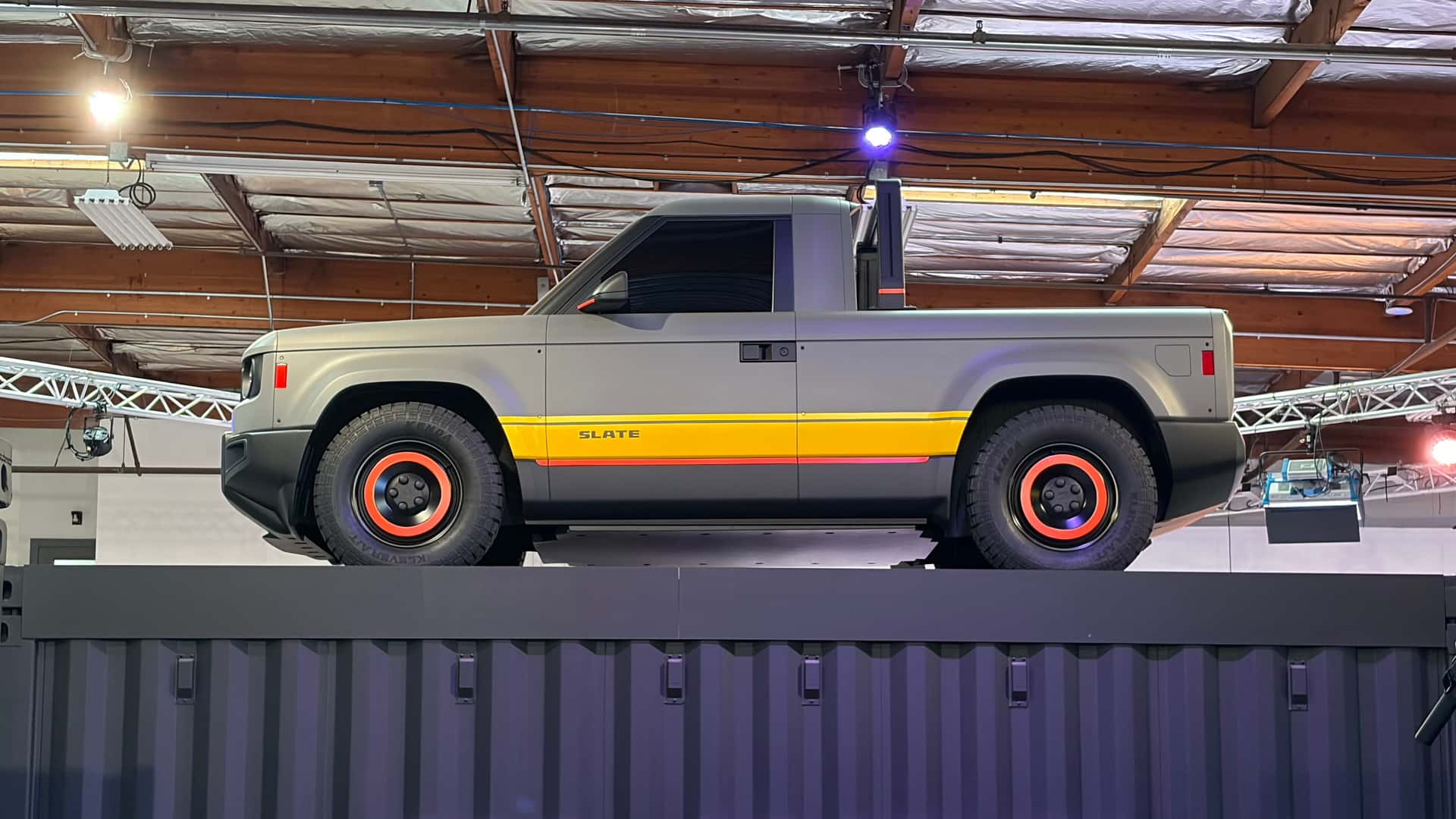
When Slate unveiled its $24,950 electric pickup, the headline was a promise of a truly affordable EV for the average consumer. Yet the promise stops at the U.S. border. According to InsideEVs, Slate has no plans to sell the truck in Canada, a decision that reveals how trade policy can cripple low‑price EV strategies before they reach market.
Deep Dive
The core of Slate’s value proposition is its bare‑bones design: no oversized touch screens, no luxury trims, and a modest price tag of $24,950 in the United States. That figure is confirmed by multiple outlets, including Electrek, which cites the same starting price. However, the Canadian market is subject to a 25% reciprocal tariff on vehicles imported from the United States. InsideEVs notes that applying the full tariff would lift the truck’s price to at least $31,100 USD. When converted at current exchange rates, the cost would exceed $44,500 CAD.
To put that number into perspective, the source compares the tariff‑inflated price with three mainstream pickups already sold in Canada: the Ford Maverick at $38,095 CAD, the Ford Ranger at $46,065 CAD, and the Chevrolet Colorado at $43,043 CAD. While those models are not electric, they all include standard features such as power windows that Slate’s minimalist truck omits. The comparison suggests that even after tariffs, Slate’s EV would sit near the top of the price range for conventional midsize pickups.
Beyond raw pricing, the source highlights broader market dynamics that could have made Slate’s entry appealing. It cites a 30% jump in midsize pickup sales in Canada last year, a growth rate that outpaced the overall industry by roughly a factor of 13. Additionally, Canadian electric‑vehicle sales are reported to be up 75% year‑over‑year. Both statistics point to a market that is expanding rapidly, potentially ready to absorb a low‑cost EV option—if the pricing barrier could be cleared.
Slate’s silence on the tariff issue is notable. The company did not elaborate on why it is not pursuing Canadian sales, but the source’s math indicates that the tariff alone could erode the price advantage that the truck enjoys in the United States. In a market where price sensitivity is high, a $20,000‑plus increase could shift consumer interest toward established, gasoline‑powered alternatives that already enjoy dealer networks and brand familiarity.
From a regulatory standpoint, the 25% tariff is part of Canada’s broader automotive trade framework, designed to protect domestic manufacturers and maintain a level playing field. For a newcomer like Slate, which relies on a low‑margin, high‑volume model, the tariff creates a structural obstacle that cannot be mitigated simply by cutting production costs. The source’s calculations imply that unless policy adjustments are made—such as tariff exemptions for low‑emission vehicles—the company would face an uphill battle to price its truck competitively in Canada.
Industry observers note that the situation is not unique to Slate. Smaller EV startups often encounter similar barriers when expanding beyond their home market, where trade duties, certification costs, and differing safety standards can quickly inflate the sticker price. While the source does not provide direct commentary from Slate on these strategic challenges, the presented figures illustrate how a single policy lever can reshape the economics of an otherwise disruptive product.
Audit & Contradictions
The announcement that Slate will not sell its cheap EV pickup in Canada is directly supported by a Slate spokesperson, who told Automotive News via email, "We do not have plans to sell vehicles in Canada," as reported by InsideEVs. This claim is corroborated by Automotive News and also appears in InsideEVs’ own coverage.
We do not have plans to sell vehicles in Canada,
However, several quantitative statements in the source are single‑source and therefore require hedging. The projected Canadian price of $31,100 USD (or $44,500 CAD) after applying the 25% tariff, the price comparisons to the Ford Maverick, Ranger, and Chevrolet Colorado, and the cited growth rates for midsize pickup sales (30%) and Canadian EV sales (75%) all appear only in the InsideEVs article. As such, they should be framed as the source’s estimates rather than independently verified facts.
Fact‑check data indicates no contradictions between the source and other outlets; the contradiction level is low. The core facts—no Canadian sales plans and the U.S. starting price of $24,950—are independently validated.
Future Outlook
If tariff policy remains unchanged, Slate’s model may stay confined to the United States, where its price point can compete directly with other entry‑level pickups. Competitors eyeing the low‑cost EV segment—such as legacy automakers planning budget electric trucks—will likely factor in similar trade barriers when assessing cross‑border expansion.
Policymakers could view Slate’s situation as a case study in how current tariff structures unintentionally inhibit the adoption of affordable electric vehicles, especially in markets that are already showing strong growth in EV registrations. Adjustments—such as reduced duties for zero‑emission vehicles or streamlined certification pathways—could open the door for more startups to bring low‑price EVs to Canada and other markets with comparable trade regimes.
For Slate, the immediate path forward may involve focusing on scaling production and refining its cost structure within the U.S. market, while monitoring any regulatory shifts that could later make a Canadian launch viable. Meanwhile, Canadian consumers seeking an affordable EV will have to wait for either a policy change that lowers the price barrier or for another manufacturer to fill the gap left by Slate’s absence.