Lead Hook
When Smart unveiled its next‑generation two‑seater, the headline numbers – a sub‑7 metre turning circle paired with a 35.7 kWh battery promising roughly 300 km of range – read like a paradox. For a car that must squeeze into the tightest European streets, the promise of a battery twice the size of its predecessor forces a hidden question: can the continent’s battery supply chain keep pace with an A‑segment electrification surge that regulators are already demanding?
Deep Dive
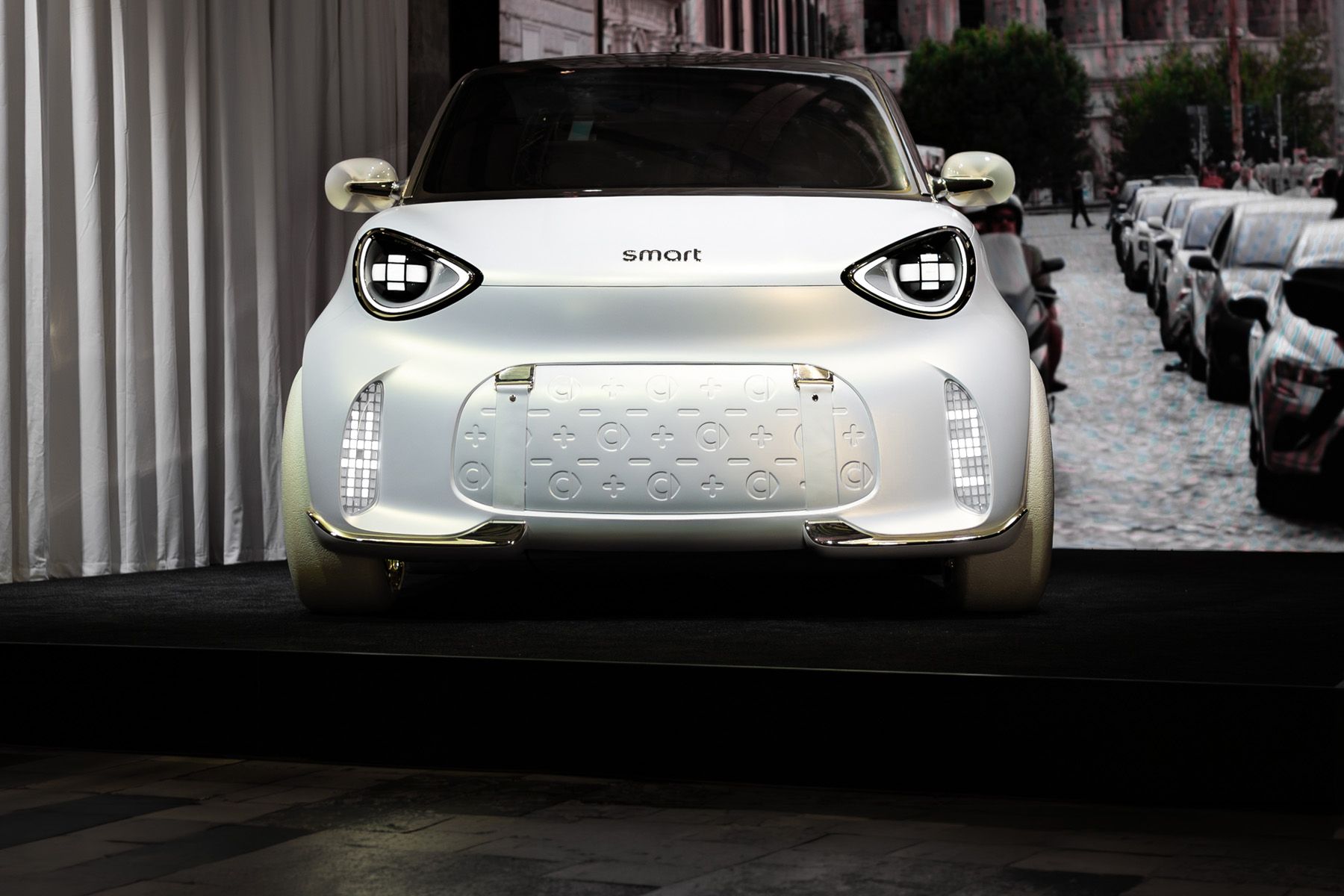
According to Electrive, the Smart #2 will sit on a dedicated “ECA” platform that discards the internal‑combustion architecture of the original fortwo. This pure‑electric foundation lets the engineering team, led by senior expert Timo Weil, place the motor and drivetrain at the rear, preserving the iconic short‑overhang layout that enables the famed tight turning circle. Weil explains that “the new platform allows us to design the steering more directly than in previous models, making the car even more agile in urban environments” while still delivering “a turning circle of less than seven metres.”
The battery is the centerpiece of the range claim. The interview states the vehicle will house a 35.7 kWh pack – “roughly double the capacity of previous models” – and that the company targets a range “of around 300 kilometres.” The same source adds that a fast‑charging session from 10 % to 80 % will take “less than 20 minutes.” No independent outlet has corroborated these figures, making them single‑source assertions that remain unverified until homologation.
Beyond capacity, the technical architecture marks a first for the A‑segment: a five‑link rear axle replaces the legacy De Dion solid axle. Weil notes, “We replaced the De Dion rear axle, a type of solid axle, with a state‑of‑the‑art five‑link rear axle. This is a first in the A‑segment.” The move promises “more comfort while maintaining the driving stability that remains our top priority.” Coupled with a revamped steering geometry, the car aims to deliver a driving experience that feels more like a larger vehicle while retaining the ultra‑compact footprint.
These engineering choices have supply‑chain implications. A 35.7 kWh pack in a vehicle that measures barely 2.7 m long forces a high energy‑density cell design, likely sourced from the same Chinese‑European partnership that underpins Smart’s broader product strategy. Weil references collaboration with Mercedes’ partner Geely in China, hinting that cell technology and module assembly may rely on Geely‑linked factories. If Smart’s pricing target – “less than €22,500” as reported – is to be met, the cost per kilowatt‑hour must stay competitive, pressuring suppliers to deliver high‑energy cells at scale without inflating the vehicle’s price.
European policy adds another layer. The EU’s forthcoming CO₂ fleet‑average targets for 2027 tighten permissible emissions across all segments, including the traditionally low‑impact A‑segment. While larger models can offset emissions with hybridisation, a city car has no such fallback; full electrification becomes a regulatory imperative. The Smart #2’s specifications, therefore, are not merely a marketing hook but a compliance response. Yet the lack of third‑party validation on range and charging performance leaves open the risk that real‑world numbers could fall short of the promised 300 km, potentially jeopardising the model’s eligibility for EU incentives tied to verified range.
Finally, the return of the Tridion safety cell – a structural concept first introduced in the original Smart – is mentioned as part of the platform’s design freedom. While the interview does not elaborate on crash‑test results, the inclusion suggests Smart is betting on a proven safety architecture to meet stringent European NCAP requirements without adding excessive weight, a crucial factor for preserving the stated range.
Audit & Contradictions
The Electrive interview is the sole source for every headline specification disclosed to date. Fact‑check data confirms that the turning‑circle claim (< 7 m), the 35.7 kWh battery with ~300 km range, the sub‑20‑minute 10‑80 % charge time, the five‑link rear axle, and the revival of the Tridion cell are all single‑source statements. No other outlet has independently verified these details, resulting in a “low” contradiction rating. The article itself acknowledges that exact range figures will only be confirmed during homologation, underscoring the provisional nature of the numbers.
Beyond the technical claims, the interview omits any discussion of production timelines, supply‑chain partners for the battery cells, or the cost structure needed to hit the sub‑€22,500 price point. It also does not address how the vehicle will meet upcoming EU emissions standards under real‑world driving conditions, nor does it provide any contingency plans should battery supply constraints arise.
Future Outlook
If Smart successfully launches a sub‑7 m turning‑circle EV with a 300 km range at a price below €22,500, it could force other A‑segment manufacturers – such as Renault, Volkswagen and Fiat – to accelerate their own battery‑capacity upgrades. The five‑link rear axle, while a comfort and handling upgrade, also raises the bar for chassis engineering in the smallest segment, potentially prompting a trickle‑down of technologies traditionally reserved for higher‑priced models.
Regulators are watching closely. The European Commission’s upcoming “Fit‑for‑55” package may tie incentives to verified range and charging speed, meaning Smart’s unverified claims could either become a competitive edge or a liability if real‑world performance lags. Moreover, the reliance on a Chinese partner for cell technology could attract scrutiny under the EU’s emerging rules on critical raw materials and supply‑chain resilience.
In the short term, the market’s reaction will hinge on the first independent road‑tests and the outcome of homologation. For now, Smart’s bold specifications illustrate how the push to electrify even the tiniest city cars is reshaping engineering priorities, supply‑chain strategies, and regulatory calculations across Europe’s automotive landscape.