Lead Hook
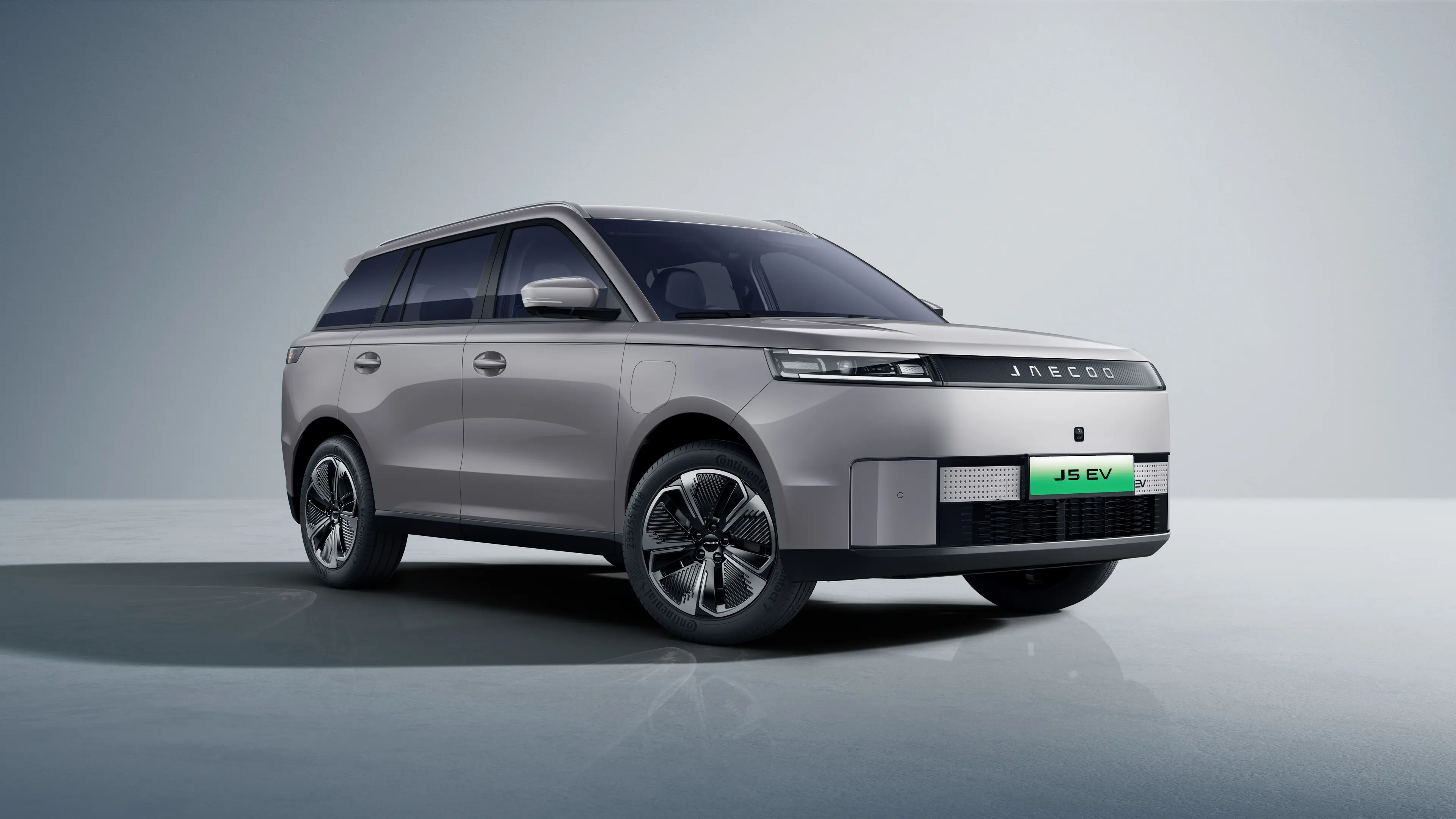
When a mid‑size SUV that sells for under $20,000 in China is seen with a high‑resolution LiDAR sensor, the story is about more than a single prototype. It points to a strategic gamble by Chery to embed advanced driver‑assistance hardware in a mass‑market vehicle, potentially reshaping how quickly affordable autonomy reaches Chinese streets. The sighting, reported by CarNewsChina, could have ripple effects across supply chains, regulatory approvals, and the competitive calculus of both domestic and foreign automakers.
Deep Dive
According to the same CarNewsChina report, the Jaecoo J5 was photographed in China with a newly installed LiDAR unit. The article links the sensor to Chery’s proprietary "Falcon 700" L2+ assisted‑driving system, suggesting that the vehicle may soon be capable of lane‑centering, adaptive cruise control, and limited hands‑off operation. In addition, the source mentions a possible V2L‑capable hybrid electric vehicle (HEV) upgrade, which would allow the car’s battery to serve as a power source for external devices.
While the headline focuses on the hardware, the underlying implications are deeper. First, integrating LiDAR into a price‑sensitive model forces Chery to confront cost‑structure challenges. LiDAR has historically been an expensive component, reserved for premium models or dedicated autonomous platforms. By fitting it onto the J5, Chery is either leveraging newer, lower‑cost solid‑state designs or negotiating bulk pricing with domestic suppliers. Analysts note that China’s LiDAR ecosystem has expanded rapidly in the past few years, driven by government subsidies and a race to supply the burgeoning autonomous‑vehicle market. If Chery can secure a cost‑effective supply line, it could set a precedent for other manufacturers aiming to democratise L2+ features.
Second, the move aligns with China’s regulatory trajectory. The country has been tightening standards for advanced driver‑assistance systems (ADAS) and encouraging the rollout of Level‑2+ capabilities in everyday cars. By equipping the J5 with Falcon 700, Chery appears to be positioning the model to meet—or even exceed—future certification thresholds. However, the article does not detail whether the LiDAR is fully integrated with the vehicle’s electronic architecture or if it remains a test‑bed component. The distinction matters because full integration would require extensive software validation, data‑fusion testing, and compliance with emerging safety standards.
Third, the hinted V2L‑capable hybrid upgrade could address another emerging market need: vehicle‑to‑load power. In densely populated Chinese cities, where power outages and the demand for mobile charging solutions are common, a hybrid system that can export electricity offers a tangible selling point. The source does not specify the battery capacity or the power rating of the V2L function, but the mere suggestion signals Chery’s intent to bundle autonomous hardware with utility‑focused electrification.
From a supply‑chain perspective, the convergence of LiDAR, L2+ software, and V2L‑ready hybrid powertrain creates a complex integration challenge. Each subsystem typically comes from different vendors—LiDAR manufacturers, ADAS software providers, and battery‑system integrators. Coordinating these partners to meet production timelines and cost targets requires a tightly managed ecosystem. If Chery can pull this off, it could give the company a competitive edge in the fast‑moving Chinese market, where consumers increasingly expect high‑tech features without premium pricing.
Audit & Contradictions
The CarNewsChina article is the sole source for every specific claim about the Jaecoo J5’s new hardware. The report states that the J5 was spotted with a LiDAR unit, that it will feature the Falcon 700 L2+ system, and that a V2L‑capable hybrid upgrade is under consideration. All four points are single‑source claims and therefore are hedged with language such as "according to CarNewsChina" or "the source suggests". No other outlet has independently confirmed the presence of the LiDAR, the exact specifications of Falcon 700, or the V2L hybrid plan. The fact‑check audit notes that there are no contradictions identified in the source material, and the contradiction level is marked as low.
What the announcement does not disclose is any timeline for production, pricing impact, or regulatory approval status. The article also omits details about the LiDAR’s range, field of view, or whether the sensor is a mechanical scanning unit or a solid‑state array. Likewise, the V2L capability is mentioned only as a potential upgrade, without technical parameters or a confirmed supply chain partner. These gaps leave room for speculation about whether the features are ready for mass production or remain at a prototype stage.
Future Outlook
If Chery proceeds with a production‑ready LiDAR‑equipped J5, the move could accelerate the trickle‑down of L2+ autonomy into the broader Chinese market. Competitors such as BYD, Geely, and foreign players like Volkswagen have already begun offering assisted‑driving suites, but few have paired them with LiDAR on an entry‑level SUV. A successful rollout would pressure rivals to either adopt similar sensor packages or double down on camera‑only solutions, potentially reshaping the cost‑benefit analysis for ADAS development.
Regulators may also respond. A higher prevalence of LiDAR‑enabled vehicles could prompt the Ministry of Industry and Information Technology to refine testing protocols, safety benchmarks, and data‑privacy rules for vehicles that collect detailed 3‑D environmental data. In turn, tighter standards could increase compliance costs, benefitting manufacturers that have already invested in LiDAR integration.
On the supply‑chain side, a confirmed demand for LiDAR in a mass‑market model could stimulate domestic manufacturers to scale production, driving down unit costs and encouraging further integration across vehicle segments. This could create a feedback loop where more affordable LiDAR makes its way into lower‑priced cars, expanding the overall market for autonomous‑driving hardware.
Finally, the hinted V2L hybrid upgrade adds another layer of strategic relevance. As China pushes for greater electrification, a vehicle that can both drive itself and act as a mobile power source aligns with policy goals around energy resilience and grid support. If Chery can validate the V2L function in real‑world conditions, it may open a new revenue stream through services such as emergency power supply or on‑the‑go charging for e‑bikes and scooters.
In sum, the photographed LiDAR on the Jaecoo J5 is more than a visual cue; it is a signal that Chery is testing the limits of cost‑effective autonomy and utility‑focused electrification. Whether the company can translate the prototype into a market‑ready product will depend on supply‑chain coordination, regulatory clearance, and consumer acceptance—all factors that remain unaddressed in the initial announcement.