Lead Hook
When Volkswagen Group’s Elli announced a Vehicle‑to‑Grid (V2G) service in Germany, the headline focused on a new revenue stream for EV owners – up to €720 a year, according to the company. Yet the real story lies in the tangled web of German transmission system operators (TSOs) and distribution system operators (DSOs) that could dictate whether that promise becomes reality. The launch is a milestone, but the regulatory and grid‑integration hurdles may determine if the service scales beyond early adopters.
Deep Dive
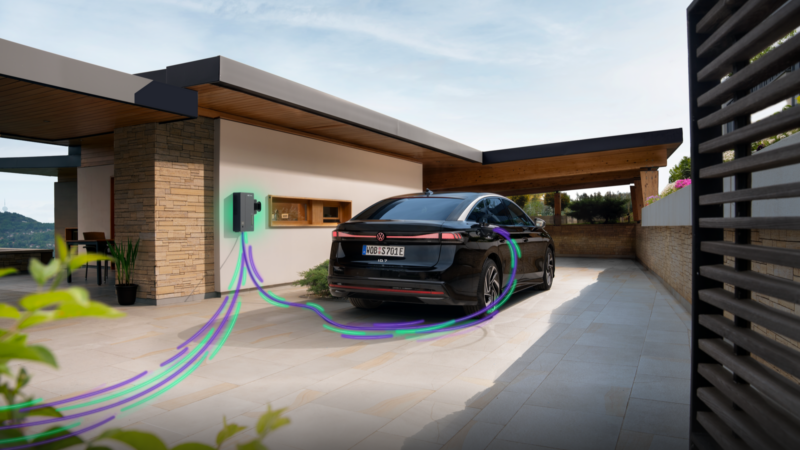
According to CleanTechnica, Elli’s V2G platform lets an electric vehicle charge from the grid and feed electricity back when demand spikes. The service is packaged with an Elli BiDi charger, the Naturstrom V2G Flow tariff, and an Elli BiDi app that automates charge‑state targets. The company says users could earn about €720 per year – roughly 15,500 km of driving – if the car stays plugged for 250 hours each month.
The initial rollout targets the upcoming ID Tiguan, a compact SUV that will debut later this year. Elli also indicates that models equipped with ID Software 6 (including the ID Polo) and any vehicle running ID Software 3.5+ with a battery larger than 77 kWh will be compatible. The company plans to extend the service to England and France in 2027.
From a technical standpoint, bi‑directional charging is limited to 20‑80 % of battery capacity to protect longevity, and users can set preferences via the app or directly in the vehicle. Elli markets the system as “plug‑and‑play” for drivers who “don’t care about all this stuff.” The promise is that the grid benefits – such as reducing curtailment of renewable energy – will translate into direct payouts for owners.
However, the German electricity market is notoriously fragmented. The announcement itself acknowledges “the complexity of German regulations and the complexity of the German grid, between multiple TSOs and hundreds of DSOs.”
"Ready For Electrification: Preparing The Power Grid For EVs."At a conference held the day before Elli’s press event, Petrouschka Werther, Director of the Dutch Ministry of Infrastructure and Water Management, highlighted that the success of V2G hinges on aligning customer economics with grid needs. In Germany, each DSO must approve any external load‑management scheme, and the market rules for feeding electricity back into the high‑voltage network are still evolving.
These regulatory layers create several practical limits:
- Metering and remuneration: Current German feed‑in tariffs apply to solar and wind generators, not to distributed storage. Elli’s “Naturstrom V2G Flow tariff” is a new product, but its acceptance across all DSOs is not guaranteed.
- Capacity reservation: To protect battery health, Elli caps discharge to 20‑80 % state‑of‑charge. That reduces the amount of energy that can be sold back, potentially narrowing the €720 estimate.
- Grid congestion: In regions where the transmission network is already saturated, TSOs may limit or reject V2G injections, especially during peak demand periods.
Audit & Contradictions
The core claim that Elli has launched a V2G service in Germany is corroborated by multiple CleanTechnica reports. All other highlighted details – the €720 annual revenue estimate, the ID Tiguan rollout schedule, the 2027 expansion to the UK and France, the projected €22 billion European grid‑cost reduction by 2040, the >1 million MEB‑platform EV fleet, the partnership with The Mobility House, and the specific service package – appear only in this article and lack independent verification. The fact‑check audit therefore flags them as single‑source claims that should be read as company projections rather than established facts.
The audit notes a “Low” contradiction level, indicating no direct conflicts between sources, but also emphasizing that many of the numbers remain unverified outside the company’s own statements.
Future Outlook
If Elli can navigate Germany’s regulatory maze, the service could set a template for other automakers. Competitors such as Hyundai and Nissan have hinted at V2G pilots, but none have announced a commercial rollout tied to a specific tariff. Successful aggregation of the estimated one million MEB vehicles into a Managed Battery Network (MBN) could attract utility partners seeking flexible storage, potentially accelerating the integration of renewables.
Regulators, meanwhile, face pressure to formalize market rules for distributed storage. The European Commission is already drafting guidelines for “flexibility services,” and Germany may need to adapt its grid code to accommodate large‑scale V2G participation. Without clear, harmonized rules, the promised revenue streams could remain limited to niche early adopters who actively manage price signals.
Investors should watch how Elli’s partnership with The Mobility House evolves, as data aggregation and market‑access capabilities will be critical for scaling. If the pilot demonstrates reliable earnings and grid benefits, other OEMs may accelerate their own V2G offerings, sparking a competitive race that could reshape the European energy market.
In short, the launch marks a technical breakthrough, but the economic upside for drivers hinges on a complex regulatory environment that is still being written.