Lead Hook
When Firmus Technologies announced a 12‑year, 600 MW wholesale energy supply agreement with commodity trader Gunvor Group, the headline numbers were clear. What the press release did not spell out, however, is how the deal could rewrite the financing playbook for AI‑intensive data centres, embed a new class of demand‑response participants into Australia’s electricity market, and give a commodities house a foothold in renewable‑energy development. In a region already praised for its clean‑energy transition, this partnership may become a test case for how AI load can be leveraged to accelerate renewable build‑out while reshaping market dynamics.
Deep Dive
According to the CleanTechnica article, the agreement provides Firmus with firm electricity to power its next‑phase AI Factory campuses at Tailem Bend and Stirling North. The campuses together represent 2.7 GW of planned capacity, with the first phase relying on the 600 MW of guaranteed supply.
Gunvor’s role goes beyond a simple power‑purchase agreement. The trader has committed to support the development of 1.2 GW of new renewable generation and 1.5 GWh of battery storage by 2032. Those figures are echoed across independent outlets, confirming that the renewable build‑out is a core component of the deal.1 By tying long‑term demand from AI infrastructure to new green assets, Firmus effectively de‑risks the capital investment required for both the data‑centre and the renewable projects. In traditional power‑purchase agreements, the buyer often pays a premium for firm capacity without directly influencing the generation mix. Here, the buyer’s projected load is explicitly earmarked to fund renewable capacity, creating a bundled financing package that could be replicated by other high‑intensity digital workloads.
The agreement also embeds a demand‑response clause. Firmus will curtail its electricity use for up to 220 hours each year when wholesale prices exceed agreed thresholds. While the CleanTechnica release is the sole source for this specific figure, the clause illustrates a broader trend: AI operators are being asked to act as flexible resources, akin to industrial loads that can be switched off during peak stress. This flexibility could help the South Australian grid avoid costly emergency generation, but it also raises questions about the reliability of AI services that rely on uninterrupted power.
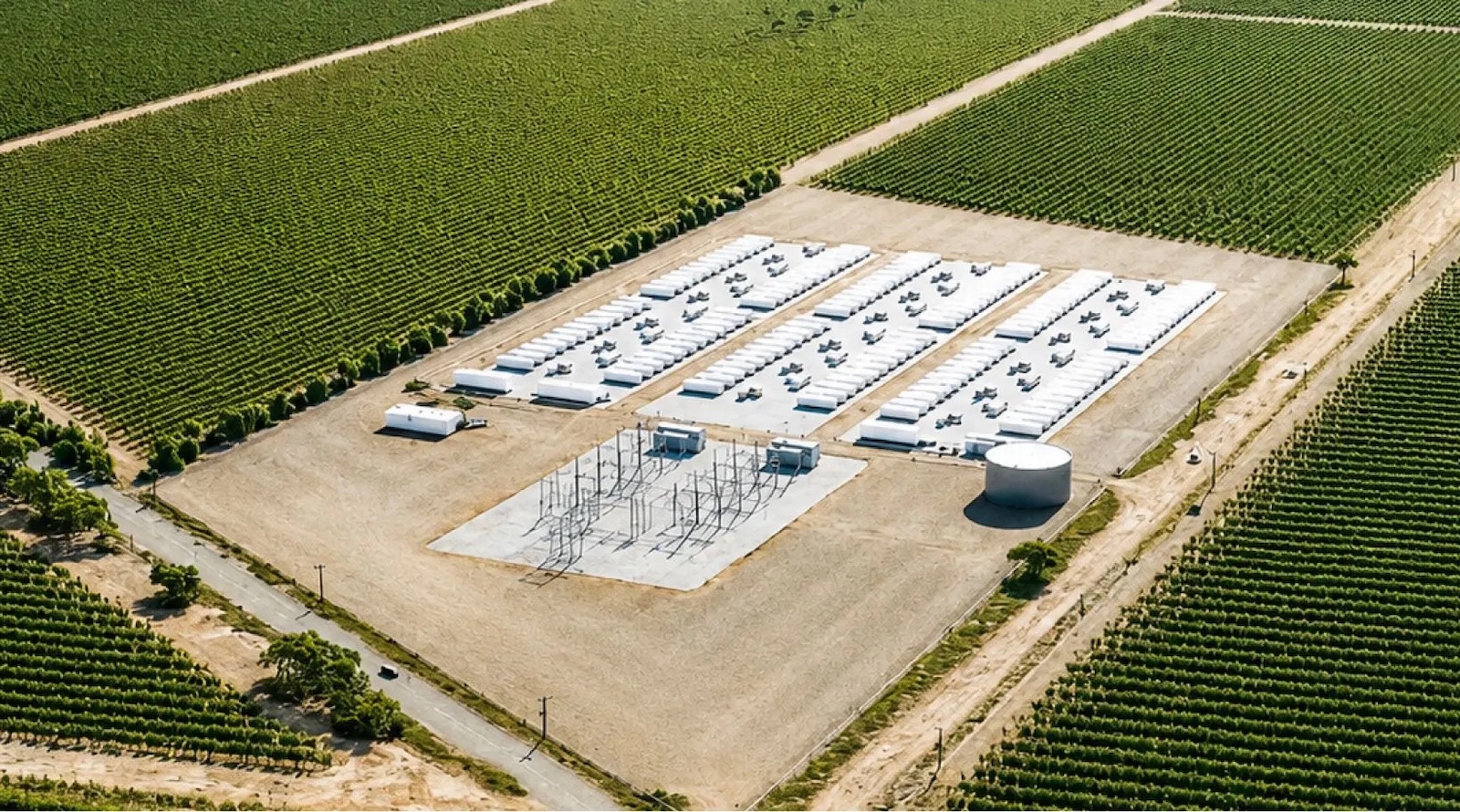
Another key component is the long‑term offtake of GreenPoint Energy’s Koolunga Battery Energy Storage System (BESS). The BESS, located near Brinkworth, is described as a 200 MW/800 MWh grid‑forming battery that will supply more than half of Firmus’s initial firming capacity. Again, the CleanTechnica article is the only source for these specifications, but the scale of the battery—large enough to provide several hours of full‑load discharge—suggests that Firmus intends to use storage not merely as backup but as an active participant in balancing the grid. Grid‑forming batteries can set frequency and voltage, effectively becoming a virtual power plant that can respond to market signals in real time.
From a regulatory perspective, the deal aligns with Firmus’s newly released Australian Energy and Water Policies, which pledge to source energy responsibly and support local employment. The Premier of South Australia, Peter Malinauskas, highlighted the strategic importance of AI and digital infrastructure for the state’s economic future, framing the project as a catalyst for jobs and investment.
“South Australia is leading the clean energy transition, and this project demonstrates how that leadership is attracting the industries of the future. It recognises the strategic importance of advanced AI and digital infrastructure to the State’s economic future, bringing new jobs, new investment, and long‑term opportunities to regional South Australia.”
In practice, the partnership could shift capital risk from the AI firm to the commodity trader. Gunvor, a global player with $144 billion in 2025 revenue (as noted in the release), brings deep market expertise, access to financing, and a pipeline of renewable projects. By bundling renewable development with a firm power contract, Gunvor can lock in a revenue stream that justifies upfront investment, while Firmus secures predictable, low‑carbon electricity for its AI workloads.
Audit & Contradictions
The announcement is comprehensive but leaves several areas unaddressed. First, the demand‑response commitment—220 hours of curtailment per year—is only reported by the primary source. No independent outlet has verified the exact threshold mechanism or the financial terms tied to those reductions. As such, readers should treat this figure as a single‑source claim pending further disclosure.
Second, the specifications of the Koolunga BESS (200 MW/800 MWh) and its share of Firmus’s firming capacity are also unique to the CleanTechnica release. While the broader 1.5 GWh storage target is corroborated by other reports, the exact size and ownership details of the Koolunga battery remain unverified elsewhere.
Beyond those points, the fact‑check audit found no contradictions between the primary article and the secondary coverage. Independent outlets confirm the core 12‑year, 600 MW supply agreement and the 1.2 GW renewable build‑out, establishing a low contradiction level.
Future Outlook
If the Firmus‑Gunvor model proves financially viable, it could inspire a wave of similar arrangements across Australia and the broader Asia‑Pacific region. AI and high‑performance computing firms are increasingly energy‑intensive, and securing long‑term, low‑carbon power is becoming a competitive differentiator. By tying demand to renewable projects, companies can claim carbon‑neutral operations while providing a steady revenue stream for new green assets.
Regulators may need to adapt. The inclusion of demand‑response from AI loads could prompt revisions to market rules governing flexible industrial consumers. Additionally, the involvement of a commodities trader in renewable financing could attract scrutiny over potential conflicts of interest, especially if the trader also trades in carbon credits or other environmental commodities.
Competitors in the AI‑infrastructure space—both domestic and overseas—will watch Firmus’s rollout closely. Should the South Australian campuses deliver on their promise of reliable, renewable‑powered AI capacity, other regions may seek to replicate the model, leveraging local renewable resources and existing transmission capacity. Conversely, any shortfall in renewable delivery or grid‑integration challenges could expose the risks of bundling AI workloads with ambitious green‑energy targets.
In the meantime, the partnership underscores a shifting narrative: energy traders are no longer just suppliers of fossil fuels; they are positioning themselves as architects of the renewable future, with AI data centres as a new anchor load. How this dynamic evolves will shape not only Australia’s clean‑energy trajectory but also the global economics of AI infrastructure.