Lead Hook
When Wedbush Securities announced its inaugural coverage of SpaceX (NASDAQ: SPCX) with a $190 price target and an “Outperform” rating, the headline grabbed Wall Street’s attention. Yet the real story lies beneath the numbers: the valuation leans heavily on future revenue streams that have never been proven at scale—sub‑$200 per kilogram launch costs, orbital data‑center services, and enterprise AI monetisation. For investors, regulators and rivals, the gap between today’s cash flow and Wedbush’s bullish forecast raises fundamental questions about capital efficiency and risk.
Deep Dive
According to Teslarati, Wedbush’s analyst Dan Ives framed SpaceX as a three‑core‑market player, with Starlink, Starship launches and AI compute projects driving future growth. The note highlights three concrete data points that underpin the $190 target:
- Starlink’s recurring‑revenue base of roughly 12 million subscribers as of June 5, which the firm describes as a “profitability driver” (source). This translates to less than 1 % of the global broadband market, a figure that Wedbush treats as early‑stage but still central to its revenue outlook.
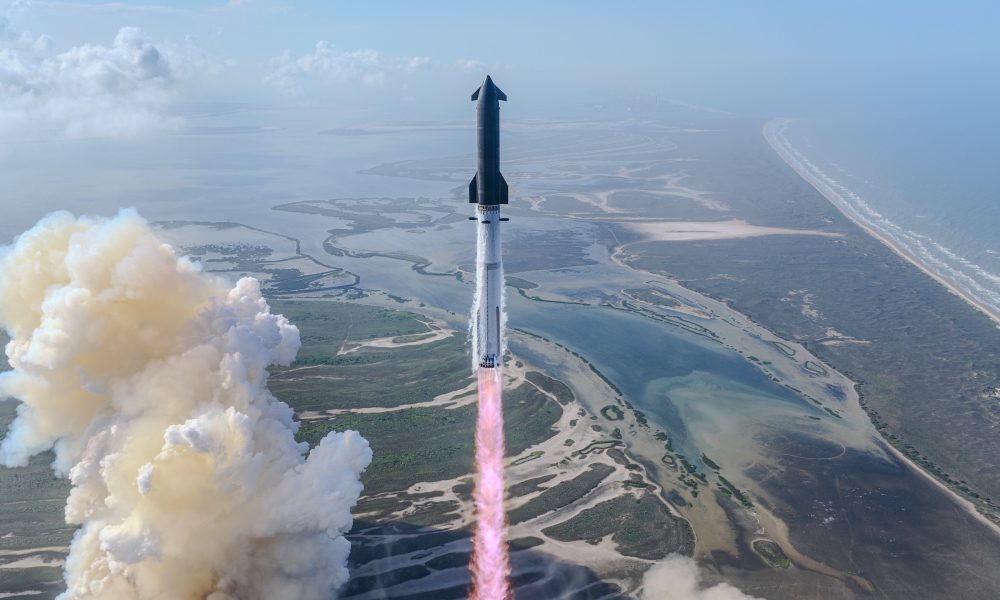
- Starship’s ambition to achieve sub‑$200 per kilogram launch costs. The analyst notes that such a cost curve would constitute an “essential layer” for the company’s broader economics, but the path to that target is not detailed.
- Potential upside from “orbital data centers” and “enterprise AI monetisation,” which Wedbush explicitly excludes from its valuation because of “major hurdles.”
These elements are woven together in a valuation model that assigns SpaceX an implied enterprise value of roughly $2.48 trillion (source). The model assumes that the three future services will eventually generate a meaningful cash‑flow contribution, even though no concrete contracts, pricing structures or regulatory approvals have been disclosed.
The Starlink subscriber count, while sizeable, still represents a modest slice of the worldwide broadband market. The service’s revenue model relies on monthly fees from users who are often in remote or underserved regions, where average revenue per user (ARPU) tends to be lower than in mature markets. Without evidence of rapid subscriber acceleration or higher‑margin enterprise contracts, the claim that Starlink alone can sustain a trillion‑plus valuation remains speculative.
Starship’s cost reduction ambition hinges on a complex set of engineering and operational milestones. Achieving sub‑$200/kg would require not only repeatable rapid‑turnaround launches but also a dramatic reduction in propellant and hardware expenses. The note acknowledges that “as it reduces the necessary hardware launch costs while generating a feedback loop for future flights to improve their launch flight rate without accelerating capex spend,” yet no timetable or technical roadmap is provided.
Orbital data centers and AI services represent an emerging market concept: placing compute hardware in low‑Earth orbit to leverage cooling advantages and proximity to satellite‑based data streams. While the idea is enticing, it also faces formidable challenges—radiation hardening, data‑transfer latency, and the need for a commercial ecosystem willing to pay premium prices for space‑based compute. The analyst’s own caution—“these face major hurdles, so we do not take that into account with our valuation”—underscores the uncertainty.
Finally, the note reports that SpaceX shares were down just over 2 % and trading around $167 at the time of publication (source). This modest price dip, juxtaposed with the lofty $190 target, illustrates the spread between current market perception and Wedbush’s forward‑looking optimism.
Audit & Contradictions
The announcement leaves several critical pieces of information undisclosed. First, the exact assumptions behind the $2.48 trillion enterprise‑value forecast are not broken out; no revenue multiples, discount rates or cash‑flow timelines are shared. Second, there is no public roadmap for achieving the sub‑$200/kg launch cost, nor any disclosed contracts that would lock in orbital‑data‑center customers. Third, the note does not address regulatory considerations for large‑scale satellite constellations or the environmental impact of increased launch cadence.
All of the principal claims—price target, subscriber count, optional upside, and current share price—are found solely in the Teslarati article. Independent outlets listed in the fact‑check (CNBC, AP, New York Times) cover SpaceX’s market debut but do not corroborate these specific figures. As the fact‑check audit notes, the claims are therefore single‑source and must be presented as such. No contradictions were identified in the other sources, so the overall contradiction level is low.
Future Outlook
If SpaceX can deliver on the Starship cost target, the company would unlock a pricing advantage that could pressure rivals such as Blue Origin and Amazon’s Kuiper, potentially reshaping launch‑service pricing across the industry. However, missing that target could force SpaceX to rely more heavily on Starlink revenues, which may plateau if subscriber growth slows or if regulatory caps on satellite constellations tighten.
The orbital‑data‑center concept, if realised, could create a new revenue class that blends satellite communications with edge computing. Yet the lack of concrete contracts means investors are betting on a market that may not materialise for years, if at all. In the meantime, traditional aerospace investors may demand more conservative valuations that reflect current cash‑flow generation rather than speculative upside.
Regulators could also play a decisive role. As launch frequency increases, the Federal Aviation Administration and international bodies will scrutinise environmental impact, spectrum allocation and debris mitigation. Any adverse rulings could raise launch costs, eroding the economic case for sub‑$200/kg pricing.
In summary, Wedbush’s $190 target paints a picture of a company poised to dominate three high‑growth arenas, but the foundation of that picture rests on unproven technical and commercial milestones. Investors should weigh the speculative upside against the tangible risk that the future revenue streams may never reach the scale required to justify a trillion‑plus valuation.
"We note that there is optional value coming from Starship’s accelerating scale towards sub-$200/kg unit economics, orbital data centers, and enterprise AI monetization as these factors could drive meaningful upside but these face major hurdles, so we do not take that into account with our valuation." – Dan Ives, Wedbush Securities