Lead Hook
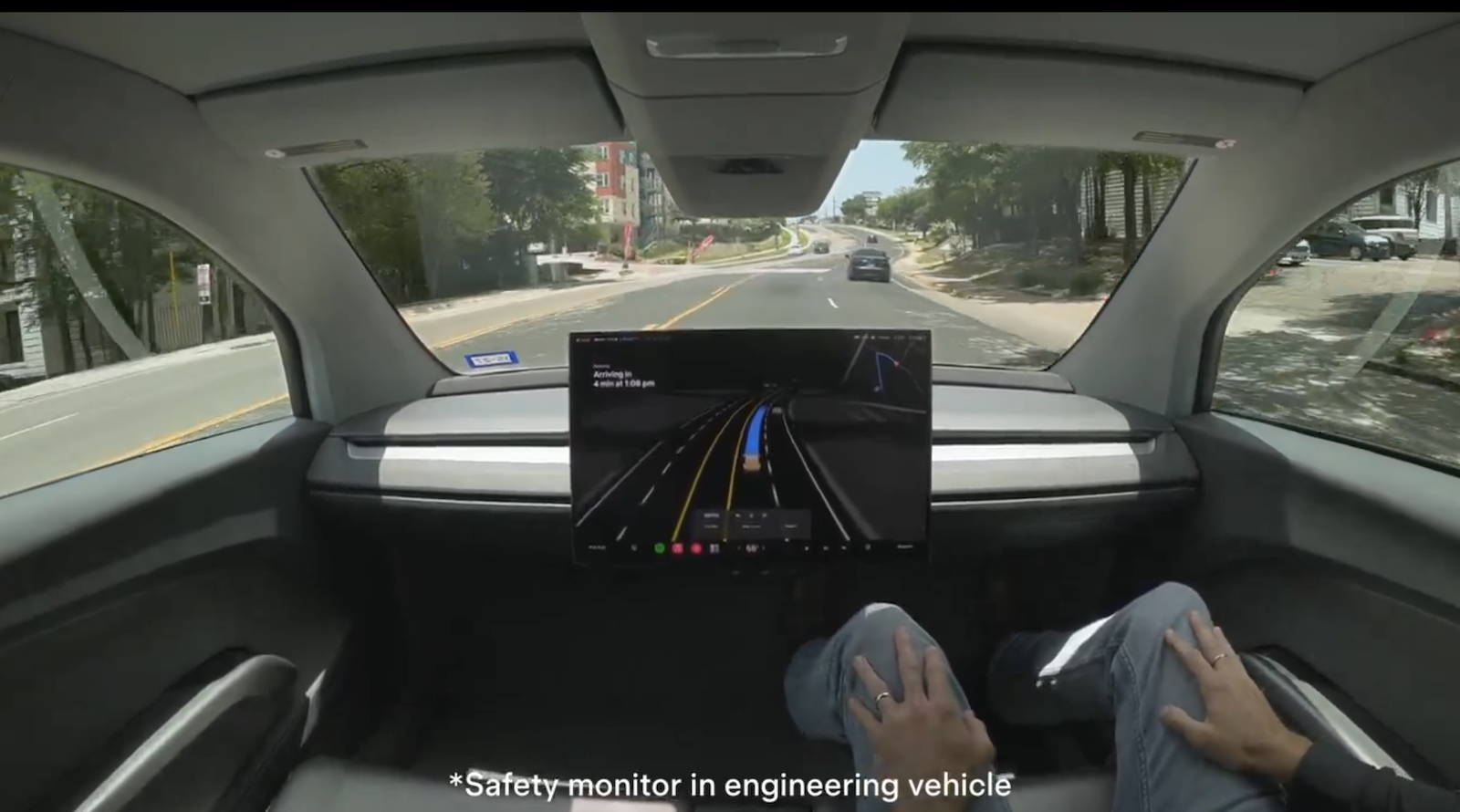
When Tesla posted a 27‑second video on X announcing that “Engineering tests of the first production Cybercab have begun in Austin,” it was more than a routine field trial. The absence of a steering wheel and brake pedals signals a regulatory shift that could rewrite the economics of autonomous‑vehicle fleets, trimming hardware, simplifying vehicle architecture, and accelerating the path to large‑scale robotaxi deployment.
Deep Dive
According to CleanTechnica, the Cybercab being tested in Austin is a production‑ready unit – not a prototype – and it is being driven on public roads without any traditional driver controls. The company’s X post explicitly states that “Engineering tests of the first production Cybercab have begun in Austin,” confirming that the vehicle is already beyond the lab stage.
The legal backdrop for this design choice is a set of forthcoming NHTSA rule changes under the Federal Motor Vehicle Safety Standards (FMVSS). The article notes that these new rules will “eliminate the need for brake pedals in autonomous vehicles.” While other outlets such as TechCrunch and Electrek have reported the Austin testing, they have not detailed the regulatory context, which remains a claim found only in the CleanTechnica piece.
From a technical standpoint, removing a steering column, brake pedal assembly, and associated hydraulic or electronic actuation systems could shave several hundred pounds from the vehicle’s curb weight. That reduction translates into lower energy consumption per mile, extending the range of electric robotaxis and reducing operating costs. Moreover, fewer mechanical components mean fewer failure points, potentially improving fleet reliability and simplifying maintenance schedules.
Supply‑chain implications are equally significant. Brake pedal assemblies and steering systems are sourced from a network of Tier‑1 suppliers that have long been entrenched in the automotive ecosystem. A shift toward pedal‑free designs could disrupt those relationships, prompting suppliers to pivot toward software‑centric or sensor‑focused offerings. For Tesla, which already manufactures most of its vehicle hardware in‑house, the move could deepen vertical integration and further isolate the company from traditional parts markets.
Economically, the capital efficiency of a robotaxi fleet could improve dramatically. Capital expenditures (CapEx) for a fleet are heavily influenced by the cost of each vehicle, which includes the price of driver‑control hardware. By eliminating those components, manufacturers may reduce the per‑unit cost, allowing operators to deploy larger fleets with the same investment. Analysts who track autonomous‑mobility business models have long argued that “unit cost is the primary barrier to profitability,” and a pedal‑free design directly addresses that barrier.
Regulatory momentum is also evident in the language from NHTSA leadership. The article quotes Administrator Jonathan Morrison:
“We are at the cusp of the greatest technological revolution in vehicle technology since the innovation of the Model T,”and adds that under Secretary Sean Duffy’s AV Framework, “NHTSA is tearing down pointless barriers to innovative designs while strengthening the fundamental safety requirements that matter and holding AV developers accountable for safe performance.” While this quote is sourced solely from CleanTechnica, it frames the agency’s intent to modernize standards that have historically required manual controls.
Historically, the Federal Motor Vehicle Safety Standards have mandated physical controls for driver intervention. The pending revisions would formalize an exemption for Level 4+ autonomous systems, provided they meet rigorous safety performance criteria. If enacted, these rules could open the door for other manufacturers to pursue similar designs, potentially accelerating the industry‑wide shift toward purpose‑built autonomous platforms rather than retrofitting existing models.
Audit & Contradictions
The core claim—that Tesla is conducting on‑road testing of production Cybercabs without steering wheels or brake pedals in Austin, Texas—is corroborated by multiple independent outlets including TechCrunch, Electrek, and Yahoo Autos. The company’s X announcement also directly confirms the start of “engineering tests.” However, several contextual statements appear only in the CleanTechnica article and therefore require hedging:
- “Tesla has been sending Cybercabs around the United States for early testing, initially equipped with steering wheels and pedals because of legal requirements.” – single‑source claim.
- “New NHTSA rules under the Federal Motor Vehicle Safety Standards will eliminate the need for brake pedals in autonomous vehicles.” – single‑source claim.
- The full Morrison quotation about the “greatest technological revolution” and the description of Secretary Sean Duffy’s AV Framework – single‑source claim.
The fact‑check audit notes a “Low” contradiction level, meaning no direct conflicts have been identified across sources. Nonetheless, readers should be aware that the regulatory details and the historical nationwide testing narrative have not been independently verified beyond the primary article.
Future Outlook
If NHTSA finalizes the pedal‑exemption rules, the design space for autonomous vehicles could expand dramatically. Competitors such as Waymo, Cruise, and Baidu’s Apollo have already invested in purpose‑built robotaxi platforms, but many still rely on modified production sedans that retain driver controls. A regulatory green light for pedal‑free designs would give Tesla a tangible cost advantage and could pressure rivals to accelerate their own hardware redesigns.
From a market perspective, fleet operators could see lower total‑cost‑of‑ownership (TCO) calculations, potentially making robotaxi services financially viable in more cities. Municipalities that have been hesitant to grant autonomous‑vehicle permits might view a pedal‑free vehicle as a lower‑risk proposition, provided that safety performance data meets the agency’s new standards.
Finally, the supply‑chain ripple could reshape the parts ecosystem. Tier‑1 manufacturers that specialize in steering columns, brake pedal assemblies, and related electronic control units may need to diversify into sensor fusion, high‑definition mapping, or safety‑critical software to stay relevant. Conversely, companies that already produce lidar, radar, and advanced computing hardware could see heightened demand as the industry leans into fully autonomous, control‑free vehicle architectures.
In short, Tesla’s Austin test is a litmus test for a broader regulatory and economic transformation. While the on‑road trial itself is a single, observable event, the underlying policy shift—if realized—could redefine how autonomous fleets are built, priced, and deployed across the United States and beyond.