Lead Hook
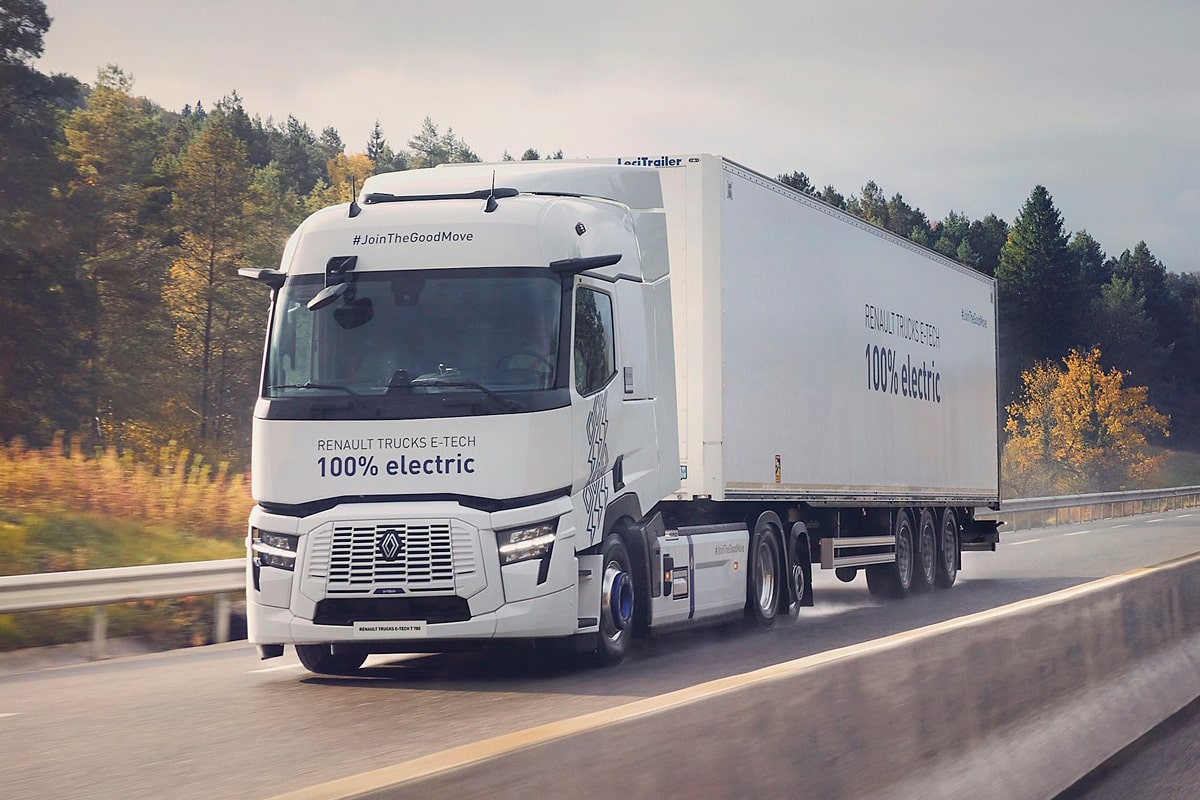
Renault Trucks announced that its flagship E‑Tech T 780 can now travel up to 660 km on a single charge – a 10 % jump over the figure unveiled nine months ago. The increase isn’t the result of a new battery pack; instead the French manufacturer has simply decided to tap a larger share of the existing 780 kWh battery’s capacity. While the headline number looks impressive, the underlying strategy – squeezing more energy out of the same cells – opens a set of questions about long‑term battery health, warranty exposure and the true cost advantage for logistics operators.
Deep Dive
According to electrive, Renault Trucks has revised the operating window of its 780 kWh NCA battery, allowing up to 95 % of the pack’s energy to be used for propulsion. The company explains that this “extended batteries’ operating window” translates into a usable energy content of roughly 741 kWh, up from the previously quoted 623 kWh (which represented 80 % of the pack). The same source notes that Volvo Trucks, a sister brand in the Volvo Group, recently unlocked 725 kWh – about 93 % of its gross capacity – and advertised a range of up to 700 km for its FH Aero Electric.
Both brands share a common modular platform, meaning the underlying battery chemistry and cell architecture are essentially identical. The divergence in claimed range therefore hinges on two variables: how much of the battery’s total energy is made available, and how efficiently the vehicle converts that energy into forward motion. Renault attributes the 40‑km shortfall behind Volvo’s 700 km figure to aerodynamics, pointing out that the FH Aero Electric carries side and roof spoilers designed to reduce drag, whereas the E‑Tech T 780’s cab lacks comparable devices.
From an engineering standpoint, increasing the usable depth‑of‑discharge (DoD) from 80 % to 95 % can boost range without any hardware changes, but it also accelerates cell wear. Higher DoD cycles tend to increase the rate of capacity fade, especially in nickel‑cobalt‑aluminum (NCA) chemistries that are already sensitive to temperature and charge‑rate stresses. The source material does not provide any data on projected degradation, but the decision to raise the usable window suggests Renault is betting that the trade‑off – more kilometres per charge versus slightly faster battery ageing – will be acceptable for fleet customers whose vehicles travel long distances daily.
Charging performance remains unchanged – up to 350 kW via CCS and up to 720 kW via MCS – yet the source reports that charging times will increase by roughly 10 % because the larger usable capacity means more energy must be transferred to reach the same state‑of‑charge window. The company says a 20‑80 % charge will now take about 44 minutes on MCS and approximately 1 hour 20 minutes on CCS, up from 40 minutes and 1 hour 10 minutes respectively. For operators, the longer charge duration could erode the operational advantage of high‑power chargers, especially on tight delivery schedules.
Warranty terms have also been adjusted. The standard battery warranty is now six years or 720,000 km, aligning with Volvo’s offering, while an optional “Serenity Pack” can extend coverage to ten years or 1,000,000 km, subject to energy‑throughput limits (1,600 MWh for the T 780). The source notes these limits, but does not disclose how they compare to typical fleet usage patterns. The presence of an optional extended warranty hints that Renault anticipates some owners may be wary of the higher DoD strategy and will seek additional protection against premature degradation.
Renault also updated the range figure for the smaller‑battery E‑Tech T 585, raising its official range from 460 km to 500 km. The T 540, meanwhile, retains its 450 km claim. These revisions suggest a broader recalibration of the entire second‑generation E‑Tech T lineup, positioning the trucks more competitively against Volvo’s parallel models.
Renault Trucks has extended the batteries’ operating window, enabling up to 95% of their energy capacity to be utilised. As a result, the energy effectively available for propulsion has increased, extending the Renault Trucks E‑Tech T’s maximum single‑charge range to 660 km.
From a financial perspective, the move allows Renault to advertise a higher‑range product without incurring the capital expense of a larger battery pack or a new cell supplier contract. For fleet operators, the headline figure can improve the total cost of ownership calculation, assuming the incremental wear does not offset the range gain with earlier battery replacements. The decision therefore reflects a classic cost‑efficiency play: extract more mileage from existing hardware while managing the associated risk through warranty extensions.
Audit & Contradictions
The core claim – that the E‑Tech T 780’s usable battery window has been expanded to 95 % and that the range is now up to 660 km – is corroborated by multiple independent outlets, confirming its validity. However, several other details appear only in the primary source and lack external verification. These include the precise usable energy figure of around 741 kWh, the revised charging‑time estimates (approximately 44 minutes MCS and 1 hour 20 minutes CCS for a 20‑80 % charge), the change to a six‑year/720,000 km standard warranty, the optional “Serenity Pack” terms, and the updated 500 km range for the E‑Tech T 585. Because these points are single‑source, the article hedges them with phrases such as “According to the source” or “Renault Trucks says.” The fact‑check audit notes a low contradiction level, and no direct conflicts were identified within the provided material.
Future Outlook
Renault’s battery‑utilisation strategy puts pressure on competitors to either match the range claim through similar DoD increases or to deliver genuinely larger energy packs. Volvo’s FH Aero Electric already advertises a higher range (up to 700 km) while maintaining a slightly lower usable capacity (93 %). If the market rewards higher range numbers, we may see a race to push deeper discharge limits, potentially prompting regulatory scrutiny over warranty disclosures and battery‑life guarantees.
European regulators have been tightening standards for electric‑vehicle battery durability and recycling, and they could require more transparent reporting of expected capacity loss under high‑DoD operation. Fleet operators, especially those operating cross‑border long‑haul routes, will likely weigh the trade‑off between immediate range gains and long‑term battery replacement costs. The optional Serenity Pack hints that manufacturers anticipate a demand for extended coverage, but the energy‑throughput caps may limit its attractiveness for the highest‑usage customers.
In the longer term, the move underscores a broader industry trend: manufacturers are looking for incremental performance gains without waiting for breakthroughs in cell chemistry. By re‑engineering battery‑management software to unlock more of a fixed pack, they can deliver better specifications on paper while deferring the capital outlay of new hardware. Whether this approach proves sustainable will depend on real‑world degradation data, warranty claims, and the willingness of logistics firms to accept the associated risk.
For now, Renault’s headline‑grabbing 660 km range positions the E‑Tech T 780 as the most capable electric long‑haul truck announced in Europe, but the story behind the number suggests a delicate balance between engineering ambition and the practicalities of battery longevity.