Lead Hook
California is poised to pour $135 million into an electric‑vehicle incentive that promises cash‑on‑the‑hood rebates for first‑time buyers. On the surface, the program looks like a straightforward bridge to replace the now‑defunct federal tax credit. Yet the bill’s fine print grants a special carve‑out to California‑headquartered manufacturers – notably Rivian and Lucid – allowing them to sidestep the $50,000 new‑vehicle and $25,000 used‑vehicle price caps that apply to everyone else. The hidden advantage raises questions about fiscal fairness, market distortion, and the long‑term viability of a state‑driven subsidy.
Deep Dive
According to InsideEVs, the incentive will be limited to first‑time EV buyers, with eligibility confirmed by a buyer attestation. The program mirrors the federal tax credit’s price caps: a new electric vehicle must have a manufacturer‑suggested retail price (MSRP) of $50,000 or less, and a used EV must be priced at $25,000 or less. However, paragraph (2) of the bill explicitly exempts “California‑headquartered zero‑emission vehicle companies” from these caps.
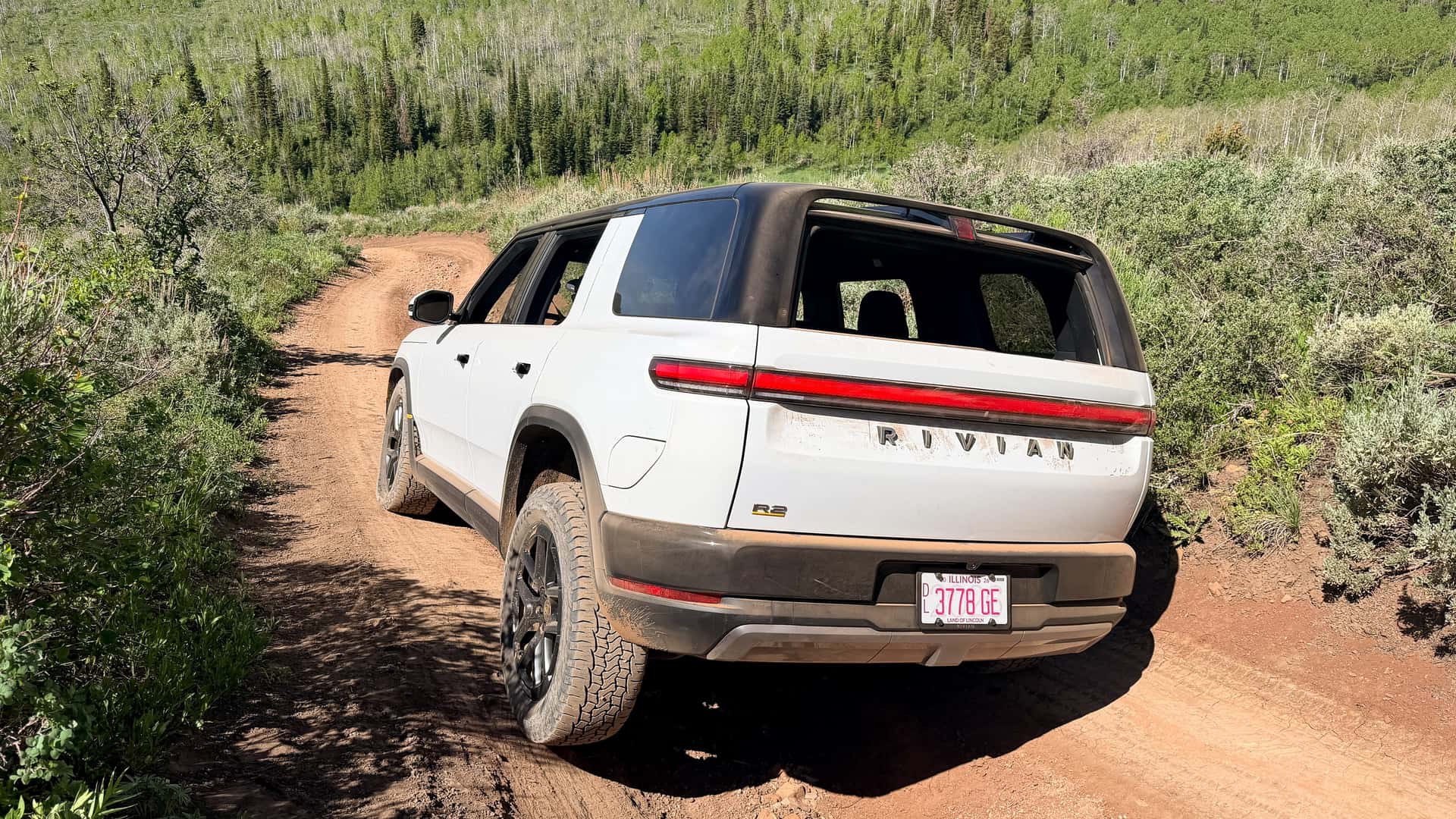
That exemption means a Rivian R2 – whose Performance model with Launch package carries a listed price of $57,990 – would still qualify for the rebate, as would Lucid’s Air sedan (starting at $70,900) and its upcoming Gravity SUV (starting at $79,900). The source notes that Rivian’s entry‑level version is slated to hit $45,000, but the current high‑end pricing would be disqualified under the caps if not for the carve‑out. Lucid’s smaller Cosmos crossover, slated to ship next year, also benefits from the same exemption.
Cash payments, rather than tax credits, are the chosen delivery method. Buyers and lessees receive the rebate directly on the “hood,” eliminating the need to claim a credit on a future tax return. The bill also obliges participating manufacturers to foot half of each incentive, a cost‑sharing model that the source says CARB is targeting at $3,500 for new EV purchases – $1,750 from the state and $1,750 from the manufacturer – with used‑vehicle incentives at half that amount.
Legislative language anticipates potential legal challenges. The bill includes a safeguard: “If a court of competent jurisdiction holds that the application of paragraph (2) is invalid, the remainder of this section shall remain in force and effect as if this section had not included paragraph (2).” This clause suggests lawmakers expect pushback from out‑of‑state automakers who will not receive the same price‑cap waiver.
Tesla, which still assembles cars at its Fremont plant but moved its corporate headquarters to Austin, Texas in 2021, is explicitly excluded from the carve‑out. The source points out that many Tesla models already fall under the $50,000 cap, but the company will not benefit from the special status granted to Rivian and Lucid.
Beyond the headline numbers, the incentive reflects a broader strategy to keep California’s EV market robust after the federal $7,500 credit vanished in September. The state’s budget directs the Air Resources Board (CARB) to design the program, and the source reports that CARB is targeting the $3,500 figure for new vehicles, with the manufacturer matching the state’s contribution.
"Market research shows that more than 80 percent of first‑time drivers who buy or lease an electric vehicle become permanent EV drivers," the American EV Jobs Alliance said. "making first‑time buyer incentives one of the most efficient ways to grow long‑term demand and strengthen American EV manufacturing."
Audit & Contradictions
The announcement, as reported by InsideEVs, is the sole source for every specific detail – from the $135 million allocation to the exact $3,500 incentive target. Independent corroboration from other outlets is absent, so each claim must be treated as single‑source. The fact‑check audit flags the following statements as single‑source and therefore hedged:
- California lawmakers and Governor Gavin Newsom have agreed to allocate $135 million for a new EV incentive program.
- The incentive will be limited to first‑time EV buyers and will apply price caps of $50,000 for new vehicles and $25,000 for used vehicles, except for California‑headquartered zero‑emission vehicle companies.
- Rivian and Lucid, as California‑based EV manufacturers, will qualify for the incentive regardless of their vehicles’ MSRP, bypassing the price caps.
- The incentive will be provided as a cash‑on‑the‑hood payment rather than a tax credit, with participating manufacturers covering half of each incentive amount.
- CARB is targeting a $3,500 incentive for new EV purchases ($1,750 from the state and $1,750 from the manufacturer) and half that amount for used EVs.
The fact‑check summary notes a “Low” contradiction level, meaning no contradictory reporting was identified. The announcement does not disclose how the $135 million will be funded over time, nor does it detail the mechanism for verifying buyer attestation or enforcing the manufacturer cost‑share.
Future Outlook
If the carve‑out stands, Rivian and Lucid could enjoy a competitive edge in California’s largest EV market, potentially attracting early adopters who might otherwise choose more affordable models from out‑of‑state brands. The state’s reliance on manufacturer co‑funding raises the risk that a shift in corporate strategy – for example, if Rivian scales back U.S. production – could jeopardize the rebate’s sustainability.
Legislators appear prepared for legal challenges, but the clause preserving the rest of the incentive if paragraph (2) is struck down suggests the program’s core – cash rebates for first‑time buyers – will survive. Should courts invalidate the exemption, Rivian and Lucid would still compete for the same pool of buyers, but the price‑cap barrier could limit their sales to higher‑priced segments.
Beyond California, other states watching the federal credit’s demise may consider similar subsidy structures. The California model, with its manufacturer cost‑share and price‑cap carve‑out, could become a template for jurisdictions seeking to nurture local EV manufacturers while still offering broad consumer support.
For now, the $135 million incentive remains a promise on paper. Its real impact will hinge on CARB’s final rulemaking, the willingness of manufacturers to shoulder half the cost, and the legal durability of the California‑headquartered exemption. Until those pieces fall into place, the program’s headline appeal – cash rebates for first‑time buyers – masks a complex policy experiment that could reshape the state’s EV ecosystem.