Lead Hook
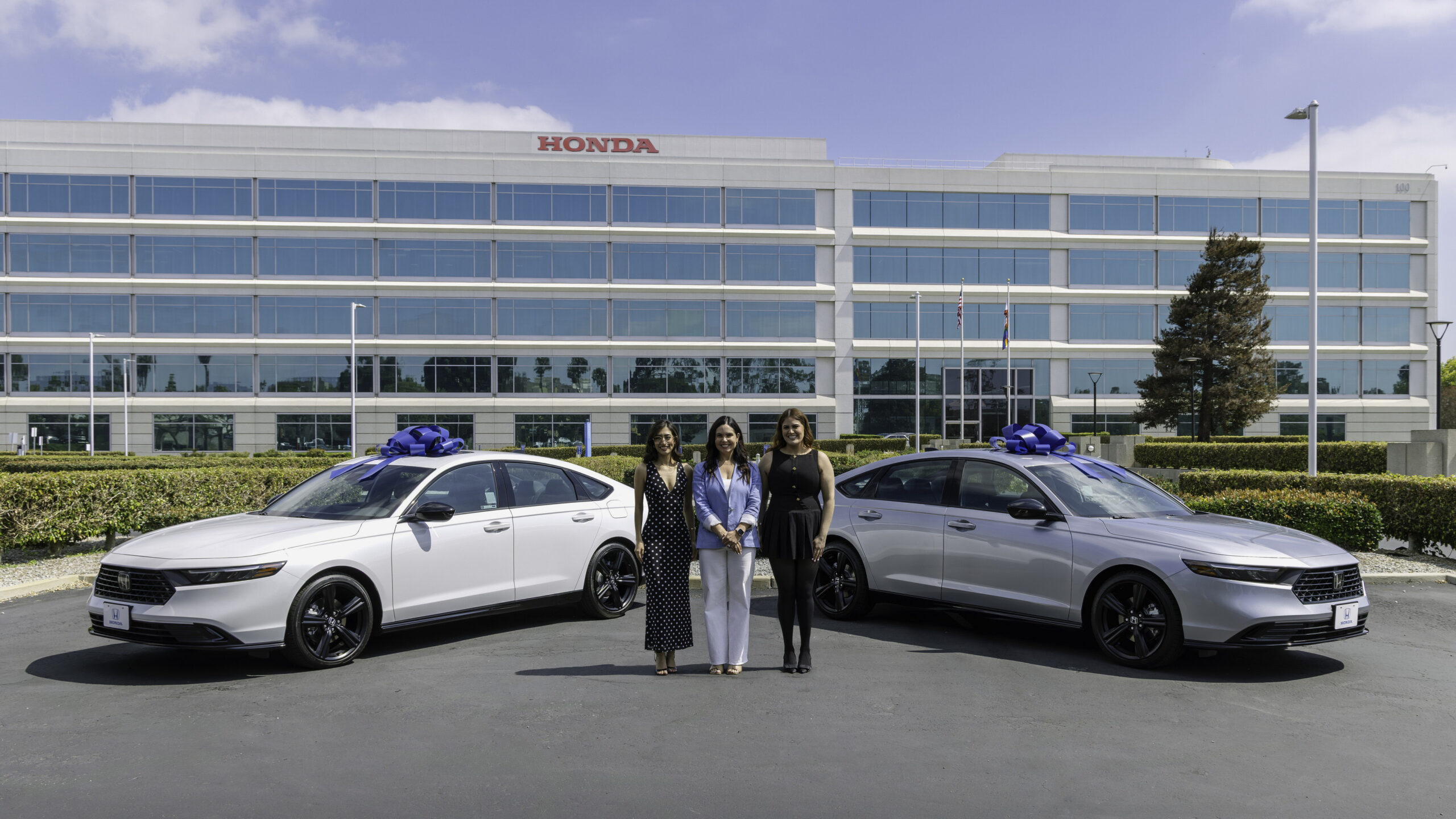
When a Southern California driver named Andrea bought the 15 millionth Honda Accord, the headline read like a triumph of nostalgia. Yet the underlying narrative is less about a single sedan and more about how a legacy model is being repurposed as a hybrid workhorse to keep Honda competitive in an industry racing toward full electrification. The milestone, announced by Carscoops, arrives at a moment when U.S. automakers are scrambling to meet stricter fuel‑economy standards, secure chip supplies, and justify domestic plant investments. Understanding what the numbers conceal reveals a strategic pivot that could reshape the sedan market and the supply chains that support it.
Deep Dive
According to the Carscoops report, Honda has now sold 15 million Accords in the United States, a figure that makes the model the best‑selling passenger car in the country over the past half‑century – a claim the company itself makes. The 15 millionth unit was a 2026 Accord Sport‑L Hybrid, purchased by Andrea, while her younger sister secured the 15,000,001st on the same day. Though the human‑interest angle is compelling, the real significance lies in two trends that the announcement does not spell out.
Hybrid dominance as a bridge to electrification. The same source notes that the hybrid version now accounts for more than half of Accord sales. That shift is not merely a marketing footnote; it reflects Honda’s response to tightening Corporate Average Fuel Economy (CAFE) regulations and the growing consumer appetite for fuel‑efficient vehicles without the range‑anxiety of pure EVs. By converting a best‑selling sedan into a hybrid, Honda can extract incremental miles per gallon across a massive existing customer base, thereby improving fleet‑wide emissions metrics while buying time to develop fully electric replacements.
Domestic production as a supply‑chain safeguard. The article states that more than 13 million Accords have been built in Ohio since Honda began U.S. production in 1982. While this figure is presented as a point of pride, it also underscores the strategic value of the Marysville plant in a landscape disrupted by semiconductor shortages and geopolitical trade tensions. Keeping a high‑volume model on American soil reduces exposure to import tariffs and shortens lead times for critical components, especially as hybrid powertrains demand both traditional engine parts and electric modules.
Economic ripple effects. A sedan that sells in the millions supports a network of suppliers, from Ohio’s stamping shops to Midwest battery‑module assemblers. The hybrid‑centric sales mix means an increased demand for electric‑drive components, prompting local vendors to invest in new tooling and workforce training. This, in turn, creates a feedback loop that can make the Ohio plant a hub for future electrified models, positioning Honda to compete with rivals that have already announced dedicated EV platforms.
Honda’s own executive remarks, quoted in the source, capture the sentiment behind the numbers:
"On behalf of Honda associates here in America and worldwide, I want to express our sincere appreciation and gratitude to the 15 million customers who purchased an Accord, including Andrea and Alondra,"and
"As we celebrate the 50th anniversary of Accord, together with Honda dealers nationwide, we are committed to building on the quality, reliability and enduring fun‑to‑drive spirit of Accord for the next 50 years."The language emphasizes continuity, but the underlying strategy is a calculated shift toward hybrid technology that leverages existing manufacturing assets.
Industry observers have noted that the Accord’s hybrid success may have prompted Toyota to accelerate its own hybrid‑only strategy for the Camry, a direct competitor. While the source does not reference this, the parallel suggests a broader market movement: sedans that once competed on gasoline efficiency are now vying on hybrid integration. The shift also pressures other OEMs, such as Kia and Hyundai, to extend warranty coverage and improve hybrid offerings to retain market share.
Audit & Contradictions
The Carscoops article provides a clear picture of the sales milestone, but several key claims appear only in that single source and therefore require cautious framing. The buyer’s name (Andrea), the specific model (2026 Accord Sport‑L Hybrid), and the Ohio production total of “more than 13 million” are all reported solely by Carscoops. Likewise, Honda’s assertion that the Accord is the best‑selling passenger car over the past 50 years, the statement that hybrids now represent “more than half of sales,” and the tie‑in to the model’s 50th anniversary are not corroborated by independent outlets. The fact‑check audit flags these as single‑source claims, meaning they should be presented as Honda’s own statements rather than independently verified facts.
Other outlets—Carscoops, Honda Newsroom, CarBuzz, and Autoguide.com—confirm the core milestone of 15 million units sold and the sister’s purchase of the 15,000,001st vehicle. No contradictions have been identified across the coverage, and the overall contradiction level is low. Nonetheless, the lack of external verification for the production and market‑share figures suggests that readers should treat them as company‑provided data pending independent analysis.
Future Outlook
Honda’s hybrid‑centric Accord may set a template for how legacy models evolve in the EV transition era. If the hybrid share continues to grow, the Accord could become a benchmark for other midsize sedans seeking to balance regulatory compliance with consumer familiarity. Competitors are likely to respond by either accelerating full‑electric rollouts—e.g., Toyota’s announced EV platform for the Camry—or by deepening hybrid lineups to protect existing market positions.
From a supply‑chain perspective, the Ohio plant’s high volume could attract additional investment for battery‑module assembly, creating a domestic hub that lessens reliance on overseas component imports. Policymakers focused on “Made in America” incentives may view the Accord’s success as evidence that supporting hybrid production can bridge the gap to full electrification while preserving jobs.
Ultimately, the 15 millionth Accord is more than a sales badge; it is a data point that illustrates how a storied nameplate can be repurposed to meet emerging regulatory, economic, and consumer demands. How Honda leverages this momentum—by expanding hybrid options, investing in domestic supply chains, or launching a fully electric successor—will determine whether the Accord remains a market leader in the next half‑century.