Lead Hook
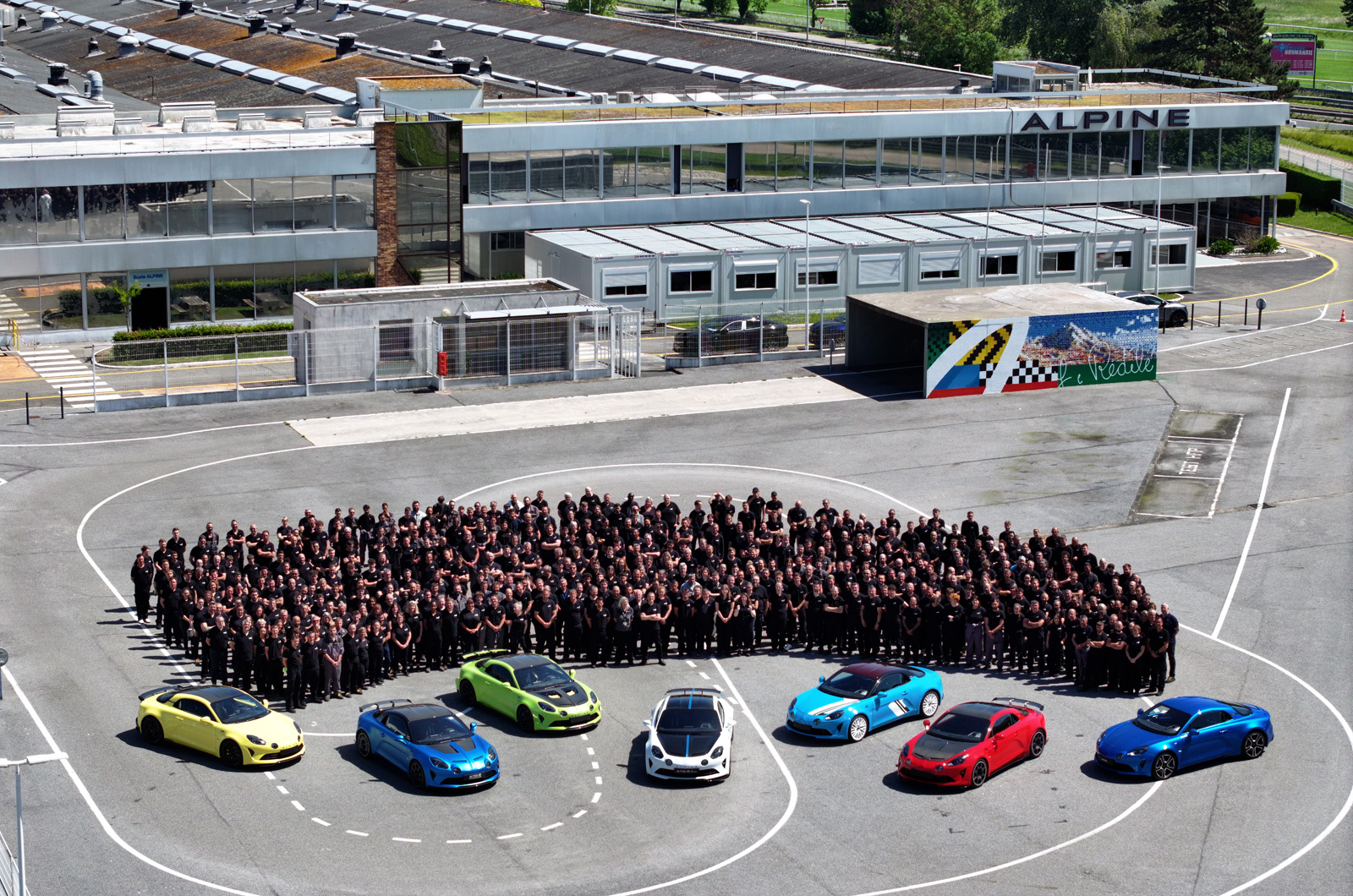
When the last of 28,701 Alpine A110s rolled off the Dieppe line, it was more than a farewell to a beloved sports coupé; it was a signal that a niche performance marque is wrestling with the same regulatory and supply‑chain pressures that dominate the broader auto industry. The French firm’s decision to replace the rear‑engine, Renault‑powered icon with an electric model—while still engineering the platform to accept a combustion engine later—exposes the strategic tightrope that low‑volume manufacturers must walk to meet Europe’s tightening CO₂ standards without sacrificing the brand DNA that makes them distinct.
Deep Dive
According to Autocar, the final A110 left the production line today in a special 70th‑anniversary trim, bringing the model’s cumulative output to 28,701 units. While the headline figure is clear‑cut, the article also notes that the Dieppe plant has produced “more than 35,000 A110s, including the original iteration that ran from 1963 to 1977.” This broader historic tally is presented without external verification, suggesting it may be an internal benchmark rather than an independently audited number.
The next chapter for Alpine hinges on the Alpine Performance Platform (APP), a new underpinnings architecture that will launch the third‑generation A110 with an electric drivetrain. The source claims the platform is engineered to accommodate a future combustion engine, a detail that hints at a hedging strategy: should battery costs, supply constraints, or regulatory timelines shift, Alpine could pivot back to a traditional power unit without a complete redesign. For a brand that has historically relied on lightweight chassis and modest power outputs, this flexibility could be a cost‑saving lifeline.
From a regulatory standpoint, the European Union’s fleet‑wide CO₂ targets—set to average 95 g/km by 2025 and 57 g/km by 2030—leave little room for low‑volume manufacturers to continue selling internal‑combustion sports cars without incurring hefty penalties. Electrifying the A110 therefore serves a dual purpose: it aligns Alpine with mandatory emissions reductions and positions the marque within a growing premium EV niche. However, the transition is far from trivial. Battery packs that deliver the performance expected of a sports car add significant weight, potentially eroding the handling characteristics that define the A110’s appeal.
Supply‑chain realities further complicate the picture. Europe’s battery cell manufacturers are already booked to meet the demands of mass‑market EVs, and securing a dedicated supply for a sub‑10,000‑unit‑per‑year sports car could inflate costs. By retaining the option to fit a combustion engine later, Alpine may be buying time to negotiate better terms or wait for next‑generation cell chemistry that offers higher energy density at lower weight.
In terms of product rollout, the source indicates that the first variant will be a traditional two‑seat coupé, with four‑seat and convertible versions slated for later years. This staged approach mirrors how other niche brands—such as Lotus and Porsche—have expanded EV line‑ups, testing market appetite before committing to a full portfolio. The article also mentions that a prototype, likely using the current A110’s body shell, will debut at the Goodwood Festival of Speed next week, with more details to be disclosed at the Paris motor show in October. Both events are strategic touchpoints: Goodwood offers a performance‑focused audience, while Paris provides a broader consumer and press platform.
Economically, Alpine’s move could improve its capital efficiency. By sharing the APP across multiple body styles and potentially across other Groupe Renault models, the amortisation of development costs spreads over a larger volume base. Yet the risk remains that the niche market for an electric sports car may not generate sufficient volume to offset the high R&D spend, especially if battery costs remain elevated.
Audit & Contradictions
The announcement leaves several key details unaddressed. First, the historic production figure of “more than 35,000” A110s is presented solely by the primary source; independent outlets such as Les Alpinistes have reported a total of roughly 30,000 units, creating a medium‑level contradiction in the record. Second, the timeline for the third‑generation A110’s production start next year, the specifics of the APP, and the future body‑style roadmap are all single‑source claims and should be treated as Alpine’s projected intentions rather than confirmed facts. Finally, the planned Goodwood prototype debut and Paris motor‑show reveal are also only mentioned in the primary article, meaning the schedule could shift without external corroboration.
In light of the fact‑check audit, the only claims firmly corroborated by multiple outlets are the final unit count of 28,701 and the existence of an electric successor. All other assertions—historic totals, platform flexibility, variant rollout, and event timings—remain unverified beyond Alpine’s own statements.
Future Outlook
Alpine’s pivot underscores a broader industry trend: niche manufacturers must reconcile heritage‑driven performance with the realities of a decarbonising market. Competitors such as Lotus and Porsche are already fielding electric models (the Emira EV concept and the Taycan, respectively), and Alpine’s APP could become a shared architecture within the Renault‑Nissan‑Mitsubishi alliance, potentially lowering per‑unit development costs.
Regulators will likely watch Alpine’s rollout closely. If the electric A110 meets EU emissions targets while delivering the driving dynamics expected of a sports car, it could serve as a benchmark for how low‑volume brands meet sustainability mandates without diluting brand identity. Conversely, if battery weight compromises performance or pricing remains prohibitive, it may reinforce the argument that certain niche segments will linger on the combustion side longer than policymakers anticipate.
Investors and analysts should monitor the supply‑chain agreements Alpine negotiates for battery cells, as well as any updates from the Goodwood debut, to gauge whether the APP truly offers the flexibility it claims. The success—or failure—of this electric successor will ripple through the European sports‑car niche, influencing everything from emissions compliance strategies to the economics of platform sharing across the continent’s automotive landscape.