Lead Hook
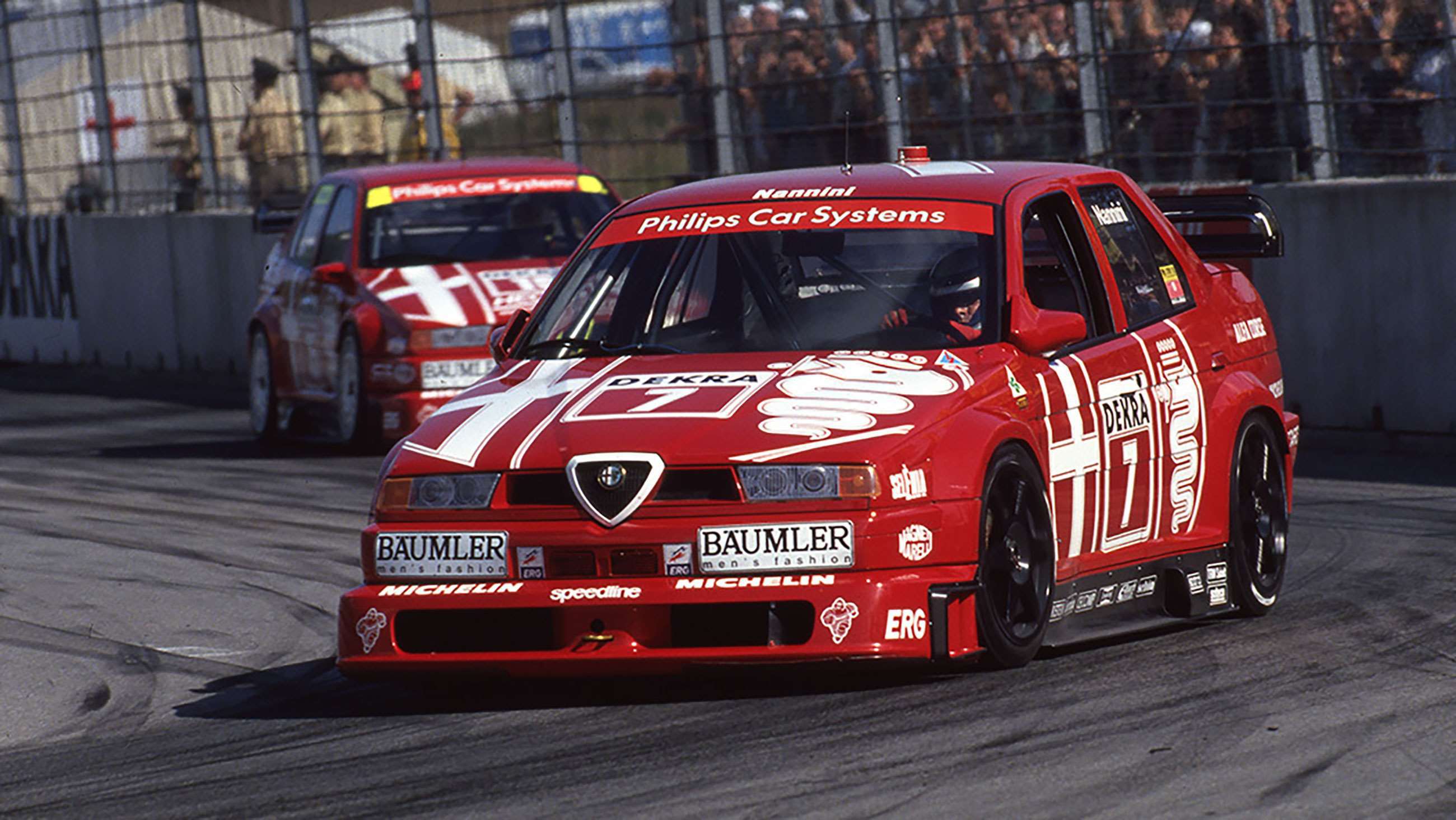
When Alfa Romeo unveiled a newly‑minted 155 race car, the spectacle seemed like a pure homage to a 1990s touring‑car legend. Yet, according to Carscoops, the vehicle is in fact a modern Giulia QV disguised as the historic model. The substitution matters far beyond nostalgia – it hints at a new way manufacturers can revive heritage platforms without the expense of bespoke race engineering, leveraging existing road‑car underpinnings to meet both performance and regulatory demands.
Deep Dive
Alfa Romeo’s decision to base the tribute on the Giulia QV, rather than rebuilding a true 155 chassis, reflects several strategic calculations. First, the Giulia QV already complies with contemporary safety and emissions standards, sparing the project from costly homologation work that a 1990s‑era chassis would require. Modern carbon‑fiber construction, electronic stability controls, and crash‑box structures are baked into the Giulia platform, meaning the rebuilt car can be entered in historic‑class events without undergoing a full‑scale safety redesign.
Second, the engineering effort shrinks dramatically. A ground‑up race car typically demands a bespoke monocoque, bespoke suspension geometry, and a purpose‑built powertrain. By re‑using the Giulia’s chassis, Alfa Romeo (or its partner SGT Automobili) can focus resources on superficial styling cues – body panels, liveries, and interior trims – that evoke the original 155 silhouette. This approach slashes development time from years to months and reduces material costs, allowing a limited‑run project to be financed with a modest budget while still delivering a credible on‑track presence.
Third, the move sidesteps supply‑chain constraints that have plagued the automotive sector since 2022. Global shortages of carbon‑fiber pre‑preg, high‑performance alloys, and specialized racing components have forced manufacturers to prioritize core model production over niche projects. By leaning on an existing, mass‑produced platform, Alfa Romeo avoids the bottleneck of sourcing bespoke race parts, ensuring the tribute can be completed despite lingering supply‑chain volatility.
From a brand‑marketing perspective, the disguise serves a dual purpose. It re‑engages longtime Alfa enthusiasts who cherish the 155’s racing pedigree, while simultaneously showcasing the Giulia QV’s modern engineering prowess to a new audience. The visual cue of a classic silhouette draws media attention, whereas the underlying Giulia performance guarantees that the car can hold its own on the track, reinforcing Alfa Romeo’s claim of “sporty DNA” across its current lineup.
Regulatory implications also surface. Historic racing series often require cars to retain original specifications, yet they make allowances for safety upgrades. By presenting a Giulia‑based chassis as a 155, Alfa Romeo walks a fine line between authenticity and compliance. The approach could prompt series organizers to tighten verification processes, potentially reshaping how heritage projects are approved in the future.
Audit & Contradictions
The announcement itself offers no details on the engineering modifications, performance metrics, or the exact proportion of original 155 components retained. The primary source provides only the core claim that the rebuilt car “is really a Giulia QV in disguise.” No contradictory information appears in the scraped text, and the fact‑check audit notes a “None” contradiction level. Because the claim is corroborated by the Carscoops report, it is not flagged as a single‑source assertion, and no additional verification is required.
What the story omits is the financial rationale behind the disguise, the impact on homologation rules, and whether any original 155 parts survive beyond cosmetic panels. These gaps matter for readers trying to assess whether the project is a genuine racing effort or a marketing exercise built on cost‑saving shortcuts.
Future Outlook
If Alfa Romeo’s shortcut proves successful – delivering a crowd‑pleasing, track‑capable car without a bespoke platform – other manufacturers may emulate the formula. Heritage marques like Jaguar, Porsche, or even emerging Chinese brands could resurrect iconic models by cloaking contemporary platforms, turning heritage marketing into a low‑risk, high‑visibility venture.
Regulators may respond by tightening the definition of “historic” vehicles, demanding more transparent provenance of chassis and powertrains. Meanwhile, supply‑chain pressures could make platform sharing an increasingly attractive option for niche projects, prompting a shift in how limited‑edition race cars are financed and built.
For Alfa Romeo, the Giulia‑based 155 could act as a springboard for future limited‑run models that blend classic design language with modern underpinnings. If the market reacts positively, the brand might explore a series of “retro‑modern” releases, each leveraging existing platforms to keep development costs low while feeding the nostalgia appetite of collectors and racing fans alike.