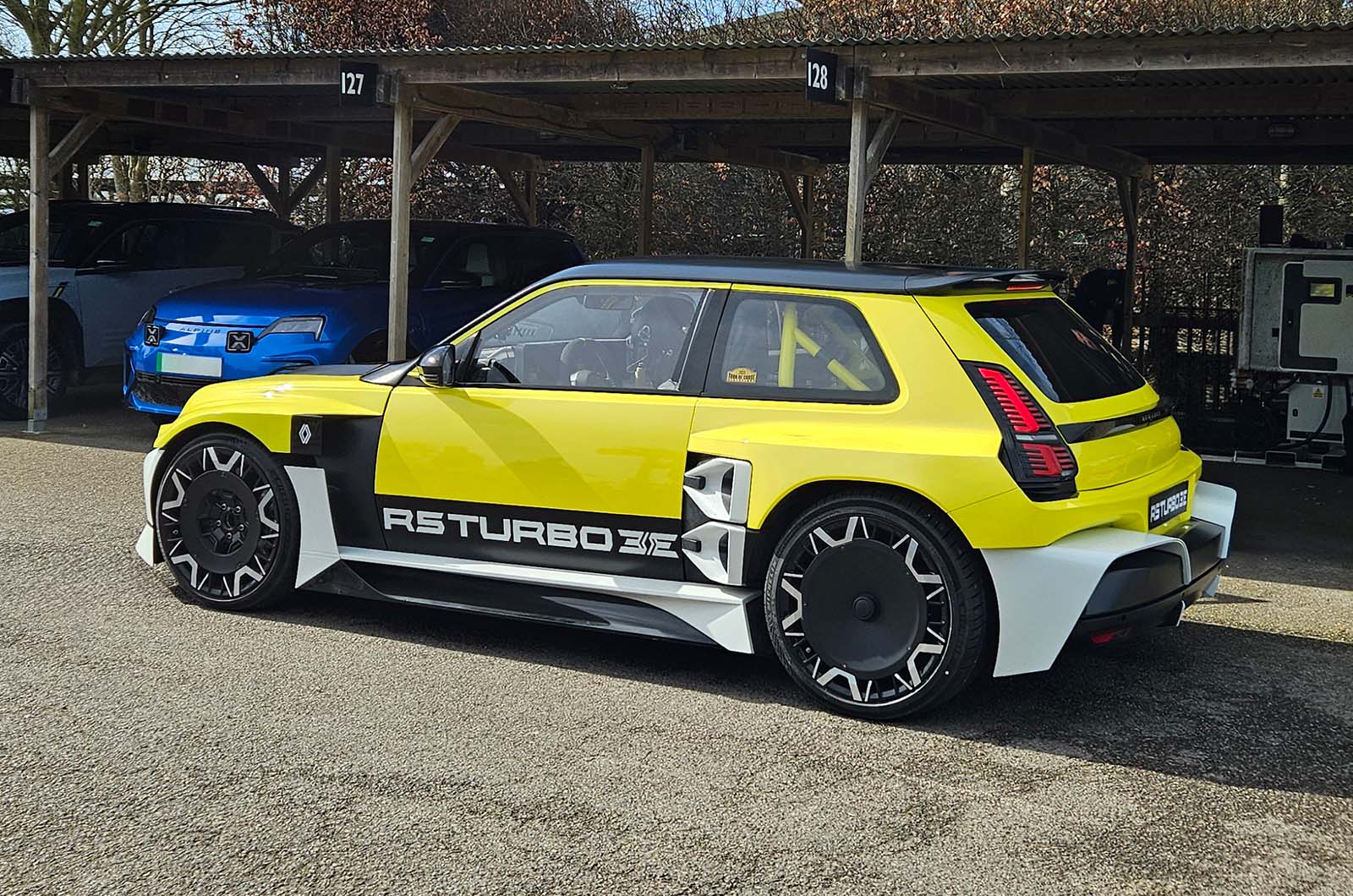
Lead Hook
Renault’s upcoming 5 Turbo 3E promises a jaw‑dropping 550 bhp from wheels that spin themselves, but the headline masks a deeper risk: the very technology that makes the car possible may also create a new bottleneck for the electric‑vehicle (EV) industry. If the engineering compromises and proprietary supply chain around in‑wheel motors (IWMs) cannot be resolved at scale, the hype surrounding ultra‑high‑performance EVs could stall the broader market transition.
Deep Dive
According to Autocar, Protean Electric’s IWM technology will be the heart of Renault’s 5 Turbo 3E, slated for sale in early 2027 as the first European car to be fitted with IWMs. The powertrain is rear‑wheel drive, delivering 550 bhp and 3,540 lb‑ft of torque, and it can sprint from 0‑62 mph in under 3.5 seconds. Those figures place the 5 Turbo 3E squarely in the hyper‑car arena, yet the underlying engineering narrative is far more nuanced.
Protean’s baseline ‘off‑the‑shelf’ PD18 IWM produces 138 bhp. The company had only two years to develop a motor package that could meet Renault’s performance brief, relying on further development and set‑up work from the Alpine engineering team, according to the same source. The jump from 138 bhp per wheel to a combined 550 bhp required not just software tweaks but a re‑thinking of core hardware, thermal management, and integration with traditional vehicle systems.
One of the most cited challenges is unsprung mass – the extra weight that sits directly on the wheel hub, which can degrade ride quality and handling. Protean commissioned independent studies and worked with Lotus Engineering on the Protean‑Mahle VW Golf platform. The key conclusion, as reported by Autocar, was that the negative impact on ride and handling could be offset by adopting stiffer suspension components and settings. While the technical fix is plausible, it raises questions about cost and the need for bespoke suspension tuning on every IWM‑equipped model, potentially limiting the technology’s applicability to niche, high‑price vehicles.
Brake integration also required a novel approach. The disc rotor is bolted to the motor assembly, with the caliper mounted on the suspension and acting on the inside diameter of the disc. Protean has collaborated with brake manufacturer Alcon since 2011, and testing on vehicles up to 3,500 kg reportedly matches the performance of standard, non‑EV brakes. This solution, while innovative, adds complexity to the wheel‑assembly and may complicate serviceability and parts supply, especially for independent garages.
Thermal management is another hidden hurdle. Each IWM houses its own integrated inverter, demanding a patented cooling system that blends hardware and software controls. The source notes that Protean holds more than 320 patents covering IWM solutions for light commercial, autonomous, and passenger vehicles. While a robust patent portfolio can protect innovation, it also concentrates critical technology within a single supplier, creating a potential choke point for automakers seeking to diversify their power‑train sources.
Finally, Protean’s Protean360+ wheel‑corner module, capable of 360° rotation, hints at future urban‑mobility concepts but remains speculative. The article does not provide details on development timelines or commercial partners, leaving the claim unsubstantiated beyond the company’s own description.
Audit & Contradictions
The Autocar piece is the sole source for every major claim about the 5 Turbo 3E’s performance, development timeline, and engineering solutions. Fact‑check data confirms that all principal assertions – the 2027 launch, 550 bhp output, two‑year development window, unsprung‑mass mitigation, brake integration, and the 320‑plus patent count – are single‑source and therefore must be presented with appropriate hedging. No independent outlet has corroborated these specifics, and the fact‑check audit notes a low contradiction level, meaning no outright disputes have emerged yet.
What the announcement does not say includes:
- The projected cost premium for the IWM system and any impact on the 5 Turbo 3E’s pricing strategy.
- Supply‑chain risks associated with relying on a single IWM supplier for a production‑volume vehicle.
- Regulatory scrutiny of unsprung‑mass‑related safety standards in Europe.
- Long‑term durability data beyond the stated 186,000‑mile design life.
- Plans for scaling the technology to more mainstream models.
Because the source does not address these gaps, readers should treat the performance claims as aspirational until third‑party validation emerges.
Future Outlook
If Protean’s solutions prove reliable in the 5 Turbo 3E, the IWM concept could carve out a high‑performance niche where the added cost and engineering complexity are justified by brand halo value. However, the need for stiffer suspension, bespoke brake architecture, and intensive thermal management suggests that mass‑market adoption will require either a dramatic reduction in component cost or a breakthrough that eliminates unsprung‑mass penalties altogether.
Competitors such as Tesla, Rivian, and emerging Chinese firms are pursuing alternative approaches – integrated axle drives, in‑board motors, or hybrid architectures – that avoid the unsprung‑mass dilemma. Should those alternatives achieve comparable performance with lower system complexity, they could outpace IWM‑centric strategies in volume markets.
Regulators may also play a role. European safety standards increasingly scrutinize wheel‑hub components for crash performance and durability. If future testing uncovers unforeseen failure modes, approval timelines could be delayed, further constraining the rollout of IWM‑based models.
In the short term, the 5 Turbo 3E will serve as a high‑visibility testbed. Its success or failure will provide the industry with concrete data on whether the engineering trade‑offs of IWMs can be reconciled with cost, serviceability, and regulatory compliance – the three pillars that determine whether a technology moves beyond the showroom floor to the production line.