Lead Hook
When Tesla released a First Responders Guide on June 27, 2026, it did more than hand emergency crews a checklist—it revealed a decisive design choice: the production Cybercab will not carry a steering wheel, brake or accelerator pedals. That omission is more than a technical footnote; it signals Tesla’s intent to accelerate a fully driver‑less robotaxi fleet while sidestepping the engineering, cost and regulatory hurdles that come with manual controls.
Deep Dive
According to Teslarati, the guide states, “A Cybercab equipped with steering wheel, brake pedal, and an acceleration pedal is typically an engineering or test vehicle, and operates at SAE Level 2 autonomy. Cybercab is not typically equipped with a steering wheel or acceleration and brake pedals.” The document makes clear that any Cybercab with a traditional cockpit is classified as a test unit, not a production model destined for public roads.
That distinction matters because SAE Level 2 autonomy still requires a human driver to monitor the system and intervene with manual inputs. By removing the steering column and pedal assembly from the production version, Tesla pushes the vehicle into a higher autonomy bracket—effectively a Level 4 platform that can operate without driver oversight in defined environments. The guide’s language also hints at built‑in safety monitors that can assist in “precarious situations or emergency,” suggesting a software‑centric safety net replaces the mechanical fallback of a steering wheel.
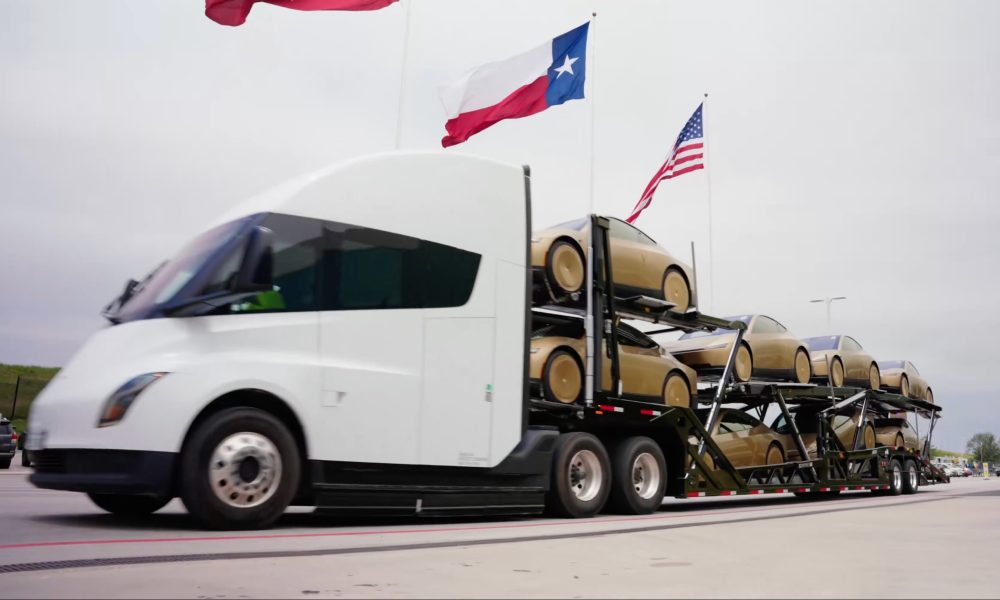
From a manufacturing perspective, eliminating steering, brake and accelerator hardware trims the bill of materials dramatically. Fewer stamped steel parts, fewer actuators, and a simpler wiring harness translate into lower capital expenditures per unit. The guide notes that earlier in the year, Cybercabs spotted at Giga Texas lacked any steering wheel or pedals, confirming that the production line has already been re‑engineered to omit these components.
Supply‑chain implications are equally stark. Steering columns and pedal assemblies are sourced from a network of Tier‑1 suppliers that also serve the broader automotive market. By standardising a manual‑free architecture, Tesla reduces its reliance on external vendors for these legacy components, potentially improving lead‑time resilience and insulating the program from the parts shortages that have plagued the industry since 2022.
Regulatory fallout is the less‑talked‑about side of this shift. U.S. safety regulators have historically required a manual override for any vehicle that operates beyond Level 2. Tesla’s documentation positions the Cybercab as a vehicle that “is not typically equipped with a steering wheel or acceleration and brake pedals,” which could force the National Highway Traffic Safety Administration (NHTSA) to evaluate whether existing crash‑worthiness standards apply to a vehicle that never had a driver interface. The presence of “engineering or test vehicles” with manual controls, as the guide admits, may become a focal point for regulators seeking a test‑bed to validate safety claims before a full rollout.
Financial analysts have long speculated that a cost‑lean, fully autonomous robotaxi could unlock a new revenue stream for Tesla, especially if the company can avoid the capital outlay required for a traditional driver‑assist fleet. By stripping out manual hardware, Tesla not only reduces per‑unit cost but also shortens the time needed to certify the vehicle for limited‑area deployment, potentially accelerating the path to revenue from ride‑hailing services.
Audit & Contradictions
The First Responders Guide does not address several critical questions: How will emergency crews access the vehicle’s interior without a steering column? What software safeguards exist to prevent unintended motion during a rescue? And how does Tesla plan to meet federal safety standards that were written with manual controls in mind?
All of the key claims about the Cybercab’s lack of manual controls and its classification as a test vehicle are sourced solely from the Teslarati article. The fact‑check audit notes that these statements are “single‑source” and lack independent corroboration from other outlets. No contradictions were identified, and the audit rates the overall contradiction level as “Low.”
Future Outlook
If Tesla proceeds with a steering‑free Cybercab, competitors will feel pressure to streamline their own autonomous‑vehicle designs. Traditional automakers that rely on legacy steering systems may face higher per‑unit costs and longer certification timelines, potentially ceding market share in the emerging robotaxi niche.
Regulators, meanwhile, will likely issue guidance—or even new rules—specific to vehicles that never have a driver interface. The NHTSA could require additional tele‑operation capabilities, remote‑shutdown mechanisms, or mandatory on‑board safety monitors to satisfy public‑safety concerns. Tesla’s early disclosure in the First Responders Guide may be a pre‑emptive move to shape that regulatory conversation.
Investors should watch for any updates to the guide or subsequent filings that clarify how Tesla intends to meet safety standards without a steering wheel. A clear regulatory pathway could unlock a multi‑billion‑dollar revenue stream, while a protracted approval process could delay the robotaxi rollout and erode the cost advantage the manual‑free design promises.
A Cybercab equipped with steering wheel, brake pedal, and an acceleration pedal is typically an engineering or test vehicle, and operates at SAE Level 2 autonomy. Cybercab is not typically equipped with a steering wheel or acceleration and brake pedals.
— Tesla First Responders Guide, as reported by Teslarati