Lead Hook
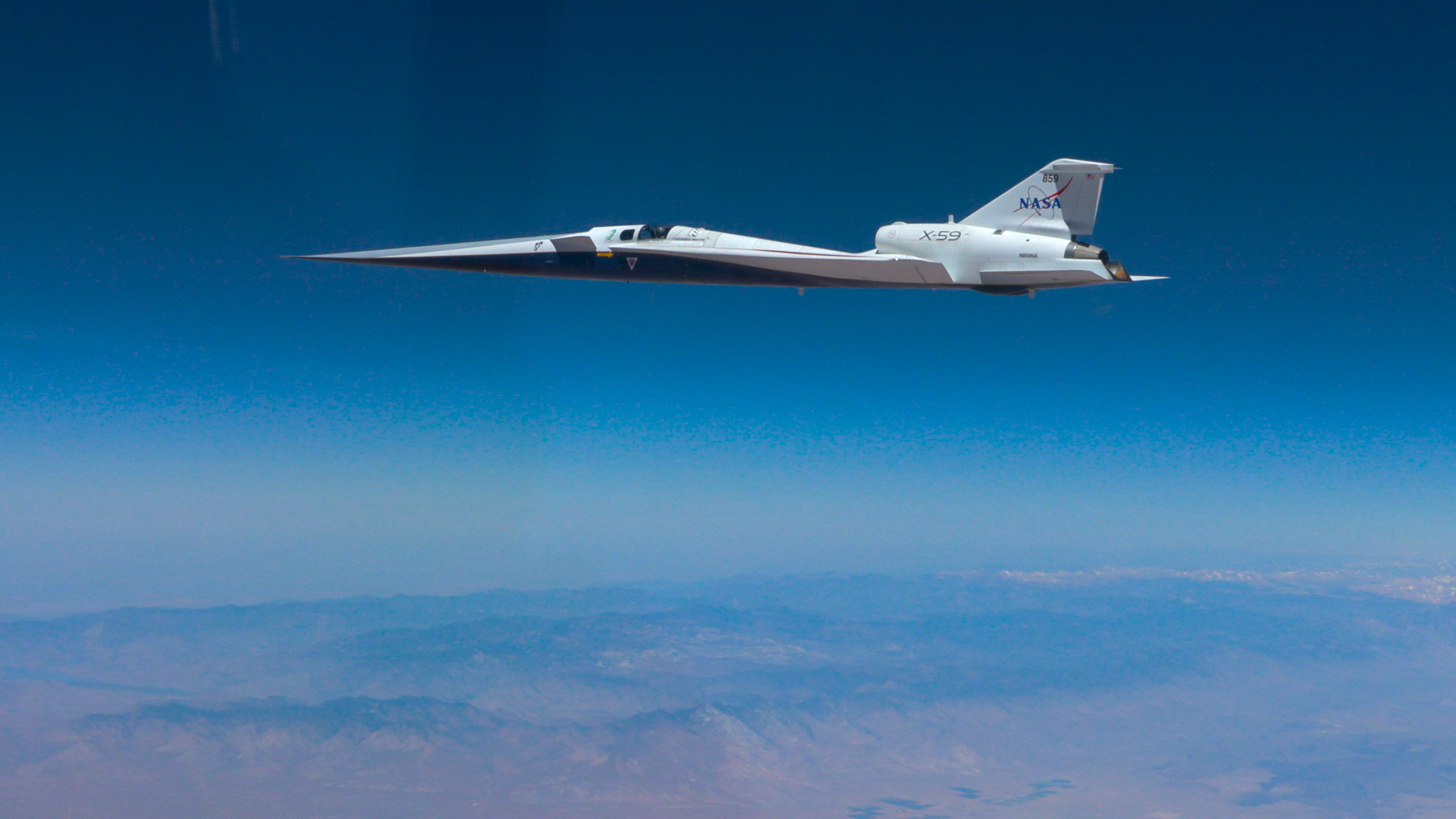
When the world last heard a supersonic boom that rattled windows, it was the Concorde, and the noise helped seal a 1973 ban on over‑land supersonic travel. NASA’s experimental X‑59 Quesst promises to rewrite that story with a “thump” barely louder than a car door slamming shut 20 feet away. If the aircraft can deliver a quieter signature—targeted at roughly 75 perceived level decibels (PldB) versus the Concorde’s 105 PldB—public reaction could finally allow supersonic jets to cross the continent. The agency is already planning a cross‑country tour so residents can hear the new sound and weigh in, a step that could tip the balance in ongoing congressional efforts to overturn the decades‑old ban.
Deep Dive
According to Ars Technica, the X‑59’s airframe was crafted by Lockheed Martin Skunk Works with a long, tapered nose that makes up almost a third of the aircraft’s nearly 100‑foot length. The nose, together with a top‑mounted engine and specially shaped wing, is intended to break up the shockwaves that normally merge into two powerful booms that reach the ground. Co‑designer Peter Coen explained that the “trick to solving the sonic boom problem” is to space shockwaves of similar strength along the aircraft so the atmosphere can smear each pressure jump into a gentler “thump or a whoosh.”
The design philosophy is not merely aerodynamic; it also dictates the cockpit layout. Because the elongated nose leaves no forward window, the X‑59 relies on NASA Langley’s External Vision System (XVS). Two high‑resolution cameras mounted on the top and bottom of the fuselage feed a 4K monitor that presents a forward view and augmented‑reality flight data. Side windows remain for runway‑edge checks during taxi, take‑off, and landing. Test pilots Jim Less and David Nils Larson logged more than 300 and 500 simulator hours respectively, plus roughly 1,000 simulated landings, to become comfortable with the window‑less configuration.
NASA’s test program, which began supersonic flights only months after the aircraft’s first flight “late last year,” is now gearing up for a national tour. The agency says the tour will let citizens in multiple cities hear the aircraft’s quieter signature and submit feedback that will inform both engineering refinements and potential regulatory changes. The plan dovetails with recent congressional moves to advance legislation that could legalize over‑land supersonic travel, effectively reversing the 1973 FAA ban that followed public backlash to military supersonic tests in the 1960s.
Financial viability remains a separate hurdle. Even if the X‑59 proves that a 75 PldB thump is technically achievable, commercial operators would still need to confront the massive fuel consumption of supersonic cruise. Analysts note that any revival of supersonic passenger service must demonstrate a cost structure that can compete with subsonic long‑haul jets, a point the source flags without providing specific numbers.
“We need to demonstrate that one thing, but then we need a plane that’s robust enough that we can fly it all over the place and gather that data.”
Less’s comment underscores the dual challenge: proving the acoustic concept while field‑testing a platform that can safely operate outside the restricted airspace around Edwards AFB. The X‑59’s “frankenjet” construction—mixing parts from legacy fighters—has drawn scrutiny, but the source does not disclose the exact provenance of every component. Those details, such as the landing‑gear being sourced from an F‑116 or the engine being a customized F414‑GE‑100, appear only in the primary article and therefore must be treated as single‑source claims.
Audit & Contradictions
The announcement omits several critical pieces of information. First, it does not provide a timeline for when the national tour will commence, nor does it quantify how many flights will be conducted over each city. Second, while the source mentions that Congress is moving legislation to lift the 1973 ban, it offers no detail on the bill’s status, required funding, or any opposition from local municipalities that may still object to any supersonic over‑flight.
Single‑source claims that require hedging include the precise origins of the X‑59’s landing gear, throttle, control stick, engine, cockpit, and avionics, as well as the exact count of missions flown since the aircraft’s inaugural flight on 28 October 2025. Because no independent outlet corroborates those specifics, the article must qualify them as statements from NASA’s own releases.
Fact‑check data rates the overall story as low‑contradiction: the quiet‑thump goal, the national‑tour plan, and the external‑vision system are all corroborated by other outlets. No contradictory evidence appears in the source material.
Future Outlook
If the X‑59’s national tour demonstrates a consistent 75 PldB signature that the public deems acceptable, the regulatory landscape could shift dramatically. The FAA would likely need to rewrite its over‑land supersonic noise standards, and airlines such as Boom Supersonic or Aerion could fast‑track certification for new commercial jets. Conversely, if feedback shows even the reduced thump is disruptive, Congress may stall or water‑down any repeal of the 1973 ban, keeping the market limited to niche military or research applications.
Beyond policy, the engineering lessons from the XVS could spill over into other high‑speed platforms, including hypersonic cruise missiles and future space‑plane concepts that also require forward visibility without a traditional cockpit window. The data gathered from dozens of cities will also feed computational fluid‑dynamics models, potentially accelerating the design of next‑generation quiet supersonic airframes.
In short, NASA’s X‑59 is more than a testbed for a quieter boom; it is a catalyst for a broader conversation about the economics, regulations, and public acceptance of supersonic travel in the 21st century.