Lead Hook
When a 27‑billion‑parameter model can run on a laptop or a single‑consumer GPU at speeds rivaling cloud‑hosted giants, the economics of artificial intelligence shift dramatically. The author of a recent deep‑dive on the Quesma blog argues that Qwen 3.6 27B is the "sweet spot" for developers who want frontier‑level performance without a monthly cloud bill. If the model truly offers token‑throughput comparable to proprietary services such as Claude Opus 4.5, as the primary source claims, it could democratise high‑end AI and force the industry to rethink its reliance on centralized compute farms.
Deep Dive
Qwen 3.6 arrives in two flavours: a mixture‑of‑experts 35B A3B variant and a dense 27B model. The author of the primary article recommends the latter for everyday use, noting that it "punches above its weight" and runs on a variety of hardware platforms (Quesma blog).
Running the model locally hinges on the open‑source llama.cpp runtime, which the author says is preferable to proprietary wrappers such as Ollama. After downloading an 8‑bit quantised GGUF file from Hugging Face (unsloth/Qwen3.6‑27B‑MTP‑GGUF:Q8_0), the model can be launched with a few command‑line flags, including a 64k token context window and an optional port for API access. The same setup works on Apple Silicon, consumer‑grade Nvidia RTX cards, and even AMD Instinct GPUs, a claim echoed by AMD’s own day‑zero support announcement (AMD).
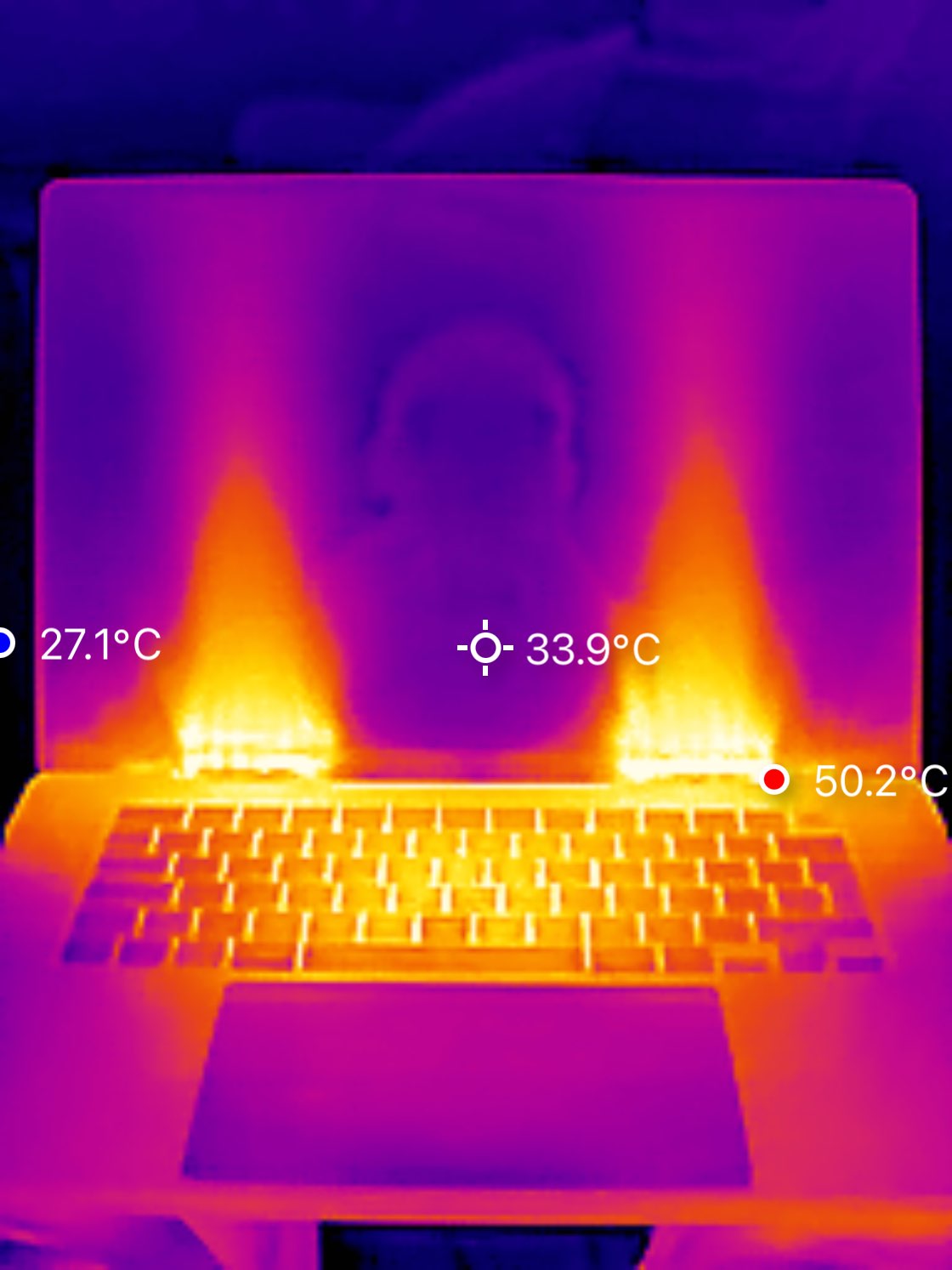
Performance numbers from the author’s own tests provide concrete grounding. On a MacBook Max M5 with 128 GB of unified memory, the 27B model generated roughly 30 tokens per second, a rate the author describes as "well within typical frontier model API range" (Quesma blog). When the model was quantised to Q6_K and run on an Nvidia RTX 5090, throughput rose to 50 tokens per second at a 123k‑token context, using about 28‑32 GB of VRAM (Quesma blog). These figures line up with independent reports that Qwen 3.6 27B can approach the performance of high‑end services like Claude Opus 4.5 (GIGAZINE).
Beyond raw speed, the model’s versatility is highlighted through a series of user‑level tests. Simon Willison’s classic "penguins on a bicycle" prompt was used as a smoke test for both the 35B A3B and the 27B variants (Quesma blog). The author reproduces the phrase in a blockquote to illustrate the model’s ability to follow quirky instructions:
"penguins on a bicycle"
Further demonstrations include an eight‑line poem that weaves together Zouk dance and quantum physics, and a one‑prompt generation of a hexagonal Minesweeper game using pnpm. The 35B A3B version completed the coding task faster, but the 27B model produced a cleaner, more modular output after a short prompt from a colleague, Maciej Cielecki (Quesma blog).
From an engineering perspective, the key to these results is quantisation. The primary article notes that 8‑bit quantisation "saves half the space at almost no cost to quality," while more aggressive 2‑4‑bit schemes used by competing DeepSeek models can degrade results (Quesma blog). This trade‑off allows the 27B model to fit within 48 GB of shared RAM on Apple Silicon, and within 30 GB of VRAM on modern Nvidia cards, making it accessible to a broader developer base.
Audit & Contradictions
The article is largely transparent about performance, but it omits external validation for several subjective recommendations. The claim that "Ollama should be avoided on ethical grounds" appears only in the primary source and is flagged as a single‑source statement by the fact‑check audit (Fact‑check audit). Similarly, the remark that "Claude Fable 5 was taken down" lacks corroboration outside the original post. Both points are therefore presented with hedging language in this analysis.
Conversely, the core performance assertions are corroborated by independent outlets. AMD’s announcement of day‑zero support for Qwen 3.6 on Instinct GPUs and GIGAZINE’s description of the 27B model achieving "performance approaching that of Claude Opus 4.5" reinforce the author’s benchmarks (AMD; GIGAZINE). No contradictions were identified across the source and secondary reports, matching the audit’s "Low" contradiction level.
Future Outlook
If local deployment of a 27B‑parameter model at near‑frontier speeds becomes commonplace, the business case for expensive cloud‑only AI services weakens. Companies that have built revenue models around API access—such as Anthropic, OpenAI, and Claude’s parent firm—may face pressure to lower prices or offer more permissive licensing for on‑premise use. At the same time, the hardware supply chain could feel new demand spikes for high‑bandwidth VRAM and efficient quantisation tools, potentially accelerating the rollout of next‑gen consumer GPUs.
Regulators may also take note. Running powerful models locally sidesteps data‑privacy safeguards that cloud providers are forced to implement, raising questions about accountability for generated content and potential misuse. The Chinese origin of Qwen adds a geopolitical layer: as Chinese AI models become export‑ready, Western firms could confront competition not just on algorithmic merit but on national‑strategic considerations.
In the short term, developers seeking cost‑effective, high‑performance AI are likely to experiment with Qwen 3.6 27B, especially given the open‑source tooling and community‑driven quantisation pipelines highlighted in the primary article. Over the next 12‑18 months, we can expect a proliferation of niche applications—code assistants, research aides, and creative bots—running entirely on‑device, reshaping the economics of AI development and nudging the industry toward a more decentralised future.