Lead Hook
When Ledermair unveiled what it calls Tyrol’s largest electric‑bus depot, the headline focused on the number of chargers and the sleek partnership with Kempower. Yet the real story lies in how the site’s design confronts a silent obstacle that many European transit agencies face: fitting high‑power charging into cramped urban footprints without overloading local grids. The depot’s 2.4 MW of schedule‑based charging, modular power units and pre‑conditioning capabilities reveal a strategic push to make electric buses viable in space‑constrained, grid‑sensitive regions.
Deep Dive
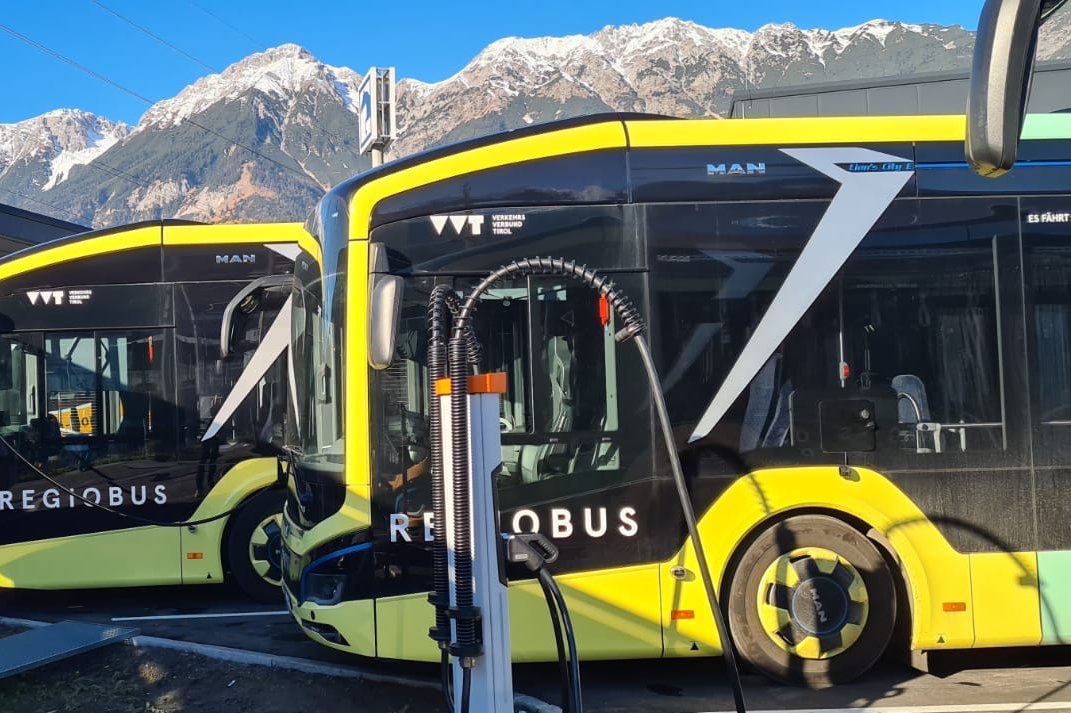
According to electrive, the new facility in Thaur, just outside Innsbruck, houses 28 charging points delivering a combined 2.4 MW of power. Four Kempower Power Units supply this capacity, while the Kempower ChargEye software orchestrates when each bus draws electricity. This schedule‑based approach is more than a convenience; it is a grid‑friendly tactic that spreads demand across off‑peak hours, reducing the risk of local transformer overloads.
The depot’s design also incorporates pre‑conditioning of battery packs before departure. By warming or cooling batteries while still connected to the grid, the system minimizes the energy needed during operation, a subtle efficiency gain that translates into lower operating costs and smoother grid interaction. Such features are increasingly common in e‑bus deployments, but their importance is amplified in Alpine regions where grid infrastructure can be both aged and limited.
Scalability is built into the hardware. The source notes that each Kempower Power Unit can be upgraded to deliver up to 600 kW, and the overall charger count can rise from the current 28 to a maximum of 32. This modularity suggests Ledermair anticipates a growing fleet without needing a complete overhaul of the depot’s electrical backbone. However, the announcement does not disclose the financial or regulatory steps required to secure additional grid capacity, a gap that could become a bottleneck if the fleet expands rapidly.
Underlying the charging infrastructure is Ledermair’s broader electrification plan. The company procured 27 MAN Lion’s City E battery‑electric buses last year for regular service in the Innsbruck region, according to the same source. While the buses themselves represent a significant capital outlay, the real cost driver may be the supporting electricity supply. In many European cities, utilities charge premium rates for high‑density loads, and the need for dedicated substations can delay rollout.
Engineering challenges also surface in the depot’s physical layout. The source mentions “unique technical challenges due to complex wiring requirements and limited space.” Tight urban sites often force engineers to route high‑current cables through constrained conduit paths, increasing installation complexity and cost. Moreover, the proximity of charging equipment to bus bays raises safety considerations, demanding rigorous compliance with European low‑voltage directives.
From a policy perspective, Austria’s national climate targets push public transport operators toward zero‑emission solutions, but funding mechanisms remain fragmented. The article does not detail whether Ledermair received regional subsidies, EU green‑transition grants, or leveraged private financing. Such omissions leave readers guessing about the economic feasibility of replicating this model elsewhere.
"The technology has proven itself in the market and provides us with precisely the adaptability we need here on site," said Alexander Ledermair.
This statement underscores the company’s confidence in the modular charging architecture, yet it also hints at a reliance on a single supplier—Kempower—for both hardware and software. While a unified solution can simplify integration, it also concentrates risk if future updates or support become unavailable.
Audit & Contradictions
All principal claims in the announcement stem from a single source—the company’s own communication via electrive. The fact‑check audit labels each as a single‑source claim, meaning independent verification is lacking. No contradictions have been identified, and the overall contradiction level is reported as low. Nonetheless, the lack of external corroboration means readers should treat figures such as the 2.4 MW capacity, the 600 kW upgrade potential, and the planned expansion to 32 chargers as company‑provided data pending third‑party validation.
What the announcement does not address includes:
- Specific grid impact assessments or agreements with local utilities.
- Financial terms of the depot’s construction, including any public subsidies or private investment.
- Long‑term maintenance contracts for the Kempower hardware and software.
- Contingency plans if the modular power units cannot be upgraded as projected.
Future Outlook
If Ledermair’s modular approach proves operationally smooth, it could set a template for other mid‑size European transit agencies grappling with similar spatial and grid constraints. Competitors may look to alternative charging architectures—such as overhead pantograph fast chargers or on‑route inductive systems—to avoid the need for extensive depot upgrades.
Regulators, meanwhile, might tighten reporting requirements for high‑power charging sites, demanding transparent grid impact studies and clearer funding disclosures. As the EU pushes for a 100% zero‑emission public‑transport fleet by 2035, the ability to scale charging infrastructure without overburdening local networks will become a decisive factor.
In the short term, the depot’s capacity to expand to 32 chargers and 600 kW per unit provides Ledermair with a buffer against rapid fleet growth. However, the true test will be whether the schedule‑based charging software can adapt to higher utilization rates while keeping electricity costs manageable. Success could encourage further investment in e‑bus fleets across Alpine regions, while any operational hiccups may reinforce skepticism about the economic viability of dense depot‑based charging.
Ultimately, the depot is a microcosm of the broader e‑mobility transition: a technically sophisticated solution that hinges on grid readiness, financing clarity, and supply‑chain resilience. Observers will be watching closely to see whether Ledermair’s model can move from a promising pilot to a scalable standard.