Lead Hook
BMW’s latest X5 isn’t just a visual overhaul; it is a tangible response to tightening emissions rules, emerging market mandates and a supply chain that is being forced to accommodate a broader mix of powertrains. By discarding the iconic split tailgate, adding a conventional liftgate and unveiling an electric iX5 that promises up to 525 miles on the WLTP cycle, the German automaker is signaling a strategic shift that goes far beyond styling.
Deep Dive
According to Motor1, the new X5 replaces the long‑standing split‑folding tailgate with a conventional liftgate. BMW frames the change as a move to improve aerodynamics and packaging, a claim that dovetails with the brand’s push for higher efficiency across its lineup. The liftgate’s smoother profile reduces drag, which is especially critical for the upcoming all‑electric iX5 variant.
The iX5, positioned as the flagship electric offering, is equipped with a 141.0 kWh battery—an evolution of the cells seen in the iX3—and delivers 578 hp and 593 lb‑ft of torque. Motor1 reports a WLTP‑rated range of up to 525 miles, a figure that places the iX5 among the longest‑range EVs currently announced. While EPA numbers are still pending, the WLTP estimate alone signals BMW’s ambition to compete directly with the high‑range segment dominated by Tesla and its rivals.
Beyond the electric model, BMW advertises a five‑powertrain portfolio for the X5: gasoline, plug‑in hybrid, electric, diesel and hydrogen. The diesel option is slated to stay out of the U.S. market, and the hydrogen model will not arrive until 2028. This breadth of choices reflects a hedging strategy in a market where regulatory pathways are diverging. Europe’s push toward zero‑emission vehicles, the United States’ gradual adoption of stricter fuel‑economy standards, and emerging mandates in China—such as the recent ban on external door handles—are all influencing BMW’s diversified approach.
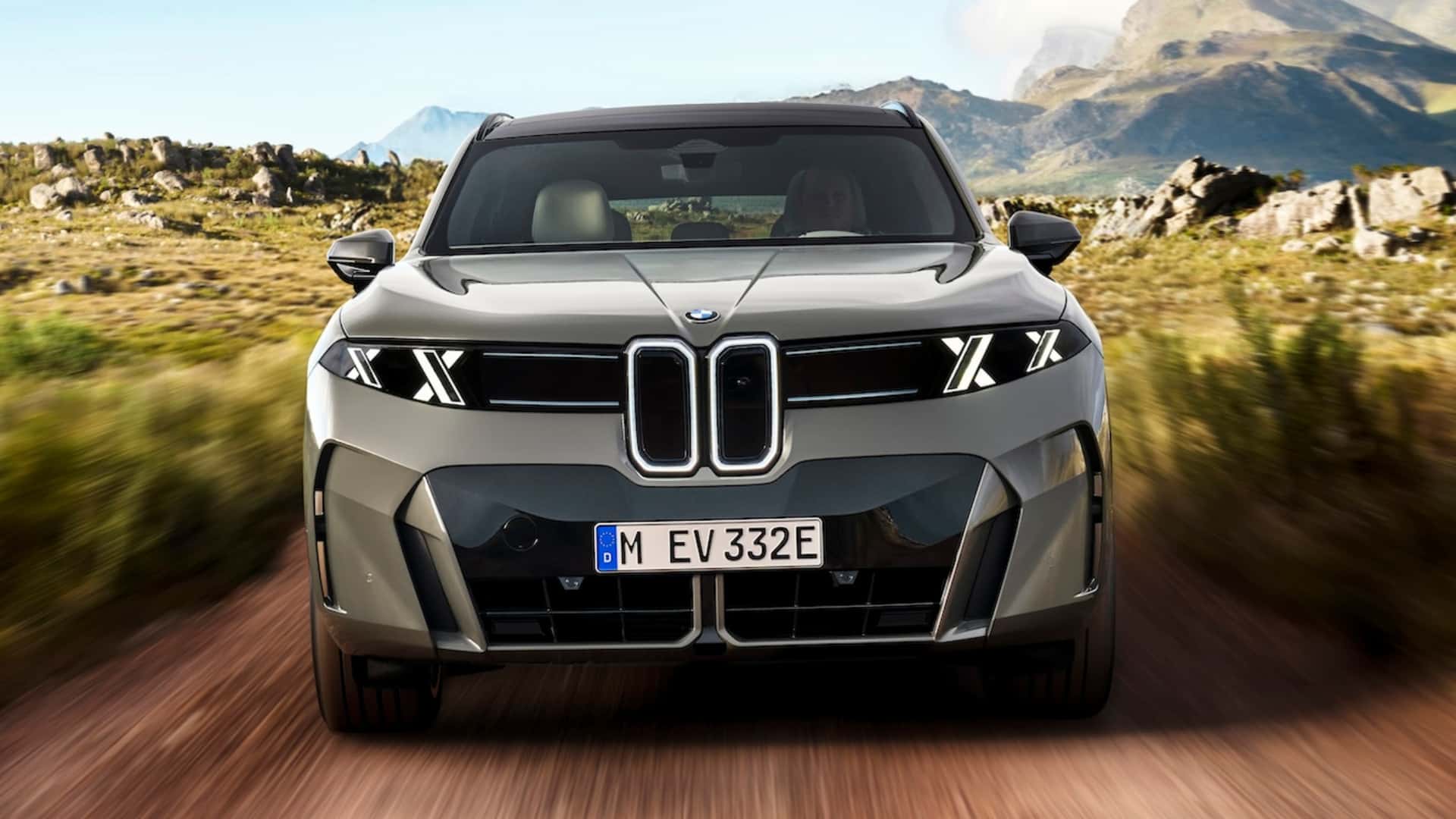
One of the most eye‑catching design details is the new double‑X headlights that can switch to a yellow hue via a cabin button, a nod to classic M‑car styling. Motor1 notes that the switch is located inside the cabin, allowing drivers to toggle the colour at will. While the feature has not been corroborated by other outlets, it underscores BMW’s emphasis on brand heritage even as the vehicle’s silhouette undergoes a radical transformation.
Door‑handle design also reflects regulatory nuance. The X5 now uses winged, button‑operated handles that retract into the body, mirroring solutions adopted by Ford and Volvo. An independent report from drive.com.au highlights that such a system helps BMW navigate China’s upcoming door‑handle ban, suggesting that the change is as much about market access as it is about aesthetics. As the article puts it, the new mechanism is “a testament to BMW’s engineering competence.”
Weight figures disclosed by Motor1 show the base gasoline X5 at 5,213 lb, the plug‑in hybrid at 5,985 lb, and the iX5 at a hefty 6,393 lb. Although these numbers lack independent verification, they illustrate the engineering trade‑offs inherent in electrification—larger battery packs add mass, which in turn impacts handling, braking and efficiency. The heavier curb weight also raises questions about how BMW will meet regional safety and emissions standards without compromising performance.
Pricing remains under wraps, and the company has indicated that the new X5 will reach dealer lots by the end of 2026. The lack of a price signal makes it difficult to gauge how the model will sit against rivals, but the anticipated premium over the outgoing X5 suggests BMW is targeting a higher‑margin segment, possibly to offset the cost of new technologies and the broader powertrain mix.
Audit & Contradictions
The core redesign details—namely the liftgate replacement and the iX5’s 525‑mile WLTP range—are corroborated by multiple outlets, reinforcing their credibility. However, several claims appear only in the Motor1 story and have not been independently confirmed:
- The five‑powertrain lineup (gasoline, plug‑in hybrid, electric, diesel, hydrogen) is a single‑source claim.
- The colour‑changing double‑X headlights are also reported solely by Motor1.
- Pricing information and the end‑2026 dealer‑lot timeline are unverified beyond the primary source.
- Exact weight figures for each variant, especially the iX5’s 6,393 lb, lack external corroboration.
The fact‑check audit notes a “Low” contradiction level, meaning no direct conflicts were found, but the reliance on a single source for several key specifications warrants caution.
Future Outlook
BMW’s X5 overhaul could set a precedent for how legacy manufacturers balance regulatory compliance with brand identity. The shift to a conventional liftgate may become a template for other premium SUVs seeking to shave drag coefficients in pursuit of longer electric ranges. Meanwhile, the five‑powertrain strategy signals that automakers are still hedging bets across fuel types, a pragmatic response to a fragmented global policy environment.
Competitors such as Mercedes‑Benz and Audi are likely to watch BMW’s market reception closely. If the iX5’s range claim holds up under EPA testing, it could pressure rivals to accelerate battery development or adopt larger capacity packs. Conversely, the added weight of the electric variant may prompt engineering teams to explore lightweight materials or innovative chassis architectures to preserve driving dynamics.
Regulators, especially in Europe and China, may view BMW’s design choices as a benchmark for future standards. The door‑handle solution, already aligned with China’s upcoming ban, could influence other manufacturers to adopt similar mechanisms, effectively shaping global design norms.
In sum, the new X5 is more than a visual reboot; it is a strategic response to a world where emissions rules, market‑specific regulations and supply‑chain realities intersect. How well BMW can translate this multifaceted approach into sales will be a litmus test for the broader industry’s ability to navigate an increasingly complex regulatory landscape.