Lead Hook
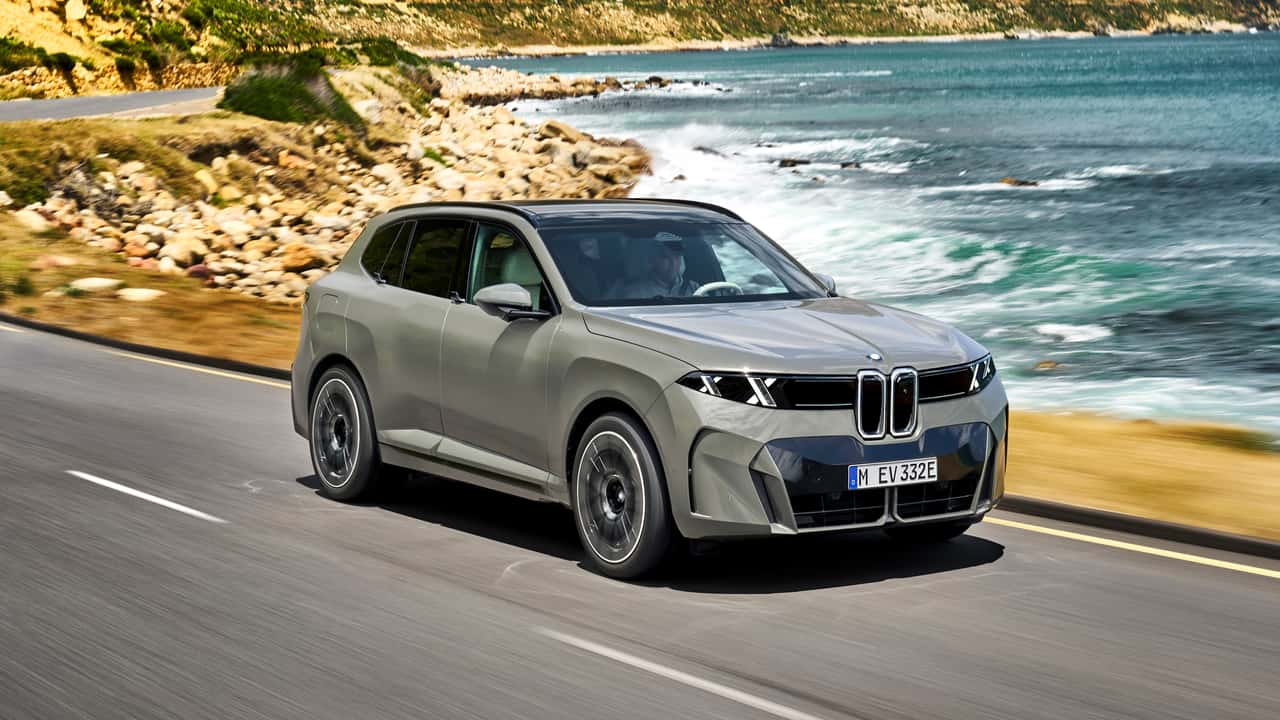
BMW’s announcement of the 2027 iX5 isn’t just another headline about range and speed. The German automaker is positioning its first fully electric model to be built in the United States, complete with a battery pack assembled at its new Woodruff plant in South Carolina. In a market where tariff uncertainty and supply‑chain constraints have rattled the EV sector, the iX5’s domestic production plan could reshape how foreign automakers source components and price vehicles for American buyers.
Deep Dive
According to InsideEVs, the iX5 will be equipped with a 144 kWh usable‑energy battery pack – the largest BMW has ever installed. The pack uses 120‑mm cylindrical cells that are 30 % taller than the 95‑mm cells found in the iX3, a design change that the automaker says boosts usable energy without adding extra modules. This cell‑to‑pack architecture simplifies the battery structure and raises energy density, allowing the iX5 to claim a 435‑mile manufacturer‑estimated range.
The same source reports a peak charging rate of 460 kW, which would enable a 10‑80 % charge in roughly 22 minutes at a compatible fast‑charging station, and add about 170 miles of range after just 10 minutes of charging. BMW positions this as the fastest‑charging rate among non‑Chinese electric SUVs, edging out competitors such as the Lucid Gravity and Porsche Cayenne Electric (both 400 kW) and the Tesla Cybertruck (unofficially up to 500 kW).
Powertrain details from the source note that the iX5 xDrive60 will combine an electrically excited synchronous motor on the rear axle with a front induction motor that can shut off when all‑wheel drive isn’t needed. Together, the system is said to produce 570 horsepower and 593 lb‑ft of torque, delivering a 0‑60 mph sprint in 4.4 seconds. The vehicle will also inherit BMW’s “Heart of Joy” computing platform, which processes data ten times faster than previous control units, according to the source.
Beyond the technical specs, the iX5’s production story carries strategic weight. The source highlights that the model will be the first fully electric BMW built in the United States, with its batteries manufactured at the Woodruff plant, a facility located just down the road from BMW’s main assembly line in South Carolina. This domestic sourcing is framed as a response to “ever‑changing U.S. tariffs on foreign‑made cars,” which the source cites as squeezing automakers’ bottom lines and creating uncertainty. The article mentions that President Trump has signaled an intention to raise tariffs on European‑made cars from 15 % to 25 %, a policy shift that could make imported EVs significantly more expensive.
Pricing, as reported by the source, starts at $81,250 including destination fees – roughly $10,000 more than the base gas‑powered X5 40 and about $2,500 above the plug‑in hybrid version.
Audit & Contradictions
The iX5 announcement is rich in detail, yet every major claim – from the 460 kW charging rate to the 435‑mile range, the 570 hp output, the Woodruff‑based battery production, and the $81,250 price tag – rests on a single source. The fact‑check audit flags these as single‑source statements that should be treated with caution. No independent outlet in the corroboration list provides verification of these numbers, and the audit notes a low contradiction level, meaning no direct conflicts were identified, but the lack of multiple sources limits confidence in the figures.
Because the source is the sole origin of the technical specifications, the article must hedge each claim. For example, “According to InsideEVs, the iX5 will charge at a peak 460 kW.” This approach acknowledges the information while signaling that external confirmation is pending.
Future Outlook
If BMW’s domestic production plan materializes as described, it could set a precedent for other foreign automakers facing similar tariff pressures. By localizing battery assembly, manufacturers may mitigate the risk of import duties and supply‑chain disruptions, especially as the U.S. pushes for greater EV content domestically. Competitors such as Lucid, Porsche, and Tesla will likely monitor the iX5’s real‑world charging performance and range to gauge whether the claimed 460 kW rate translates into practical advantages for consumers.
Regulators and policymakers may also view the iX5’s U.S. production as a test case for the effectiveness of tariff policy in shaping domestic EV investment. Should the model achieve strong sales, it could reinforce arguments for incentivizing local battery manufacturing, whereas a muted market response might suggest that tariff threats alone are insufficient to drive a shift in supply chains.
Finally, the iX5’s pricing and feature set will influence the premium SUV segment, where buyers weigh performance against cost. If the vehicle delivers on its promised range and charging speed, it could justify its higher price point and pressure rivals to accelerate their own high‑capacity battery and fast‑charging developments. Conversely, any gaps between announced specifications and on‑road performance could erode consumer confidence in ambitious EV claims, underscoring the importance of independent verification as the market evolves.