Lead Hook
Amazon’s self‑driving unit Zoox has rolled out a visually refreshed version of its purpose‑built robotaxi just weeks before the start of full‑scale series production. On the surface, the upgrades – brighter interiors, colour‑changing reflectors and upgraded audio links – read like a customer‑experience tune‑up. Yet the announcement glosses over a critical bottleneck: the need for regulatory sign‑off on each new‑generation autonomous vehicle before it can be built in volume. That hurdle could dictate whether Zoox’s goal of 100 vehicles a week ever materialises, shaping the pace of driverless‑taxi expansion across the United States.
Deep Dive
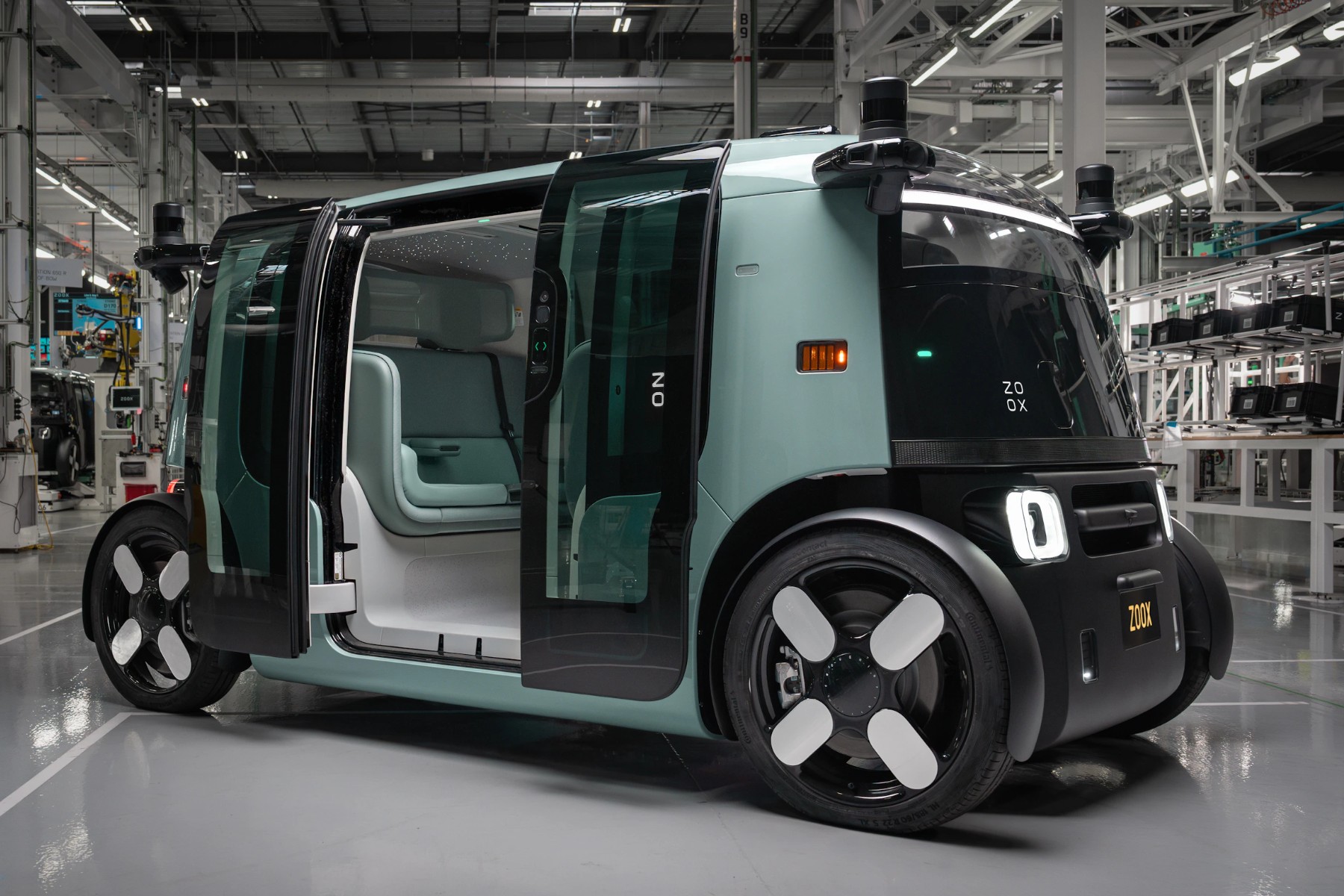
According to electrive, Zoox’s updated robotaxi retains its four‑passenger, face‑to‑face seating layout but adds a suite of refinements derived from rider feedback in Las Vegas and San Francisco. The company has repositioned external reflectors so they now change colour to signal the vehicle’s front and rear, installed a new speaker and microphone on the door interface, and boosted the two‑way audio system that links passengers to the Zoox control centre. Inside, a brighter colour scheme – solid aloe‑green seats, stone‑grey flooring and matching trim – is meant to reduce visual clutter, while a refined wireless charging pad, cup holders and flooring aim to keep personal items from being misplaced.
“The updates we’ve made to this iteration of our purpose‑built robotaxi continue to further distinguish the Zoox experience from anything else available today,” said Chris Stoffel, Director, Robot Industrial Design and Studio Engineering at Zoox.Beyond the aesthetic tweaks, Zoox is gearing up for series production in a 20,000‑square‑metre Hayward, California facility that opened a year ago. The plant has so far handled pre‑series builds and continuous process optimisation, but Zoox now declares it is ready for “full‑scale series production.” The company says it will “gradually scale series production in Hayward to 100 vehicles per week, subject to regulatory approval,” a cadence that would translate into roughly 5,000 units annually, with the factory’s design capacity capable of reaching 10,000 per year. The numbers are striking, but the phrase “subject to regulatory approval” is a thin veil over a complex, jurisdiction‑by‑jurisdiction clearance process. Autonomous vehicle (AV) regulations in the United States remain fragmented: each state sets its own testing and deployment rules, and local municipalities often impose additional safety requirements. Zoox already operates a driverless ride‑hailing service in Las Vegas (since September 2025) and San Francisco (launched in November), yet extending the fleet to new markets such as Austin, Miami and six test‑drive cities will require separate approvals for the updated hardware and software stack. Historically, regulators have demanded extensive data packages, on‑road safety reports and sometimes physical inspections of the vehicle’s control architecture before granting a production permit. If any of those approvals stall, the planned 100‑units‑per‑week ramp‑up could be throttled, forcing Zoox to rely on a slower, perhaps batch‑by‑batch, production schedule. That would not only delay fleet expansion but also affect the economics of the Hayward plant, which was built on the assumption of high‑volume output. The capital intensity of a dedicated autonomous‑vehicle factory—spanning tooling, robotics, and a specialised supply chain for components like custom reflectors and interior trim—means that under‑utilisation could erode margins. Moreover, the supply chain for bespoke AV parts is still nascent. While the source does not detail component sourcing, the need for colour‑changing reflectors and integrated door‑mounted audio hardware suggests reliance on niche suppliers. Any disruption—whether from semiconductor shortages, logistics bottlenecks, or quality‑control issues—could further delay the production cadence. In contrast, traditional automakers leveraging existing platforms can absorb such shocks more readily. The broader market context adds pressure. Competitors such as Waymo, Cruise and emerging Chinese firms are also racing to scale driverless services, often partnering with legacy manufacturers to piggy‑back on established production lines. Zoox’s strategy of a purpose‑built, steering‑wheel‑less vehicle distinguishes it technologically but also locks it into a singular manufacturing pathway, amplifying the stakes of regulatory and supply‑chain setbacks.
Audit & Contradictions
The primary source confirms the design updates, the Hayward factory’s size, and the operational history in Las Vegas and San Francisco. Independent outlets—including Electric Cars Report, CNBC and qz.com—corroborate the announcement of the refreshed robotaxi and the upcoming production push. However, two claims appear only in the primary article and thus require hedging: the factory’s theoretical capacity of up to 10,000 vehicles per year and the target of scaling to 100 vehicles per week. As the fact‑check notes, these figures are “single‑source” and have not been independently verified. No contradictions were identified between the source and secondary reports; the fact‑check summary lists a “None” contradiction level. Nonetheless, the announcement omits any timeline for regulatory approvals, cost estimates for the factory build‑out, or details on how Zoox will manage supply‑chain risks for its specialised components.
Future Outlook
If Zoox secures the necessary approvals and can sustain its 100‑unit‑per‑week cadence, the Hayward plant could become a benchmark for dedicated AV manufacturing in the United States, potentially prompting other tech‑heavy firms to invest in similar specialised factories. Success would also accelerate the rollout of driverless ride‑hailing services beyond the current pilot cities, bolstering Amazon’s logistics ecosystem and challenging traditional taxi operators. Conversely, prolonged regulatory delays or supply‑chain hiccups could force Zoox to recalibrate its growth strategy, perhaps shifting toward a lower‑volume, high‑margin model or seeking partnerships with established OEMs to leverage existing production capacity. Regulators, meanwhile, may tighten oversight as fleets expand, demanding more rigorous safety data and possibly revisiting the permissibility of steering‑wheel‑less designs. Competitors will watch Zoox’s progress closely. Waymo’s recent focus on retrofitting existing vehicle platforms suggests a divergent path that mitigates factory risk, while Cruise’s partnership with General Motors offers a hybrid of proprietary software on mass‑produced chassis. Zoox’s fate will therefore hinge not just on the appeal of its refreshed interior but on its ability to navigate the regulatory maze and supply‑chain realities that lie beneath the glossy press release.