Lead Hook
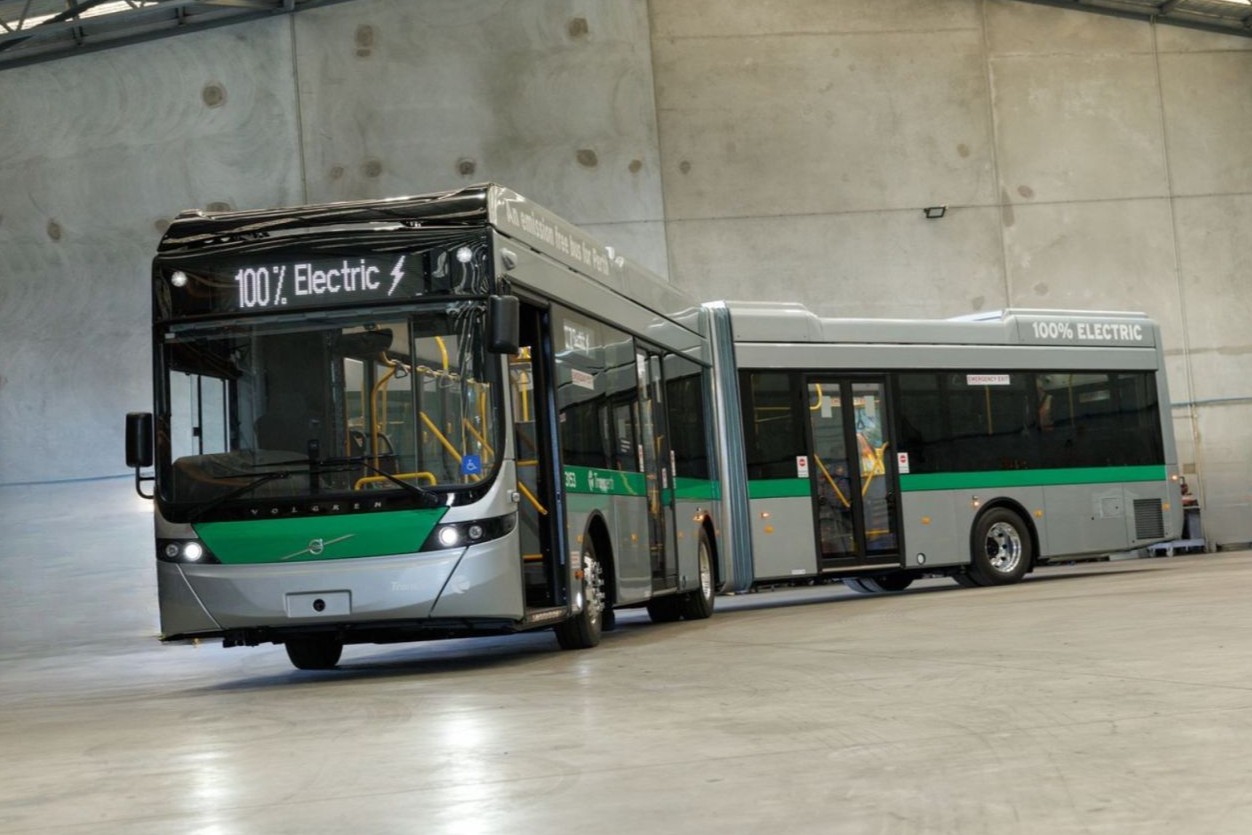
When Volvo Buses rolled out the first Australian‑made electric articulated bus, the headline was the vehicle itself – an 18‑metre, 200 kW‑dual‑motor, 497 kWh battery‑powered “bendy” that will soon carry commuters through Perth. Yet the deeper story is about where the bus was built, who built it, and what that means for a nation that has been heavily reliant on imported transit equipment. The local assembly at Volgren’s Malaga plant not only adds capacity to Transperth’s growing fleet, it also plants a seed for an Australian supply chain that could reduce import costs, create skilled jobs and accelerate the state’s climate‑action goals.
Deep Dive
According to electrive.com, the new bus sits on Volvo’s low‑floor BZL Electric articulated chassis and is bodied by Australian manufacturer Volgren at its Malaga facility near Perth. The chassis‑body pairing is tailored for the Public Transport Authority (PTA) of Western Australia, which has partnered with Volvo for more than a decade and already operates over 1,400 Volvo buses.
Technical specifications disclosed by the source show the bus measures 18 metres in length, seats 57 passengers and can accommodate roughly 105 passengers in total – a notable jump from the standard Transperth bus that carries about 80 people. The propulsion system employs Volvo’s dual‑motor EPT802 layout, delivering two 200 kW motors, while energy storage comes from twelve lithium‑iron‑phosphate (LFP) battery packs that together hold 497 kWh. The vehicle supports CCS2 fast‑charging and can be recharged in approximately four hours, according to the announcement.
Beyond the hardware, the bus is part of a broader rollout. The source notes that Western Australia already runs more than 150 battery‑electric buses across the Transperth network, with roughly eleven new electric units entering service each month. Funding for the transition is anchored by a A$250 million programme jointly financed by the Australian and Western Australian governments, intended to deliver an initial fleet of 130 electric buses plus the requisite charging infrastructure and depot upgrades. Existing charging points have been installed at the Malaga depot and Elizabeth Quay Bus Station, with further work underway at Bayswater, Karrinyup and Jandakot depots.
Mark Fryer, Director of Product & Industry at Volvo Buses Asia Pacific, framed the development as a strategic milestone:
"This is a genuine ‘Australia first’, and the Volvo BZL Electric Articulated has been built right here in Perth,"he said, adding that the platform was “developed with the Australian market in mind, and specifically to meet the needs of the PTA, an operator we have partnered with for more than a decade.” The emphasis on local manufacturing dovetails with Transport Minister Rita Saffioti’s comment that the rollout “keeps our economy strong while delivering a greener, cleaner public transport network for the future.”
The local assembly line does more than stamp a badge on a bus. By situating final‑stage production in Western Australia, Volvo and Volgren reduce logistical lead times and shipping emissions associated with importing fully built articulated buses from Europe. The move also aligns with national objectives to broaden domestic high‑tech manufacturing, a sector that historically lags behind automotive assembly in the country. If the partnership scales, it could spur ancillary supply‑chain activity – from battery pack integration to charging‑station construction – creating a cluster of green‑technology jobs.
However, the scale of the initiative remains modest. Only two articulated units are slated for testing in the coming weeks, with passenger service expected around August. The article does not disclose pricing, nor does it detail any commitments for further units beyond the current government‑funded fleet of 130 electric buses. The long‑term viability of a locally‑built electric bus market will hinge on whether the PTA and other Australian operators continue to order at volumes that justify the up‑front capital outlay.
Audit & Contradictions
The core claim – that Volvo has unveiled Australia’s first locally built electric articulated bus, based on the BZL chassis, and that it will undergo testing before entering service in August – is corroborated by multiple independent outlets, including Cision News and Automotive World. The source also provides detailed technical data (vehicle length, passenger capacity, motor power, battery capacity, charging time) and fleet numbers (over 140 BZL Electric buses nationwide, more than 150 battery‑electric buses in Transperth’s network) that appear only in the primary article. Per the fact‑check audit, these figures are single‑source and therefore should be treated as statements from Volvo/Buses rather than independently verified facts.
There are no outright contradictions identified in the source material; the fact‑check summary rates the contradiction level as “Low.” Nonetheless, the announcement omits several contextual details: the cost per vehicle, the expected lifespan of the battery packs, the proportion of locally sourced components versus imported ones, and any performance targets (e.g., range under typical Perth conditions). These gaps limit a full assessment of the program’s economic and environmental impact.
Future Outlook
If the pilot proves successful, the articulated bus could become a template for larger‑scale Australian production of electric heavy‑duty vehicles. Competitors such as BYD and Proterra have already entered the Australian market with imported models; a domestically assembled Volvo could pressure them to consider joint‑venture assembly or local partnerships. Moreover, the A$250 million government programme signals a policy commitment that may encourage other states to emulate Western Australia’s approach, potentially unlocking a national market for locally built electric buses.
Regulators will likely scrutinise the performance data once the buses enter service, especially regarding charging turnaround and reliability in Perth’s hot climate. Positive outcomes could accelerate the phase‑out of diesel and compressed natural gas buses, as the PTA plans to retire older units as they reach end‑of‑life.
In sum, the unveiling is as much a statement about supply‑chain sovereignty as it is about a new vehicle on the road. Whether the “Australia first” articulation translates into a sustainable, export‑ready industry will depend on continued government support, consistent procurement volumes, and the ability of local manufacturers to meet the rigorous demands of electric transit.