Lead Hook
When Lada unveiled a $19,800 station wagon equipped with a six‑speed manual gearbox and matte black steel wheels, the headline seemed to celebrate a cheap family car for the Russian market. Yet the move carries a strategic weight far beyond the price tag: it underscores how Russia’s flagship automaker is reshaping its product architecture to sidestep foreign‑made CVT units and hedge against a supply chain strained by sanctions and import restrictions.
Deep Dive
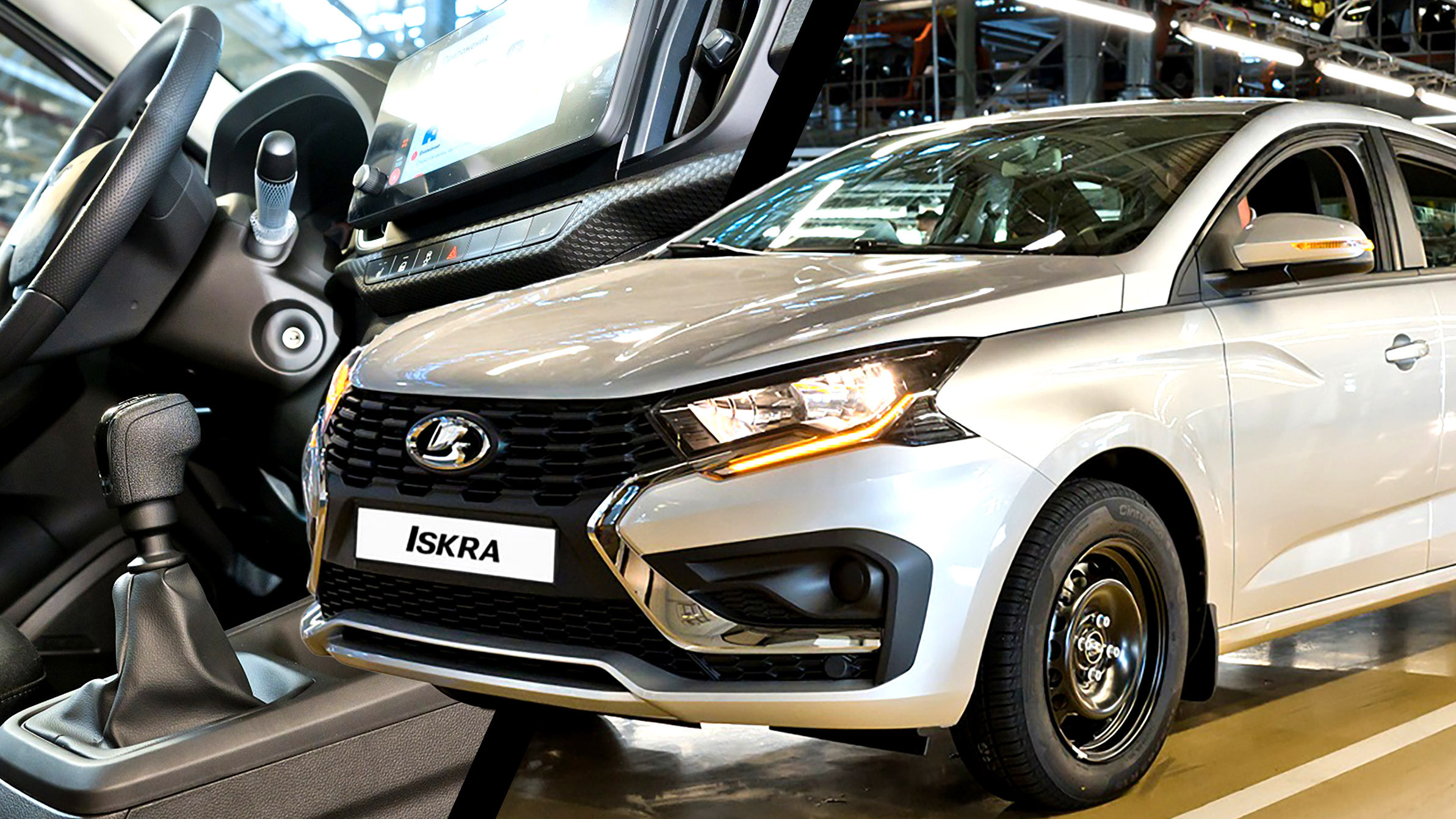
According to Carscoops, the new Iskra SW Drive is priced at 1,565,000 rubles – roughly $19,800 at current exchange rates – undercutting the CVT‑equipped sibling that retails for 1,677,000 rubles. The price advantage stems primarily from the substitution of a six‑speed manual transmission for the continuously variable unit that previously powered the wagon.
The manual gearbox, described as a three‑pedal layout, is paired with a 15‑inch set of black steel wheels, a choice that further trims production costs while preserving a rugged aesthetic suited to Russia’s rougher road conditions. The wheel design also avoids the expense of alloy production and coating, allowing Lada to keep the sticker price low for budget‑oriented families.
While the price and transmission swap are corroborated by multiple outlets, the source adds several technical details that remain unverified elsewhere. It claims the Iskra SW Drive runs a 1.6‑liter naturally‑aspirated engine delivering 105 hp (78 kW) – the most powerful unit in the Iskra range. The source also reports a 0‑100 km/h (62 mph) sprint of 12.7 seconds and a top speed of 174 km/h (108 mph), making the manual version 1.2 seconds quicker and 5 mph faster than its CVT counterpart. Fuel consumption is quoted at 7.8 L/100 km (30.1 mpg), a figure that Lada positions as competitive for a vehicle of this class.
Standard equipment, per the same report, includes an 8‑inch Lada Enjoy Evo infotainment screen, heated front seats, heated side mirrors, air‑conditioning, cruise control, and dual airbags. The vehicle sits on a localized, Dacia‑derived CMF‑B platform that Lada first showcased in mid‑2024, with deliveries slated to begin in mid‑2025. This architecture, inherited from the Renault Group era, has been adapted to meet Russian manufacturing capabilities and regulatory requirements.
Beyond the headline numbers, the decision to revert to a manual transmission reveals an underlying engineering and economic calculus. Modern CVTs, while offering smooth acceleration and fuel‑efficiency gains, are typically sourced from foreign suppliers that have become increasingly difficult for Russian manufacturers to procure amid Western sanctions. By reinstating a domestically produced manual gearbox, Lada reduces its exposure to external component shortages and the associated cost volatility.
Moreover, the manual gearbox aligns with the preferences of a segment of Russian drivers who value direct control, especially when hauling heavy loads on uneven terrain. The source notes that the manual “does more than wake up the driving, it also outruns the CVT,” suggesting that performance metrics are being leveraged as a marketing angle to offset any perceived loss of convenience.
Audit & Contradictions
The core facts – the $19,800 price point, the six‑speed manual transmission, and the black steel wheels – are corroborated by independent outlets such as Carscoops and ТопЖир. However, all other specifications – engine output, acceleration and top‑speed figures, fuel‑consumption claim, equipment list, and platform heritage – appear only in the primary source. As such, they should be presented with hedging language (e.g., “According to the source”). The fact‑check audit notes a low level of contradiction, meaning no direct conflicts were identified between the primary source and secondary reports.
In practice, this means readers should treat the performance and fuel‑efficiency numbers as Lada’s own claims rather than independently verified data. No alternative publications have published independent dyno or EPA‑type testing for the manual Iskra SW at this stage.
Future Outlook
The manual‑first strategy could set a precedent for other Russian manufacturers facing similar component constraints. If Lada’s cost‑cutting approach proves popular, competitors may follow suit, potentially reviving the market for budget manual transmissions that have largely disappeared in Europe and North America.
From a regulatory perspective, the vehicle complies with Russian safety standards, featuring dual airbags and heated safety equipment. Yet the reliance on a simpler drivetrain might simplify compliance testing, allowing faster certification and earlier market entry – a tactical advantage in a market where consumer confidence has been shaken by economic volatility.
Internationally, the move signals to foreign investors that Russian automakers are prioritizing self‑reliance over imported technology. While this may limit the appeal of the Iskra SW in markets that favor automatic transmissions, it could bolster domestic sales by offering a competitively priced, locally sourced alternative that sidesteps sanctions‑related supply disruptions.
Looking ahead, the success of the manual Iskra SW will hinge on whether the price advantage translates into sustained demand. If buyers respond positively, Lada may expand the manual option across its broader lineup, reinforcing a supply‑chain strategy that leans heavily on domestically produced components. Conversely, if market preferences continue to shift toward automatics, the manual wagon could become a niche offering, underscoring the tension between cost efficiency and evolving consumer expectations.