Lead Hook
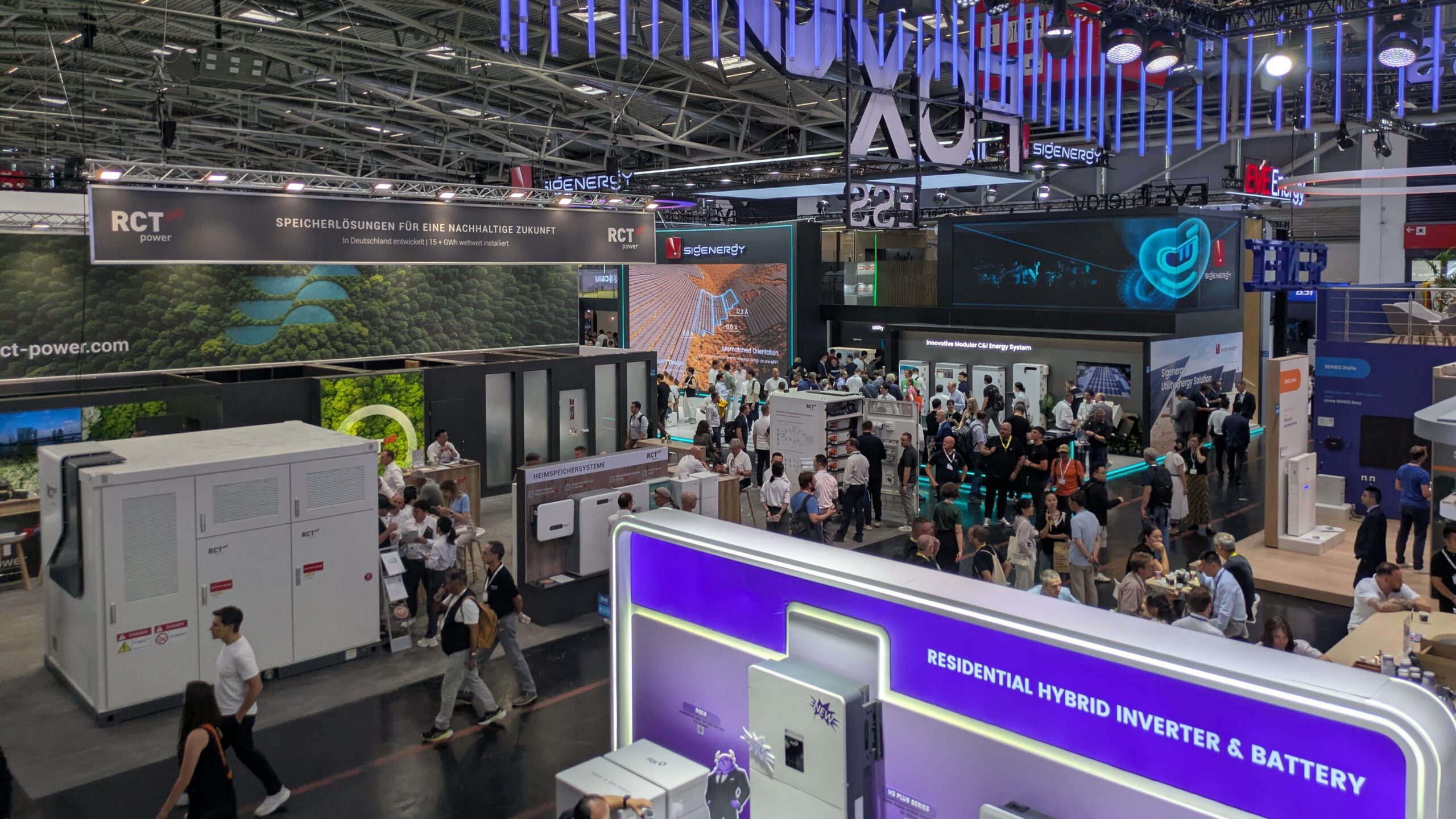
The buzz surrounding InterSolar Europe 2026 was less about a single product launch and more about the sheer scale of the show. According to CleanTechnica, more than 2,800 companies exhibited across 18 halls in Munich. That number alone signals a market that is approaching saturation, where differentiation will become the decisive factor for survival. At the same time, the event underscored a decisive pivot: solar is no longer just panels on roofs – it is now tightly coupled with battery storage, integrated EV charging, and even automated installation robots. For investors, regulators, and the incumbent utilities, the implications are profound.
Deep Dive
One of the most frequently repeated themes at the show was the centrality of energy storage. A Bloomberg NEF study cited in the report concluded that “
battery storage is the future of home solar.” The study’s finding reflects a broader European trend where energy storage systems (ESS) are being positioned as the missing link for a cost‑effective, stable grid. In Germany, where the event took place, ESS are increasingly viewed as essential for power‑hungry applications such as commercial heat pumps and electric‑vehicle (EV) chargers. The report notes that utilities are expanding storage capacity to capture cheap utility‑scale solar generation when the sun isn’t shining and to replace baseload thermal generation.
Beyond utility‑scale storage, the exhibition highlighted a niche that could unlock a new customer base: balcony solar with integrated storage. The concept targets apartments and other residences that lack roof space. The report points to Jackery’s new SolarVault 3 as a concrete example of a compact, self‑installable system that can take advantage of time‑of‑use (TOU) rates. While the article does not provide performance data, the emphasis on design and ease of use suggests manufacturers are betting on the DIY market to drive volume.
Automation was another recurring motif. Robots are now being deployed for mounting, cleaning, mowing, and inspecting utility‑scale solar farms. The report describes this as “the opposite side of the spectrum from self‑installed balcony solar,” indicating that the industry is moving toward a bifurcated model: highly automated large‑scale projects on one hand, and highly modular, consumer‑focused kits on the other.
Management software also received a spotlight. Companies such as BYD, Huawei and Rolls‑Royce Energy showcased advanced energy‑management systems (EMS) that coordinate storage, generation, and load. The report mentions that vehicle‑to‑grid (V2G) services from VW and Octopus Energy are adding another layer of flexibility, allowing EVs to act as distributed storage assets. While the article does not detail regulatory frameworks, the inclusion of V2G hints at a growing policy conversation around grid services and compensation mechanisms.
Design differentiation was highlighted through the example of Jackery, whose portable models feature a distinctive charcoal‑gray and high‑visibility orange scheme. Competitors were observed taking photographs of these products, suggesting that aesthetic cues are becoming a competitive battleground in a market where hardware specifications are converging.
Audit & Contradictions
The CleanTechnica piece is the sole source for several headline‑grabbing claims. The figure of “more than 2,800 companies exhibited” comes directly from the event organizers and is not corroborated by any of the listed independent outlets. Likewise, the description of balcony‑solar systems opening solar access to apartments, and the emphasis on V2G services, are only reported by this article. The fact‑check audit flags these as single‑source statements. No contradictions were identified across the independent outlets, and the overall contradiction level is classified as low.
Because these points lack external verification, readers should treat them as the perspective of the CleanTechnica report rather than universally accepted data. The absence of corroborating coverage also means that market participants may be over‑ or under‑estimating the scale of these trends.
Future Outlook
If the exhibitor count is any indication, the European solar ecosystem is teeming with players vying for market share. In such an environment, consolidation becomes a logical outcome. Companies that can combine compelling design, integrated storage, and automated deployment are likely to emerge as acquisition targets for larger utilities or technology groups seeking to diversify their portfolios.
Regulators will also feel pressure to adapt. The growing prevalence of ESS and V2G services will demand clearer rules around grid interconnection, compensation for ancillary services, and safety standards for residential storage. In Germany, where transformer backlogs are cited as a bottleneck, storage could be used to defer costly infrastructure upgrades, but only if policy frameworks support such deferral.
For incumbents, the message is clear: merely supplying panels will no longer be sufficient. Success will hinge on offering end‑to‑end solutions that blend hardware, software, and user‑centric design. Start‑ups that master this integration may either carve out a lasting niche or become attractive assets for larger players looking to accelerate their own transition toward a storage‑rich, electrified grid.