Lead Hook
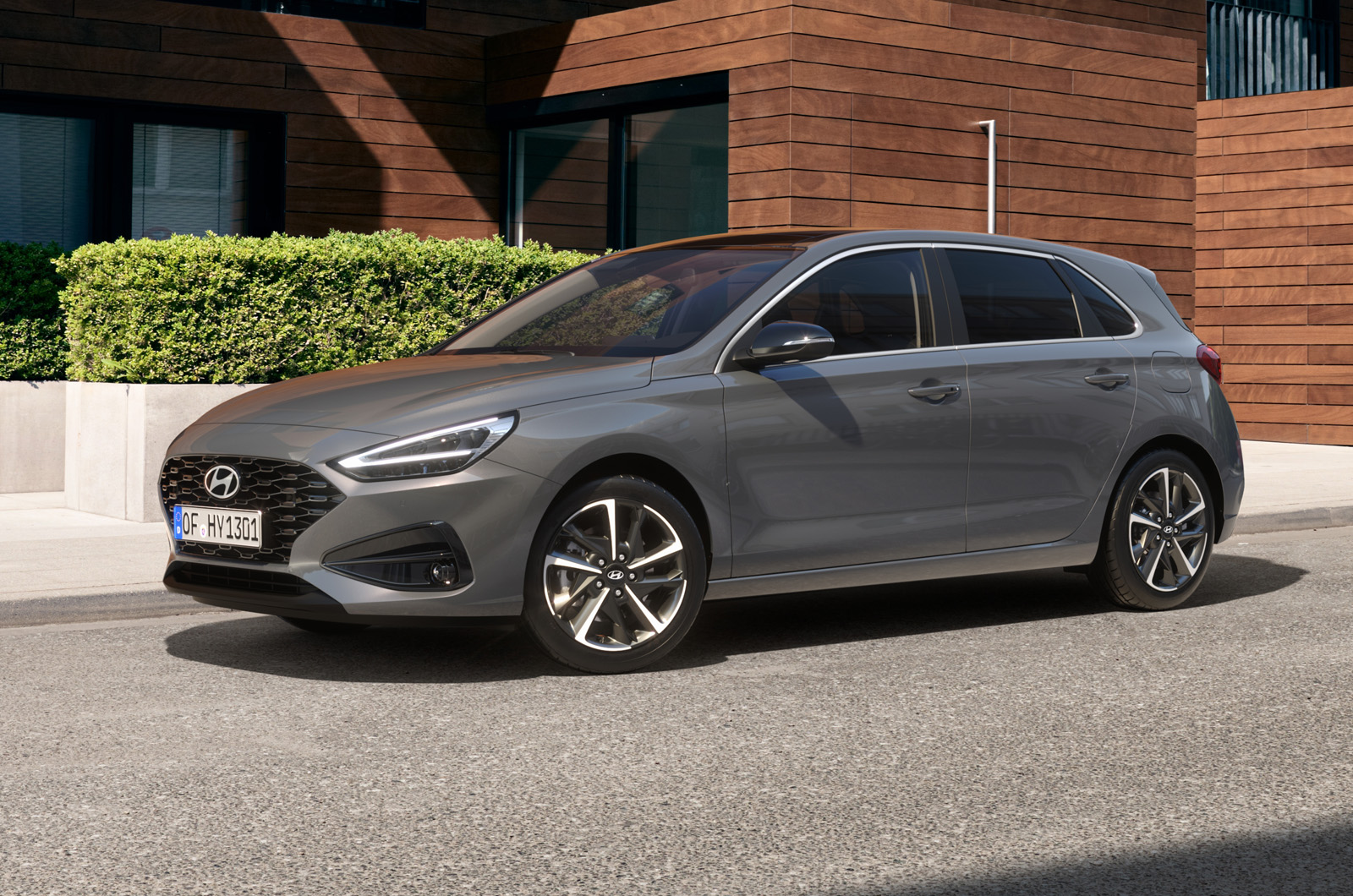
When Hyundai announced that the i30 hatchback will disappear from the European line‑up with no direct replacement, the news reads like a simple model discontinuation. Yet the implications run deeper: it signals a strategic reallocation of capital away from a segment that has become a profit‑drain for many OEMs and toward the electrified and crossover‑centric future that Europe’s buyers are demanding. For a market that once celebrated the i30 as a practical family workhorse, the decision highlights how shrinking demand for traditional petrol hatchbacks is reshaping product road‑maps, supply‑chain contracts, and the economics of fleet sales across the continent.
Deep Dive
According to Autocar, Hyundai’s i30 has already been off sale in the United Kingdom for a year, although it remains available in some other European markets. The company’s Europe chief, Xavier Martinet, confirmed that a fourth‑generation i30 is not in the pipeline. He explained that the segment’s demand “is not growing, and it’s also a vehicle that historically was mostly a fleet vehicle, on which the profit is not so high.”
That profitability gap is at the heart of the decision. Martinet added that the i30’s retail sales “were a small proportion” and that the lower price point meant “the profits [were] as well.” When he summed up the calculus, he said,
"The business case is not extremely compelling,"a direct quote that captures Hyundai’s cost‑benefit analysis.
The decline of the C‑segment hatchback is not unique to Hyundai. The same Autocar report notes that recent years have seen the cancellation of several close rivals – the Ford Focus, Kia Ceed and Renault Megane – while stalwarts such as the Volkswagen Golf, Peugeot 308 and Toyota Corolla continue to sell, albeit in a shrinking share of the market. The broader trend is a consumer shift toward mid‑size crossovers, which now dominate family‑car purchases in Europe. This shift is reinforced by fleet operators, who are increasingly favouring higher‑riding models that offer perceived safety and versatility.
Hyundai’s product strategy appears to be following that market logic. Earlier this month the automaker unveiled a new‑generation i20 supermini, a model that sits below the i30 in size and price, and launched the Ioniq 3 EV – a compact crossover that directly targets the same buyer demographic that is abandoning hatchbacks. By concentrating development resources on the i20 and the Ioniq 3, Hyundai can achieve higher unit economics: the i20 remains a high‑volume, low‑cost platform, while the Ioniq 3 taps into the premium that European subsidies and emissions regulations place on electric vehicles.
From a supply‑chain perspective, the retirement of the i30 will likely reduce demand for small‑displacement petrol engines, associated transmission families, and the lightweight chassis components that have been standardised across the segment for years. Suppliers that have built up capacity for these parts may need to pivot to the growing SUV and EV sub‑segments, a transition that could involve re‑tooling costs and a temporary dip in order volumes. Conversely, the shift may accelerate investment in battery packs, electric drivetrains, and high‑strength steel or aluminium structures required for crossover bodies.
Dealership networks will also feel the impact. Many European dealers rely on the steady flow of fleet orders for hatchbacks to smooth revenue cycles. With the i30’s fleet sales described as “low‑profit” and now effectively ending, dealers will need to lean on the higher‑margin Ioniq 3 or the upcoming SUV‑type offerings to maintain profitability. This mirrors a broader dealer‑level re‑orientation across the continent, where showrooms are being redesignated to showcase electric and crossover models as the primary sales drivers.
Audit & Contradictions
The Autocar article provides the core facts about the i30’s phase‑out, but it leaves several key details unaddressed. First, the timeline for a potential replacement – even a non‑hatchback answer – is vague. Martinet hinted that “we might still have some answers coming, but it might be a different answer to the one we’ve got so far,” without specifying a launch window or vehicle type. Second, the financial impact on Hyundai’s European operations is not quantified; the article does not disclose how much profit loss the i30 contributed relative to the overall portfolio.
All statements regarding the i30’s UK sales status, the absence of a fourth‑generation model, the profitability rationale, and the speculation about a future SUV‑style answer are sourced solely from the Autocar piece and therefore must be treated as single‑source claims. The report does not present contradictory evidence from other outlets, and the fact‑check audit notes a “Low” contradiction level, meaning no direct disputes have been identified.
Future Outlook
Hyundai’s move is likely to accelerate a cascade of similar decisions among manufacturers that have been wrestling with the same economics. If the i30’s exit proves financially prudent, other OEMs may hasten the retirement of low‑margin hatchbacks in favour of crossovers and EVs, further compressing the supply chain for small petrol powertrains.
Competitors such as Opel‑Vauxhall are already hinting at a shift. Their boss Florian Hüttl suggested that the Astra’s successor could be a “less traditional C‑segment offering – potentially some sort of SUV.” Should Hyundai follow that route, it would reinforce a market‑wide pivot that could reshape European vehicle registrations, with a higher proportion of electrified crossovers and a corresponding decline in traditional hatchback registrations.
Regulators may also take note. The European Union’s tightening CO₂ fleet‑average targets make low‑efficiency, low‑margin models less attractive for manufacturers seeking compliance credits. By exiting the i30, Hyundai not only removes a vehicle that struggles to meet future emissions standards but also frees up internal emissions “budget” for higher‑efficiency EVs.
In the short term, the i30’s disappearance will be felt most keenly by fleet operators that have relied on its low purchase price and predictable running costs. Over the longer horizon, the decision underscores a strategic realignment: capital that once funded incremental hatchback updates is now being redirected toward electrified powertrains and higher‑margin crossover platforms. For the European automotive landscape, Hyundai’s exit may be less a farewell to a single model and more a bellwether of the industry’s next chapter.