Lead Hook
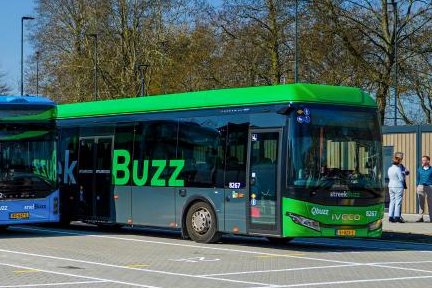
When the European Investment Bank pledged a €70 million loan to Dutch operator Qbuzz, the headline was clear: a major step toward decarbonising regional transport in the Netherlands. Yet the deeper story is a market‑wide pivot toward Chinese bus manufacturers, a shift forced by supply bottlenecks at traditional European firms. The financing not only fuels the rollout of 275 battery‑electric buses in South‑Holland, it also signals how capital‑intensive green projects may increasingly lean on non‑European technology to meet aggressive climate targets.
Deep Dive
According to the announcement, the European Investment Bank (EIB) approved a €70 million loan for Qbuzz, a public‑transport operator owned by Italy’s Ferrovie dello Stato since 2017. The loan will be matched by an equivalent financing package from Société Générale, creating a €140 million pool earmarked for electrifying Qbuzz’s fleet and expanding depot charging infrastructure electrive.
The core of the project is the deployment of 275 battery‑electric buses under the Zuid‑Holland Noord concession, which serves the cities of Leiden, Alphen aan den Rijn and Gouda. The operator says the new buses will replace diesel units and cut CO₂ emissions from regional services, while also making public transport more attractive to shift commuters away from private cars and trains. To support the fleet, the financing covers high‑capacity grid connections at Qbuzz depots, a prerequisite for rapid charging of large‑capacity batteries.
While the EIB frames the investment as a contribution to European energy independence, the source material reveals that Qbuzz’s recent procurement decisions were heavily influenced by supply‑chain disruptions at European manufacturers. The company reports that it expanded its battery‑electric fleet with vehicles from Chinese maker Yutong after facing delays from Iveco and the insolvency of Van Hool, which had previously formed part of its procurement strategy. This pivot to a Chinese supplier, highlighted in the Qbuzz announcement, reflects a broader trend where European transit agencies, constrained by limited domestic production capacity, turn to Asian manufacturers to meet rollout timelines.
In addition to battery‑electric buses, Qbuzz says it is investing in green hydrogen for public transport. While details are sparse, the mention of hydrogen alongside electric buses suggests a dual‑track approach to decarbonisation, hedging against uncertainties in battery technology, charging infrastructure rollout, or future regulatory shifts. The EIB’s own statement links the project to both transport decarbonisation and a strengthening of European energy independence, implying that hydrogen could serve as a strategic energy carrier alongside electricity.
From a financial perspective, the €70 million loan represents a sizeable public‑sector commitment to a single operator’s electrification program. By pairing the loan with a matching private‑sector facility from Société Générale, the financing structure spreads risk and leverages private capital to accelerate deployment. The combined €140 million package will fund not only vehicle procurement but also the necessary grid upgrades, underscoring the intertwined nature of transport electrification and energy system upgrades.
Audit & Contradictions
The announcement provides a clear picture of the loan amount and the intended scale of the fleet, both of which are directly supported by the primary source. The €70 million EIB loan is corroborated by an independent electrive.com report, confirming the core financing figure.
However, several key details appear only in the Qbuzz statement and have not been independently verified:
- The exact number of buses (275) slated for deployment under the Zuid‑Holland Noord concession.
- The specific cities—Leiden, Alphen aan den Rijn and Gouda—served by the new fleet.
- The decision to source buses from Chinese manufacturer Yutong due to supply issues with European firms.
- The concurrent investment in green hydrogen for public transport.
Because these points are single‑source claims, the article hedges them with language such as “according to the announcement” or “the company says.” No contradictions have been identified between the primary source and the independent corroboration, so the fact‑check audit labels the overall contradiction level as low.
Future Outlook
The Qbuzz financing package may set a precedent for other European transit agencies facing similar supply constraints. If Chinese manufacturers can deliver reliable, cost‑effective electric buses on schedule, they could capture a larger share of the European market, pressuring domestic firms to accelerate production capacity or pursue strategic alliances.
Regulators may also respond by revisiting procurement policies that favour local manufacturers, balancing climate urgency against industrial policy goals. The dual focus on battery‑electric buses and green hydrogen hints at a future where multi‑modal decarbonisation strategies become standard, allowing operators to adapt to evolving technology costs and grid capabilities.
For financiers, the blended public‑private structure demonstrates a viable model for scaling up green transport projects without overburdening public budgets. As the EU continues to push for tighter emissions standards, similar financing mechanisms could become a cornerstone of the continent’s transition to zero‑emission public transport.
Ultimately, the success of Qbuzz’s electrification will be judged not just by the number of buses on the road, but by whether the supply chain shift to Asian manufacturers can be reconciled with Europe’s broader ambition for a self‑sufficient, low‑carbon industrial base.