Lead Hook
Slate’s electric pickup has captured headlines with a base price that hovers around $25,000 – a figure that, on its face, could disrupt the low‑cost EV segment. Yet the excitement masks a pricing architecture that leans heavily on a menu of optional accessories. In a market where every dollar of range, safety and warranty matters, the true cost of ownership may be far higher than the headline number suggests. Understanding how Slate plans to make a profit at this price point is crucial for consumers, investors and regulators alike.
Deep Dive
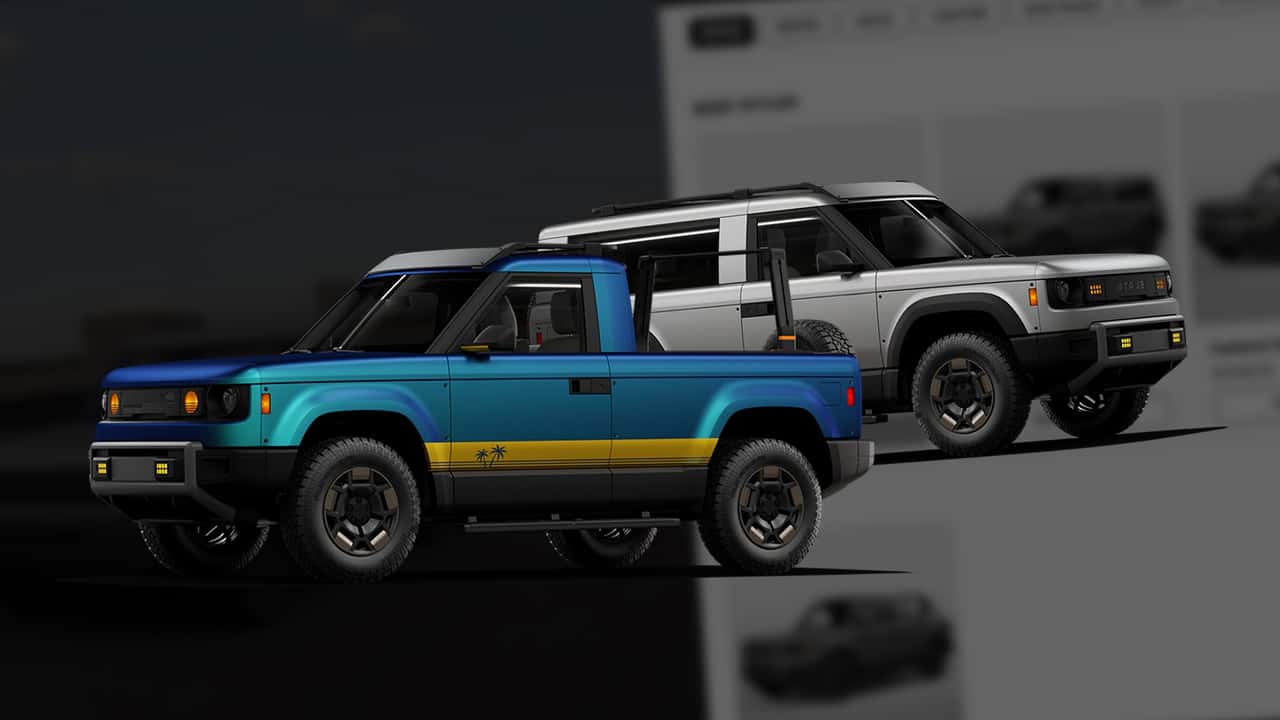
According to InsideEVs, the base model of the Slate pickup is priced at roughly $25,000. That low entry price is bolstered by a minimalist design – the truck ships with crank windows, steel wheels and a sparse interior of “bare plastic.” The company then offers an extensive catalog of accessories, ranging from sub‑$60 cosmetic add‑ons (lamp plates, grille inserts) to multi‑thousand‑dollar performance and utility upgrades.
Key accessories listed in the source include:
- Exterior upgrades such as fender flares ($150) and upgraded front/rear bumpers (combined $1,100)【source】.
- Utility packages like a roof platform ($1,200), 17‑inch wheels ($1,400) and a folding solar tonneau cover ($2,300).
- Interior comfort items such as a centre console ($250), a Bluetooth‑enabled sound system unit ($250) and additional speakers ($150).
- The flagship “SUV kit,” which transforms the pickup into a boxy or fastback utility vehicle for $5,000 (boxy) or $7,000 (fastback).
When a buyer selects a broad suite of these options, the price can climb rapidly, easily surpassing $40,000. The source article does not disclose a single, all‑inclusive total; instead, it demonstrates how each add‑on stacks up against the base price.
This accessory‑centric approach mirrors a broader trend among low‑margin manufacturers: sell a cheap base product and capture profit through high‑margin add‑ons. In the automotive world, traditional OEMs bundle many of these items into higher trim levels, obscuring the incremental cost to the consumer. Slate’s transparent pricing sheet makes each add‑on explicit, but it also forces buyers to perform a mental arithmetic exercise that can easily inflate the purchase price beyond the advertised “budget” range.
From a financial perspective, the model raises several questions. First, the $25,000 sticker likely reflects a cost structure that is unsustainable without supplemental revenue. Battery packs, power electronics and compliance testing alone consume a large share of a sub‑$30k vehicle’s bill of materials. By offloading non‑essential features to optional accessories, Slate can keep the headline price low while still achieving a viable gross margin on the overall transaction.
Second, the reliance on a la carte parts may introduce supply‑chain complexities. Each accessory – whether an under‑$60 lamp plate or a $7,000 fastback kit – requires its own sourcing, inventory management and certification. If demand for the base vehicle outpaces the availability of popular add‑ons, customers could face delayed deliveries or forced compromises, eroding the perceived simplicity that the brand touts.
Finally, the regulatory landscape adds another layer of risk. In the United States, any modification that affects vehicle safety – such as upgraded lighting, roof structures or wheel size – must meet FMVSS standards and may require additional testing and documentation. Slate’s modular strategy could impose a compliance burden that scales with each accessory, potentially increasing overhead costs and slowing time‑to‑market for new options.
Audit & Contradictions
The source article is thorough in listing prices, but it is the sole repository of those details. The base price of $25,000 is corroborated by other outlets, including Yahoo Autos, which also reports the same figure. All other pricing information – the under‑$60 lamp plates, $150 fender flares, $1,200 roof platform, $2,300 solar tonneau cover, interior options and the SUV kits – appears only in the InsideEVs piece. As such, these claims must be presented as single‑source statements, e.g., “According to InsideEVs, the roof platform costs $1,200.”
The fact‑check audit notes no contradictions between the source and external reporting, assigning a “Low” contradiction level. Nonetheless, the article does not disclose the cost of the lift kit, the pricing of the “Slatelet” dash art, nor the long‑term durability or warranty implications of many accessories. Those omissions are significant because they affect the total cost of ownership and the vehicle’s resale value.
Future Outlook
If Slate’s pricing blueprint proves profitable, other emerging EV makers may emulate the model, especially in segments where price sensitivity is high. Established manufacturers could respond by unbundling their own trim packages, offering more granular pricing to compete directly with Slate’s “pay‑only‑what‑you‑need” promise.
Regulators may also take note. The proliferation of aftermarket accessories that alter a vehicle’s safety envelope could prompt stricter certification requirements for modular upgrades, similar to the scrutiny applied to aftermarket lighting and suspension parts in the conventional auto market. Ensuring that each optional component complies with federal safety standards could increase compliance costs for both Slate and any future adopters of the model.
For consumers, the headline $25,000 price will remain alluring, but the true decision will hinge on how many accessories they deem essential. As the market matures, transparency around total cost – including likely accessory bundles for a usable daily driver – will become a key differentiator. Slate’s experiment will thus serve as a litmus test for whether a low‑base‑price, high‑customization strategy can sustain itself without alienating buyers who feel the final price is “too expensive” after all the add‑ons are tallied.
In the short term, Slate’s approach may attract early adopters who relish the freedom to build a truly bespoke EV. In the longer run, the model’s scalability will depend on how efficiently the company can manage accessory supply chains, meet safety regulations and maintain a compelling value proposition as competitors introduce their own low‑cost, feature‑rich pickups.