Lead Hook
Solar‑powered cars have long been a futuristic promise, but the real test is whether they can replace a conventional charging routine for everyday drivers. Aptera’s latest validation run showed the vehicle’s integrated solar panels can generate a peak 4.6 kWh in a single day when the car is repositioned to catch more sun — a figure confirmed by CleanTechnica. If that energy can be turned into usable mileage, a driver without access to home or public chargers could theoretically travel daily on sunlight alone. The stakes are high: a successful proof could reshape the economics of EV ownership for renters, apartment‑dwelling commuters, and anyone in regions where grid charging is costly or unavailable.
Deep Dive
According to the source article, the solar‑generated 4.6 kWh was achieved by a validation vehicle that was deliberately moved throughout the day to maximize exposure. The company notes this “peak” figure as a milestone, but the conversion of that energy into range hinges on a stringent efficiency target. The article states that Aptera must achieve an efficiency design goal of 100 Wh per mile—equivalent to 10 mi/kWh—to reach the advertised 40 mile of daily solar range. By contrast, the piece claims most traditional EVs on highways manage between 3 and 4.5 mi per kWh. Both numbers are presented as context but lack independent verification, so they should be read as the company’s internal benchmarks.
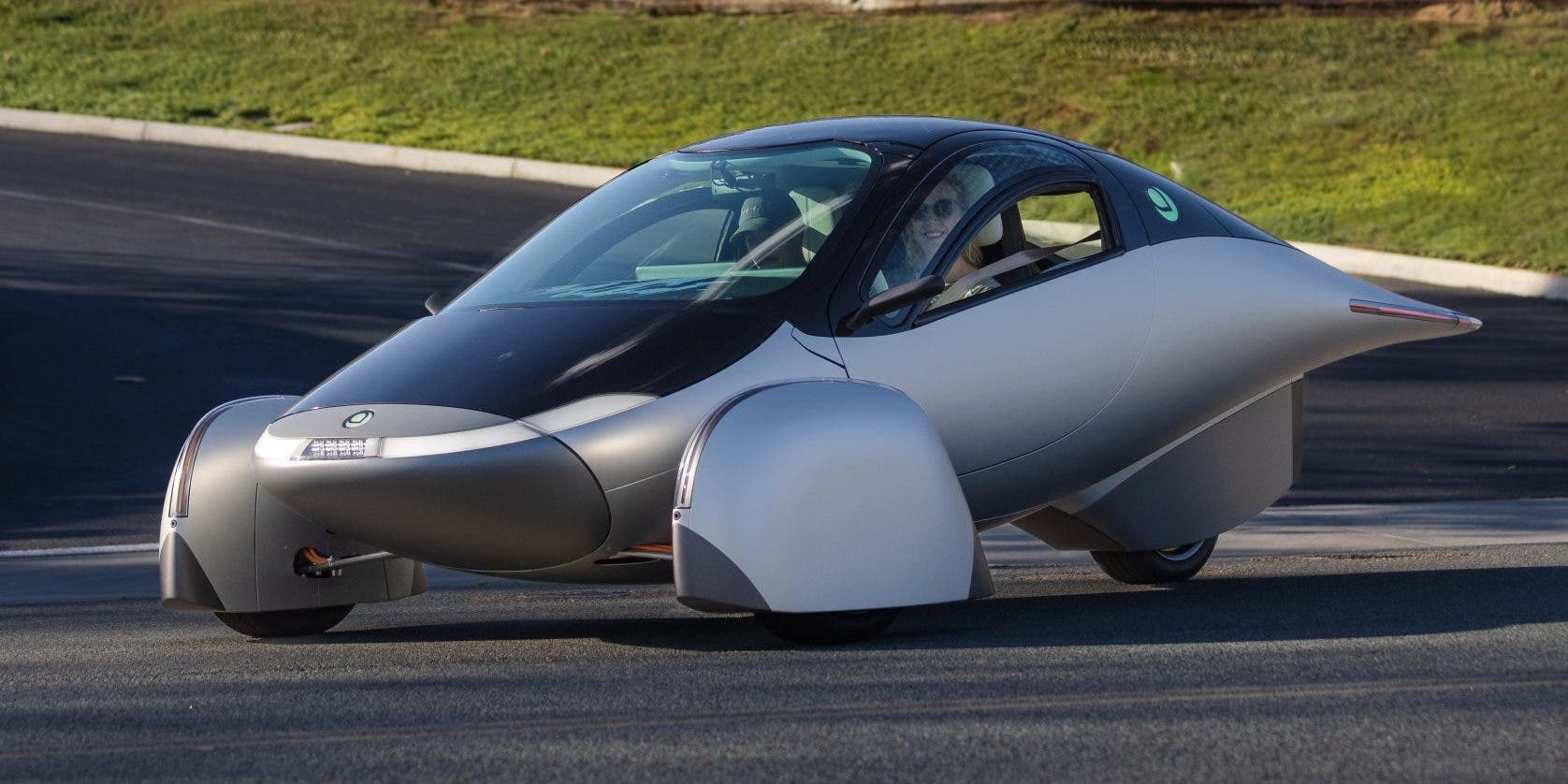
Engineering the car to meet the 100 Wh/mi target demands extreme aerodynamic and rolling‑resistance performance. The article describes the vehicle’s “teardrop” shape, which is intended to eliminate vacuum zones that increase drag, and notes the three‑wheel layout that reduces unsprung mass. While these design cues are plausible, the real‑world data comes from a coast‑down test the company released. In that test the Aptera took “over three minutes to decelerate from 60 mph to a complete stop” and even managed to keep rolling uphill on the test track — a performance that suggests low drag and rolling resistance. The source attributes these results directly to Aptera’s own testing, and they are corroborated by other CleanTechnica coverage.
Even if the aerodynamic claims hold, the solar conversion efficiency of the curved panels and the custom charge controller must also stay within tight tolerances. The article emphasizes that the 4.6 kWh figure was a “peak” achieved under optimal positioning; real‑world drivers may not be able to replicate that level of sun‑tracking, especially in less sunny locales. The author of the source piece acknowledges this uncertainty, noting that a driver in New Mexico might see better results than one in North Carolina, but the exact performance envelope remains unquantified.
"The proof is in the pudding."
That line, lifted directly from the source, underscores the gap between laboratory‑grade numbers and everyday usability. Aptera plans to close that gap with a third‑party validation sequence slated for July, followed by a full‑range test that will drain the battery from 100 % to 0 % to confirm real‑world efficiency across the entire voltage curve. The article frames this upcoming test as the decisive step: if the vehicle can repeatedly travel 40 mi while consuming only 4 kWh, the solar‑range claim would be substantiated.
Audit & Contradictions
The announcement is transparent about the solar generation figure and the coast‑down performance—both of which are supported by other CleanTechnica reports, as noted in the fact‑check audit. However, several key assertions appear only in this piece and lack external verification:
- The 100 Wh/mi efficiency target required to achieve 40 mi of solar range is a single‑source claim.
- The comparison that “most traditional EVs get somewhere between 3 and 4.5 mi per kWh” is also uncorroborated outside this article.
- The planned July third‑party validation and subsequent full‑range test are mentioned solely by the source.
- The statement that “if the vehicle can repeatedly drive 40 mi while only using 4 kWh, the solar‑range claim will be proven” is a forward‑looking, single‑source projection.
- The description of the vehicle as “extremely lightweight, has three wheels, and uses a teardrop aerodynamic shape” is presented without independent data.
The fact‑check summary rates the contradiction level as “Low,” indicating no direct conflicts between sources, but the reliance on single‑source data for the efficiency and mileage targets means readers should treat those numbers as provisional.
Future Outlook
If Aptera can validate the 100 Wh/mi figure, it would set a new benchmark for solar‑assisted EVs, forcing traditional manufacturers to reconsider the trade‑off between battery size and solar integration. Competitors such as Lightyear and Hyundai’s solar‑roof concepts would face pressure to demonstrate comparable efficiency or risk being eclipsed in markets where charging infrastructure lags.
Regulators could also take note. A vehicle that reliably delivers 40 mi of range from daylight alone would qualify for special incentives under emerging “solar‑vehicle” programs in several U.S. states, potentially reshaping subsidy structures that currently favor larger battery packs. Moreover, utilities might see a reduction in peak‑load demand from a segment of drivers who can offset daytime charging with solar harvest, influencing grid planning and demand‑response strategies.
From a capital‑efficiency standpoint, proving the efficiency claim could unlock additional funding for Aptera’s California factory, as investors often tie financing to demonstrable performance milestones. Conversely, failure to meet the target could stall production, delay deliveries, and erode confidence in solar‑EV business models.
Ultimately, the coming months will test whether Aptera’s solar skin is a novelty or a viable pathway to broader EV adoption for those without convenient charging. The industry—and the drivers who stand to benefit—will be watching the July validation closely.