Lead Hook
Volkswagen's charging subsidiary Elli is exiting the hardware business, a move that signals a broader industry shift from selling boxes to selling energy. By the end of 2026, Elli will cease final assembly of its battery-buffered Flexpole fast-charging station at its Hanover plant, handing production entirely to its Chinese partner ZhongDe Energy. The decision underscores the capital-intensive nature of charging hardware and the growing strategic importance of software and energy management.
Deep Dive
According to electrive.com, Elli Chief Technology Officer Mark Möller confirmed the withdrawal in an exclusive interview. “The market is evolving: from basic charging towards smart charging,” Möller said. “We want to seize this opportunity and focus even more intensively on the interface with the energy market.”
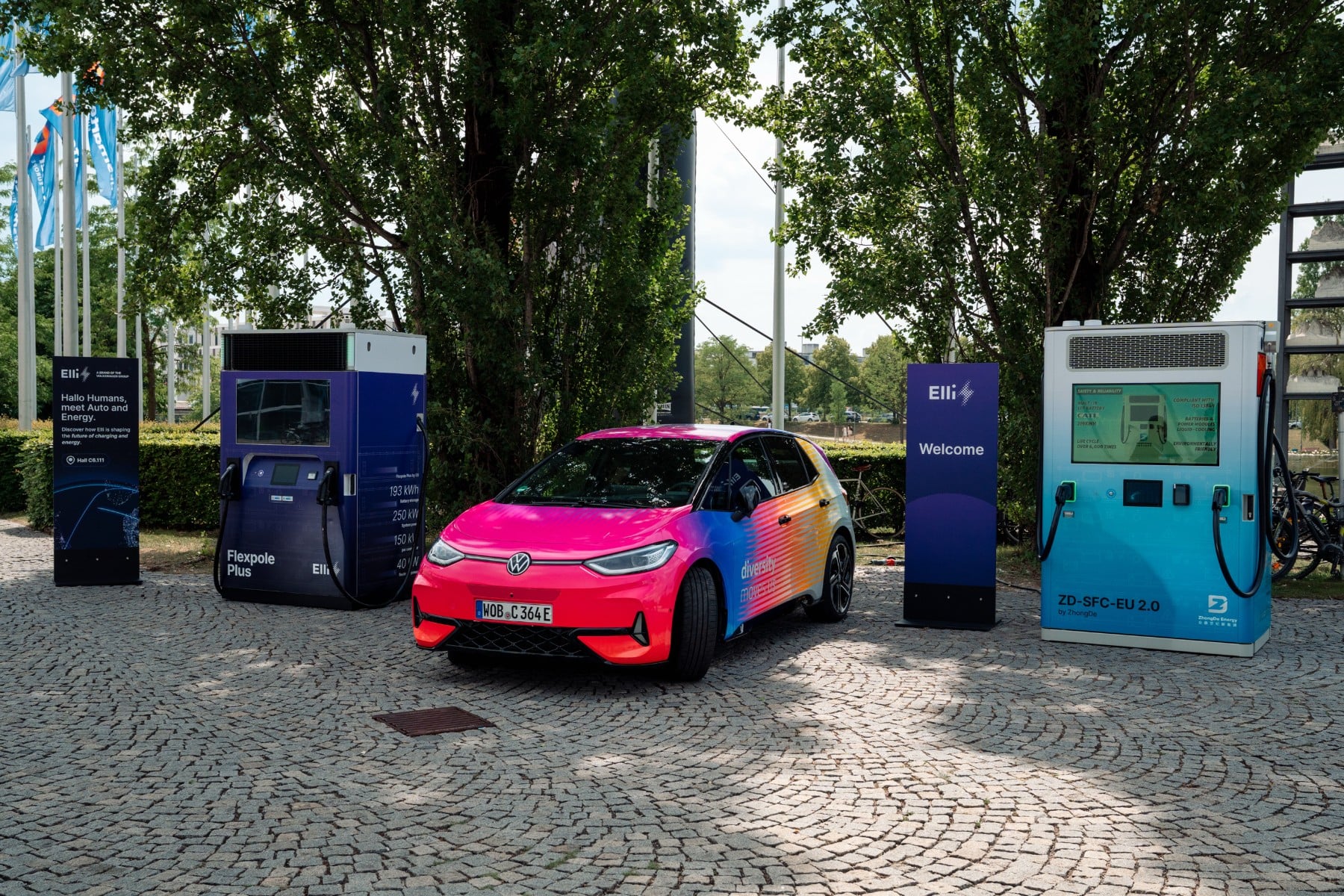
The Flexpole is a DC fast charger that integrates a buffer battery to reduce grid demand. The current model delivers up to 250 kW total via two connectors rated at 150 kW each. Since its launch, nearly 1,000 units have been sold, with roughly 700 operating across 14 European countries, per the source. The charger’s main components have always been supplied by ZhongDe, with Elli handling final assembly, calibration-law compliance, and CCS cable fitting.
ZhongDe will now manufacture an upgraded version at a facility near Frankfurt. The new station will feature a 219 kWh battery (up from 193 kWh), provide up to 300 kW per connector (total 330 kW), require an 80 kW grid connection, and include a powder-based fire-suppression system, as reported by electrive.com. Möller said the partnership will continue, but Elli will no longer be a hardware producer.
The shift reflects a deliberate strategy. Möller explained that Elli’s “value creation in Germany … has been limited” for the Flexpole, and the assembly work was relatively low value-add. No job losses are expected; staff will move to the adjacent battery system assembly line at the Hanover plant. The company is now focusing on “digital use cases in energy trading,” leveraging its position at the intersection of mobility and energy markets.
“The first phase for us was driven by the ambition to support Volkswagen and its brands’ customers with charging solutions,” Möller said. “At the time, we saw battery-buffered charging stations as a relevant niche—and quickly implemented the idea of offering such a station ourselves, in collaboration with our Chinese partner.”
Audit & Contradictions
Our fact-check audit found no contradictions in the report. The key claims—Elli’s exit from Flexpole production, the handover to ZhongDe, the sales figures, and the technical specs of the upgraded station—are all directly supported by the source material. The contradiction level is None.
What the announcement does not say, however, is revealing. There is no discussion of the profitability of the Flexpole product line, the cost of the transition, or whether Elli’s warranty obligations will strain its balance sheet. Nor does the company disclose how many of the 700 installed units are generating recurring revenue from energy services—a metric that would clarify the strategic logic. Industry observers might note that the decision to outsource production while maintaining software control mirrors trends in other sectors, where automotive OEMs increasingly rely on Tier-1 suppliers for physical components.
Future Outlook
Elli’s pivot could pressure other charging point operators (CPOs) to invest in software and energy capabilities. Competitors like ABB, Alpitronic, and Kempower still emphasize hardware differentiation, but the margins in hardware are thinning. The rise of integrated energy trading, load balancing, and grid services may become the primary battleground.
For ZhongDe Energy, the deal provides a foothold in the European market with a proven product. The upgraded Flexpole, with higher power and improved safety, could appeal to CPOs seeking to future-proof sites. However, ZhongDe must build its own service network and brand recognition without Elli’s backing.
Regulators in Europe may also take note. The transfer of production from Germany to a Chinese-owned facility, even if within Germany, raises questions about the resilience of EV charging supply chains. Germany’s commitment to e-mobility includes domestic manufacturing, but this deal shows that cost pressures can erode even high-profile corporate ventures.
Ultimately, Elli’s move reflects a mature market where speed, integration, and energy intelligence matter more than proprietary hardware. As Möller put it, Elli no longer needs to “manufacture hardware ourselves” to win in the fast-charging ecosystem.