Lead Hook
When Tesla’s quarterly delivery numbers stop being the headline, the market’s attention pivots to what the company will do with the cars it already has on the road. The consensus forecast of 406,024 deliveries for the second quarter, announced by a slate of analysts, marks the latest data point in a trend that analysts say is redefining Tesla’s growth story. The shift matters because it signals a strategic re‑weighting from raw vehicle volume to the monetisation of its software and energy assets – a move that could reshape capital allocation, supply‑chain dynamics, and the competitive landscape for every automaker chasing autonomous‑driving revenue.
Deep Dive
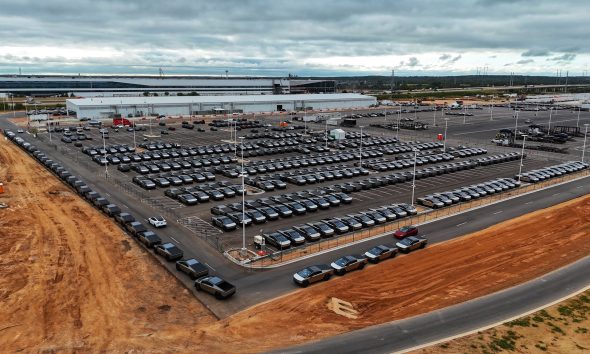
According to Teslarati, the consensus estimate for Q2 deliveries stands at 406,024 units, compiled from analysts at firms such as Daiwa, DB, Wedbush, and Goldman Sachs. The figure follows a Q1 delivery total of 358,023 cars – a 6.3 % rise over the same quarter a year earlier but still below Wall Street’s 365,000‑370,000 expectation. The incremental growth in unit sales is dwarfed by the company’s projected energy deployment of 13.8 GWh for the quarter, a number that the source treats as a new benchmark for Tesla’s broader business narrative.
The article frames this data as evidence of a “long‑standing theory” that Tesla is moving away from a pure‑car growth model. It points to the Robotaxi project as the centerpiece of this pivot, noting that investors and the public are now “more concerned about the deployment of vehicles into the fleet, the operation of a driverless ride‑hailing service, Cybercab production and operation, and expansion into new cities.” The source argues that the company’s Full Self‑Driving (FSD) suite, already logged with billions of miles from the existing fleet, is the foundation for a future service that could generate recurring revenue without relying on new vehicle sales.
From a technical standpoint, the Robotaxi ambition leans heavily on the data accumulated by Tesla’s current owners. By leveraging that real‑world mileage, the company hopes to accelerate the transition from supervised to unsupervised operation, a step that would effectively turn its vehicle base into a distributed sensor network. The financial implication is a shift from capital‑intensive manufacturing to software‑driven margins, a model that could improve capital efficiency if the regulatory environment permits full autonomy.
Model Y L – A Parallel Tale
While the delivery forecast highlights the service pivot, the source also references the larger Model Y L that launched in China last year. Some analysts have mentioned the possibility of U.S. production, but no firm timeline has been confirmed by Tesla. The prospect of a U.S.-built Model Y L remains speculative pending official announcements.
Audit & Contradictions
The primary source provides a clear picture of the delivery consensus and the strategic shift toward Robotaxi and energy deployments. Independent outlets referenced in the fact‑check audit – such as Electrek and CNBC – corroborate the delivery figures and the overall trend of rising deliveries before EV tax‑credit expirations. The audit notes no contradictions in the core delivery and energy deployment data.
Single‑source claims identified in the source material include the specific dimensions of the Model Y L, the definitive plan to launch the Model Y L in the United States this year, and a separate claim about a competitor’s ban in the U.S. (Polestar). Because these points lack independent verification, the article flags them with hedging language: the Model Y L’s U.S. production schedule is “reported by a source,” and the ban on Polestar is “mentioned in the source but not independently confirmed.”
Overall, the fact‑check summary rates the core delivery consensus and energy deployment numbers as verified, while the product‑specific claims remain single‑source and should be treated as tentative.
Future Outlook
If Tesla’s service‑first narrative bears fruit, the implications extend beyond the company’s balance sheet. Competitors that rely heavily on vehicle sales – such as traditional OEMs and newer EV entrants – may feel pressure to accelerate their own autonomous‑driving software programs or seek partnerships to access a similar data moat. Regulators, especially in the United States, will likely face heightened scrutiny as driverless ride‑hailing moves from pilot projects to commercial operations. The potential introduction of a larger‑bodied, lower‑cost SUV alternative could also affect market segmentation.
Financial analysts may begin to weight Tesla’s valuation more on software‑as‑a‑service metrics than on vehicle throughput. Capital markets could reward the company for any measurable progress in Robotaxi deployment, while penalising delays that keep the service in a supervised state. In parallel, the energy deployment figure of 13.8 GWh suggests that Tesla’s non‑automotive revenue streams are becoming an increasingly material part of its earnings narrative.
In short, the Q2 delivery consensus is less a headline about numbers and more a barometer of a strategic inflection point. As Tesla leans into robotaxis, energy, and the possibility of a larger Model Y variant, the industry will watch closely to see whether the shift from “cars sold” to “services delivered” reshapes the competitive dynamics of the global EV market.