Lead Hook
Skoda’s newest marketing push frames the Enyaq vRS as the answer to a long‑standing motoring fantasy: a single vehicle that can comfortably handle daily chores while still delivering weekend‑road thrills. The claim is seductive, especially as families grapple with the cost of owning two cars in a tightening economy. Yet the numbers that underpin the promise – power, range, charging speed and interior equipment – all come from a single promotional piece, leaving a gap between headline allure and the practical realities of daily ownership.
Deep Dive
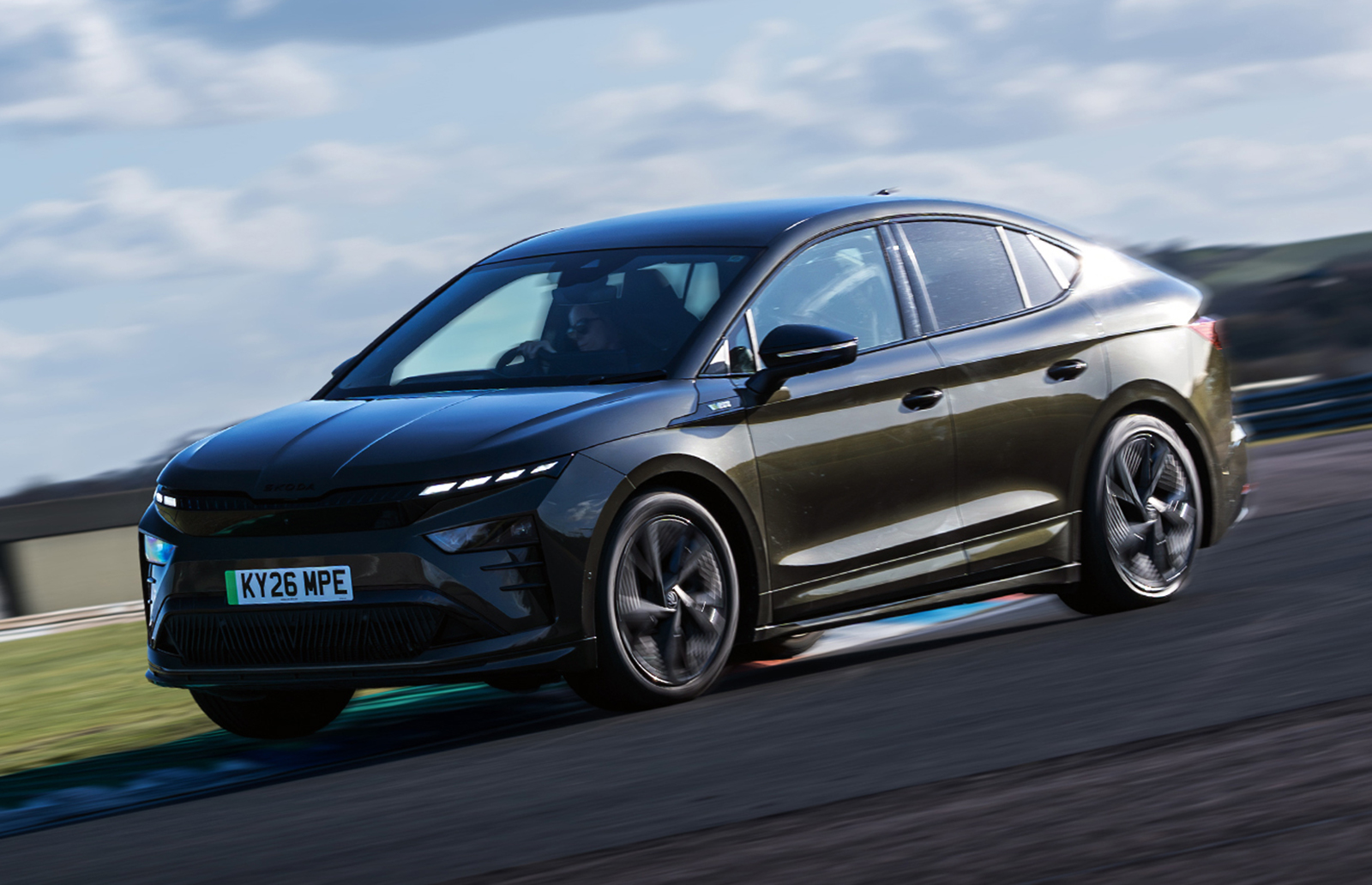
The Enyaq vRS is positioned as the performance arm of Skoda’s electric SUV flagship. According to Autocar, the model delivers 335 bhp and 697 Nm of torque, propelling it from 0‑62 mph in 5.4 seconds. Those figures sit alongside a suite of chassis‑tuning measures – Dynamic Chassis Control, lowered suspension and revised steering calibration – that the source claims give the vehicle a composure “no electric SUV this size has any right to.”
Range and charging are central to the “one‑car” narrative. The same source states the Enyaq vRS is equipped with an 84 kWh battery that can achieve up to 344 miles of WLTP‑rated range. A 185 kW DC charger, it adds, can top the pack from 10 % to 80 % in roughly 26 minutes. If these numbers hold in real‑world driving, the vehicle could indeed replace a conventional commuter car and a weekend‑focused sports SUV, provided owners have reliable access to high‑power charging stations.
Inside, the Enyaq vRS is presented as a fully‑loaded cabin. Standard equipment includes a 13‑inch infotainment screen, an augmented‑reality head‑up display, heated seats and a 12‑speaker CANTON sound system, per the source. Practical touches – a 585‑litre boot, an ice‑scraper in the tailgate and an umbrella in the door – are highlighted as evidence that the vehicle remains family‑friendly despite its performance badge.
While the specifications sound impressive, they raise deeper questions about the feasibility of a true “one‑car garage” solution in today’s market. The WLTP range figure, for example, is obtained under test conditions that differ from everyday driving patterns, especially in colder climates where battery efficiency drops. The 26‑minute fast‑charge claim assumes the availability of 185 kW chargers, which remain unevenly distributed across many European regions. Without a dense network of such high‑power stations, owners may find that the vehicle’s rapid‑charge advantage is more theoretical than practical.
Moreover, the performance‑focused chassis setup could have trade‑offs in ride comfort and energy consumption. A lowered suspension and sport‑tuned steering often translate into higher rolling resistance and reduced efficiency, potentially shaving miles off the advertised range when the car is driven aggressively on weekend roads. The source does not address how these dynamics affect the vehicle’s day‑to‑day fuel‑cost equivalence compared with a conventional internal‑combustion family SUV.
From a cost‑of‑ownership perspective, the Enyaq vRS’s battery size and high‑power charging capability suggest a premium price point, yet the promotional material offers no pricing data. In a market where consumers weigh upfront cost against long‑term savings, the lack of transparent pricing complicates the decision to consolidate two vehicles into one.
Audit & Contradictions
The Autocar piece supplies a suite of specific performance and equipment figures, but none of these details are corroborated by the independent outlets listed in the fact‑check audit. As a result, each key specification – power output, torque, acceleration time, battery capacity, WLTP range, DC charging speed, interior equipment and cargo volume – is a single‑source claim. The audit notes that no contradictions were found between the source and the secondary references, but the reliance on a lone promotional article means the data remain unverified beyond Skoda’s own messaging.
Because the source is the sole origin of these numbers, the article must hedge them appropriately. Phrases such as “according to the source” or “the source reports that” are used throughout to signal that independent verification is lacking. The fact‑check summary categorises the contradiction level as “Low,” reflecting the absence of conflicting information rather than the strength of the evidence.
Future Outlook
If Skoda’s one‑car positioning resonates with consumers, other manufacturers may feel pressure to bundle performance and practicality into a single electric SUV. This could accelerate the development of larger battery packs paired with sport‑tuned chassis, but it also risks inflating vehicle prices and stretching charging infrastructure demands.
Regulators across Europe are meanwhile tightening average fleet‑wide CO₂ targets, encouraging automakers to offer higher‑range EVs. The Enyaq vRS’s claimed 344‑mile WLTP range aligns with those targets, but the real‑world range under mixed driving conditions will be a key metric that buyers and policymakers will monitor closely.
Charging network operators are likely to see increased demand for 150‑200 kW stations if high‑performance EVs become the norm for families seeking a single‑car solution. Investment in such infrastructure will be essential to prevent the marketing promise from outpacing practical usability.
In the short term, the Enyaq vRS will serve as a litmus test: can a performance‑oriented electric SUV truly replace two conventional vehicles without compromising daily convenience? The answer will hinge on how quickly the supporting ecosystem – from fast‑charging points to transparent pricing – catches up with the ambition of Skoda’s promotional narrative.