Lead Hook
Renault’s announcement that its iconic 4 and 5 electric models will receive “extra power and range” in 2027 is more than a simple mid‑cycle refresh. It signals a calculated decision to extend the life of the AmpR Small platform while the company prepares a new generation of larger EVs for 2028. In a market where the European Union is tightening fleet‑wide CO₂ limits for 2027, the move highlights how legacy EVs are being nudged to stay competitive without the expense of a full redesign.
Deep Dive
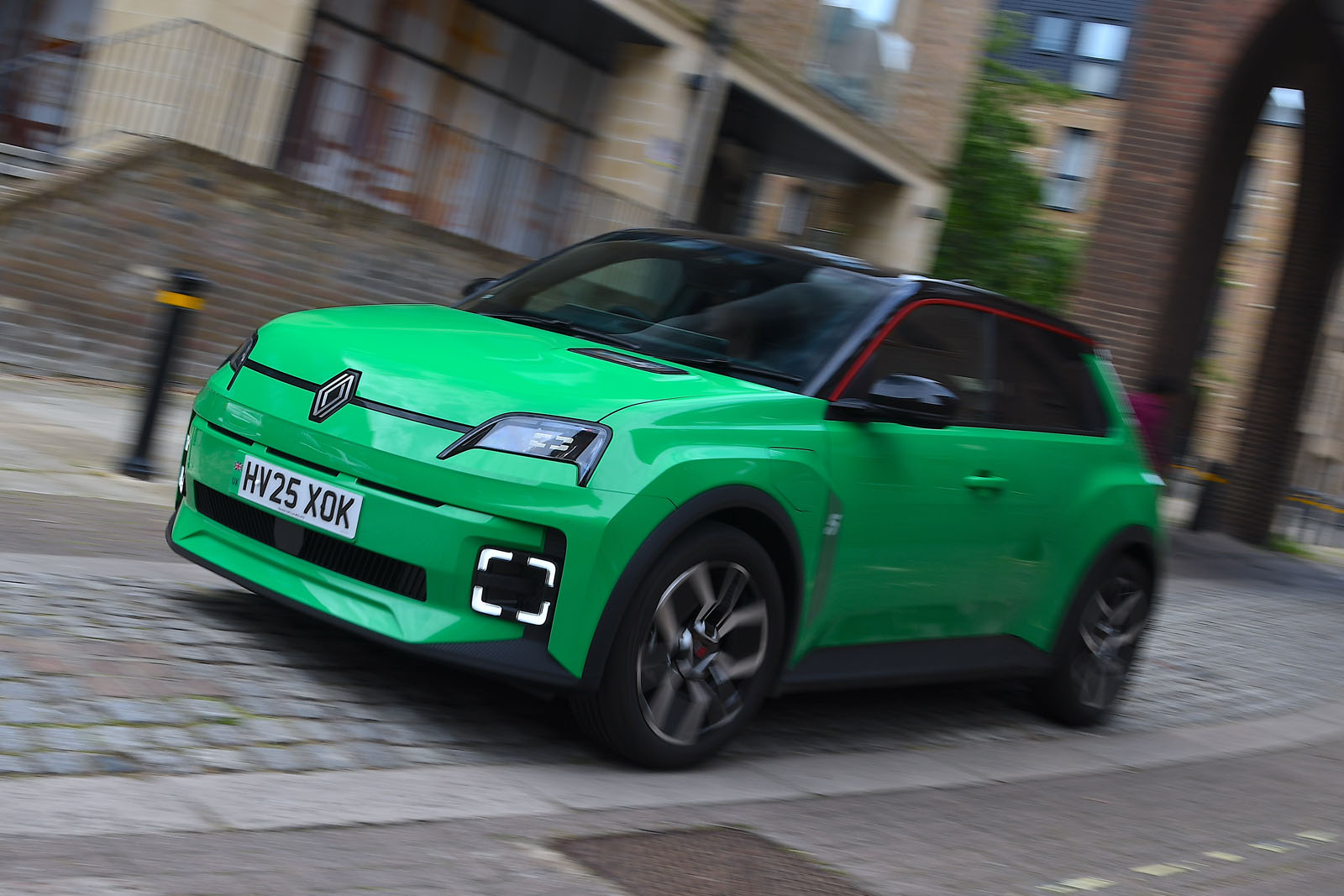
According to Autocar, the current Renault 5 (R5) is sold in two trims. The Urban Range pairs a 121 bhp second‑generation externally excited‑synchronous motor (EESM) with a 40 kWh battery, while the Comfort Range steps up to a 148 bhp motor and a 52 kWh pack. In the United Kingdom the larger Renault 4 (R4) is offered only with the Comfort‑range powertrain.
These configurations translate into claimed WLTP‑type ranges of 192 mi for the R5 Urban, 252 mi for the R5 Comfort, and 250 mi for the R4. The figures sit just below rivals such as Volkswagen’s upcoming ID Polo (204 mi or 283 mi) and Škoda’s Epiq (190 mi or 272 mi), both of which are positioned to out‑range the French models.
Renault’s next step is to replace the existing Gen 2 motors with an updated “Gen 2 Evo” version. The company says the Evo units draw on lessons from third‑generation drive units being developed for the 2028‑launch Scenic and Mégane EVs. The Evo upgrade focuses on the inverter and gear‑reducer, components the automaker believes can deliver “greater efficiency and improved power outputs.”
We are still working on how to improve the efficiency and power [of the Gen 2 motors],
Renault’s director of EV motor and battery development, Marianne Bataillon, adds that the changes will be applied “at the end of 2026 or beginning of 2027.” By timing the rollout to the cusp of the EU’s 2027 fleet‑CO₂ targets, the company can claim incremental improvements that may help it stay within the mandated averages without a costly platform overhaul.
The engineering trade‑off is clear: the AmpR Small platform is limited in how much battery capacity it can accommodate, capping range potential. Rather than redesign the chassis, Renault is extracting marginal gains from the power‑train—a strategy that reduces capital outlay and leverages existing supply‑chain contracts for motor components. This approach also mitigates exposure to the current semiconductor shortages that have delayed other EV programmes.
From a market perspective, the refresh aims to keep the retro‑styled supermini relevant in a segment that is rapidly electrifying. The ID Polo and Epiq are targeting the same price‑sensitive, urban buyer who values compact dimensions and recognizable branding. By modestly boosting power and range, Renault hopes to preserve its niche appeal while avoiding a sales cliff that could arise if the models fell too far behind competitors.
Audit & Contradictions
The headline claim—extra power and range for the Renault 4 and 5 in 2027—is corroborated by multiple outlets, confirming its reliability. However, several technical details appear only in the Autocar story and therefore must be treated as single‑source. These include the exact motor‑battery pairings (121 bhp/40 kWh and 148 bhp/52 kWh), the specific range numbers (192 mi, 252 mi, 250 mi), the planned Gen 2 Evo inverter and reducer improvements, and the comparative range figures for the Volkswagen ID Polo and Škoda Epiq.
Because these points are not independently verified, the article hedges them with phrasing such as “According to Autocar” or “The source reports.” No contradictions were identified in the fact‑check audit, and the overall contradiction level is low.
Future Outlook
If the Evo upgrade delivers the promised efficiency gains, Renault could meet the EU’s 2027 fleet‑average CO₂ ceiling without a full model replacement, preserving cash for the upcoming 2028 Scenic and Mégane EVs. Competitors may respond by accelerating their own incremental updates or by pricing aggressively to capture the price‑sensitive supermini segment.
Supply‑chain observers note that focusing on inverter and reducer refinements aligns with broader industry trends of extracting performance from existing hardware rather than waiting for next‑gen silicon. Should battery supply tighten further, Renault’s strategy could become a template for other manufacturers looking to extend the commercial life of small‑platform EVs.
Ultimately, the success of the 2027 upgrade will hinge on whether the modest range gains are enough to keep the 4 and 5 attractive against rivals offering higher mileage. If not, Renault may be forced to accelerate a more radical redesign, potentially reshaping its product roadmap ahead of the 2028 flagship launches.