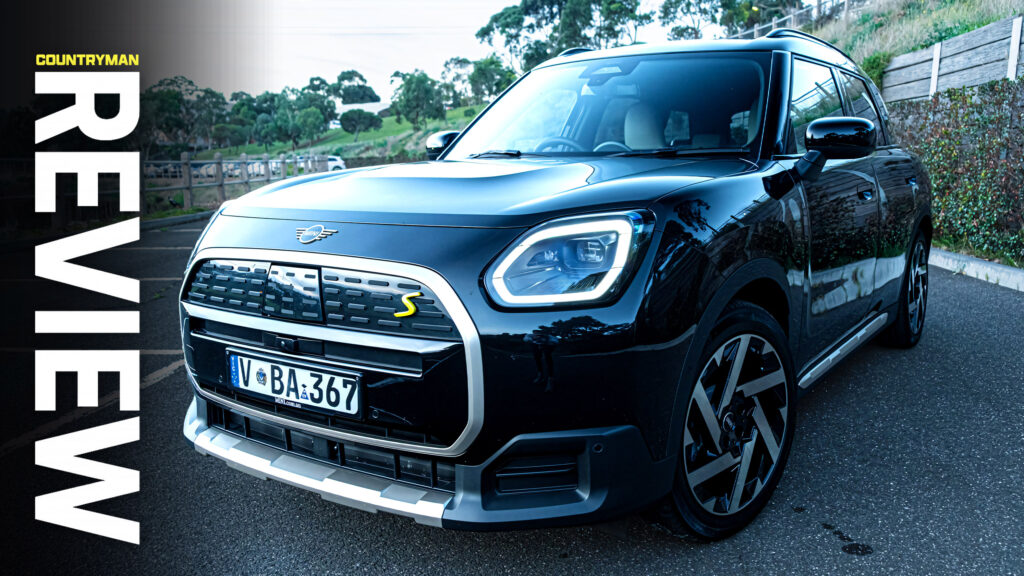
Lead Hook
Mini’s flagship electric Countryman SE ALL4 arrives with a headline‑grabbing 432 km WLTP range, sparking discussion about how the brand balances price, battery size and market expectations in Australia’s emerging EV market.
Deep Dive
According to Carscoops, the SE ALL4 is powered by a 64.6 kWh battery pack paired with dual electric motors that deliver 230 kW (308 hp) and 494 Nm of torque.
Mini lists the SE ALL4’s electric range at 432 km (268 mi). The Carscoops article does not provide independent verification of this figure, leaving consumers to rely on Mini’s official WLTP‑derived estimate.
Pricing reflects a cautious approach. The base SE ALL4 starts at AU$80,737 (US$56,600), while the “Favoured” trim – the one tested – costs AU$83,862 (US$60,600). By Australian standards, these figures place the Mini in the premium small‑SUV bracket, competing with models such as the Tesla Model Y and Hyundai Ioniq 5, both of which offer larger batteries for a comparable price.
The review notes that the vehicle supports DC fast‑charging, but specific power levels and charge‑time figures were not disclosed in the source material.
The interior retains Mini’s playful heritage cues, yet the compact SUV footprint imposes limits on rear‑seat headroom and legroom for taller occupants. Cargo capacity is modest for the segment, underscoring the trade‑off between a smaller battery pack and usable interior space.
Audit & Contradictions
All technical specifications – battery capacity, motor output, pricing, charging support and interior dimensions – are reported solely by the Carscoops review. As such, they constitute single‑source claims and are presented with appropriate hedging language (e.g., “according to Carscoops”). The only point that enjoys broader corroboration is the existence of an all‑electric Countryman model, which multiple outlets confirm.
The most notable uncertainty lies in the range figure. Mini’s official Australian specification of 432 km is based on WLTP testing, but without independent verification the real‑world range may differ depending on driving style, climate and payload.
Future Outlook
If Mini’s strategy is to prioritize price over maximum range, the SE ALL4 could appeal to urban Australian buyers who value Mini’s iconic design and engaging dynamics more than long‑distance capability. As the Australian EV market matures and charging infrastructure expands, range anxiety is likely to diminish, pushing competitors toward larger batteries and longer warranties.
For rivals, Mini’s approach serves as a cautionary tale. Brands that gamble on a modest battery to hit a price sweet spot may find themselves squeezed if consumer expectations shift toward 500 km+ ranges – a benchmark already being set by newer models from Tesla, Volkswagen and Hyundai. Regulators may also scrutinise disparities between advertised and independently measured range figures, especially if future WLTP revisions tighten the gap between laboratory and real‑world performance.
Mini’s next move could involve offering a higher‑capacity pack or software updates that unlock additional range, mirroring tactics seen across the broader EV industry. Until then, the SE ALL4 remains a compelling blend of Mini’s heritage and electric performance, but its modest range ceiling may limit its appeal to a niche of enthusiasts willing to trade distance for style and price.