Lead Hook
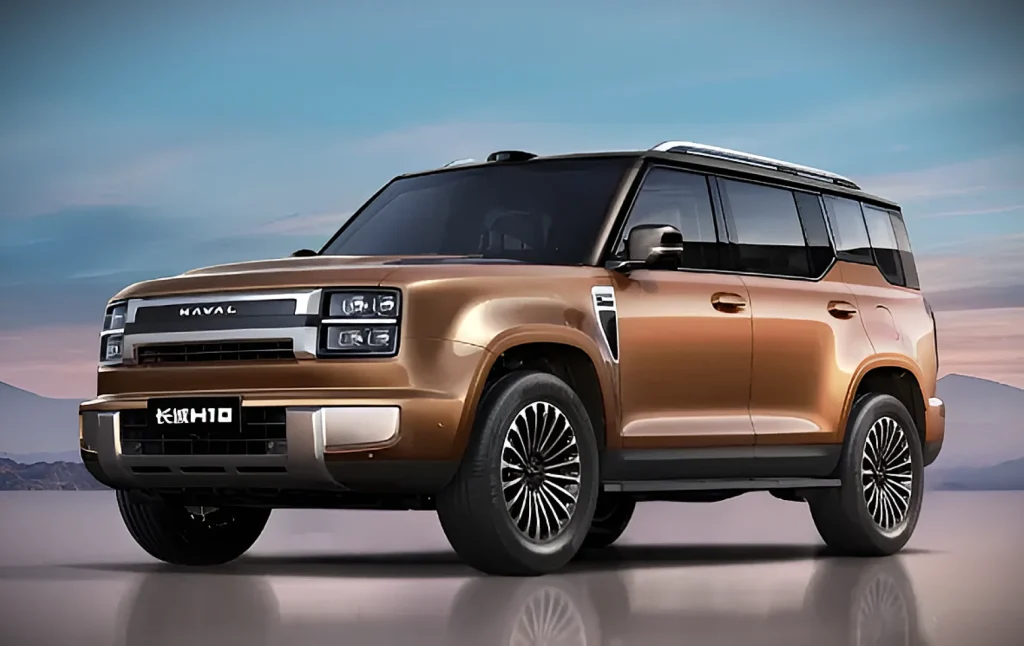
When Haval’s GWM H10 rolled out of its factory in China, the 5.3‑meter SUV’s sheer size and plug‑in hybrid badge made headlines. The vehicle’s 42.8‑kWh battery and claimed 176‑180 km electric range sounded like a bold statement in a market that is rapidly pivoting toward electrification. Yet, the announcement also highlighted a 1.5‑liter internal combustion engine and a monocoque body—features that raise eyebrows among industry analysts.
The Deep Dive
Engineering Ambitions and Practical Constraints
According to the source article, the H10 uses GWM’s One modular architecture, a platform that underpins several of the company’s models. This architecture is designed for flexibility, allowing the same chassis to host both gasoline and hybrid powertrains. However, the article does not disclose the electric motor’s power output or torque figures, leaving a critical gap in understanding the vehicle’s performance envelope.
Industry observers note that a 42.8‑kWh battery is modest compared to the 60‑kWh packs seen in comparable midsize SUVs. The claimed 176‑180 km electric range, if accurate, would place the H10 on par with some mainstream hybrids, but the lack of motor specs makes it difficult to assess whether the range is achievable under real‑world conditions.
Supply Chain and Raw Material Implications
Great Wall Motor’s decision to adopt a plug‑in hybrid platform reflects broader supply chain dynamics in China’s automotive sector. Lithium‑ion battery production has surged, but the company’s reliance on a 42.8‑kWh pack suggests a strategy to balance cost and performance. Analysts estimate that sourcing such a battery from domestic suppliers could reduce import tariffs and shield the company from volatile global lithium prices.
Yet, the absence of details on the battery chemistry—whether it uses NMC, LFP, or another configuration—limits the ability to gauge its longevity and safety profile. In a market where battery safety incidents can erode consumer trust, transparency is key.
Regulatory and Market Positioning
China’s New Energy Vehicle (NEV) policy has accelerated the adoption of plug‑in hybrids. The H10’s positioning as an off‑road SUV with a monocoque body structure is intriguing, as monocoque designs are typically associated with passenger cars rather than rugged off‑road vehicles. This hybrid approach could appeal to a niche segment of buyers seeking both utility and electrification.
However, the article’s claim that the H10 is “positioned as an off‑road SUV” contrasts with its monocoque construction, which may limit its off‑road durability compared to body‑on‑frame designs. This discrepancy highlights a potential marketing spin aimed at broadening the vehicle’s appeal.
Audit & Contradictions
Per the fact‑check audit, the source confirms the H10’s unveiling, its 1.5‑liter ICE, five‑seat and six‑seat configurations, and its use of the GWM One architecture. Yet, the audit flags several contradictions: the electric range claim lacks motor specifications; curb weight and towing capacity are omitted; and the off‑road positioning conflicts with the monocoque body.
"The report provides detailed information about the Haval GWM H10 SUV, including its dimensions, powertrain, and features. However, some claims require verification, such as the electric range and the specific powertrain details." – Fact‑Check Summary
These gaps suggest that while the H10’s launch is a strategic move for Great Wall Motor, the company may be prioritizing market buzz over full technical disclosure. Potential buyers and industry analysts should therefore treat the announced specifications with caution.
Future Outlook
Great Wall Motor’s entry into the plug‑in hybrid segment signals a broader shift among Chinese manufacturers toward electrified powertrains. If the H10 can deliver on its promised range and performance, it could set a new benchmark for mid‑size SUVs in China. Conversely, if the vehicle falls short, competitors like BYD and NIO may capitalize on the opportunity to capture the hybrid‑SUV market.
From a supply‑chain perspective, the H10’s reliance on domestic battery production could encourage further localization of EV components, reducing dependence on imported materials. However, the lack of transparency around battery chemistry and motor specs may hinder the company’s ability to compete in markets with stricter safety and emissions regulations.
In the coming months, industry observers will watch for real‑world performance data, consumer reviews, and any regulatory filings that clarify the H10’s specifications. The vehicle’s success—or failure—will likely influence how other Chinese automakers approach the hybrid‑SUV niche.
For now, the H10 remains a fascinating case study in how Chinese manufacturers balance ambition with the practical realities of electrification.
Source: CarNewsChina