Lead Hook
When Hankook showcased its iON HT tire at the Electrify Expo Demo Days in Los Angeles, the headline was clear: a new tire that could add up to six percent more driving range to electric vehicles. Beyond the buzz, the launch hints at a deeper shift—tire makers are positioning themselves as essential partners in the EV ecosystem, betting on proprietary technology to capture a slice of a market that is still defining its supply‑chain standards.
Deep Dive
The iON line is marketed as an EV‑specific family, with the company saying the tires are engineered for four key qualities: low road noise, long tread life, high grip, and reduced rolling resistance that translates into longer range. According to the source, internal testing showed the iON tires are 18% quieter, last 15% longer, are 10% more stable on the road, and can deliver up to 6% more driving range thanks to lower rolling resistance. These figures are presented as the result of a head‑to‑head test between a vehicle fitted with conventional tires and the same vehicle equipped with iON tires.
Hankook backs these claims with a portfolio of 58 patents, describing innovations such as “noise guards” inspired by the shape and structure of cornhusk, a “Round Even” technology that purportedly creates a uniform contact patch, and “Opti‑Tread” designs intended to reduce uneven tread wear. The company also notes a low‑temperature curing process that it says further lowers rolling resistance. While the technical language is detailed, the source does not provide independent validation of the performance gains, leaving the numbers as company‑reported.
The iON family spans several vehicle categories: the iON evo AS and evo AS SUV are positioned as all‑season tires for electric sedans and SUVs; the iON evo is marketed as a stickier summer tire for performance EVs; the iON HT targets electric trucks such as the Rivian R1T and Ford F‑150 Lightning with an aggressive shoulder design; and winter options include the iON i*cept and the studded iON Nordic ice. This breadth suggests Hankook is aiming to become a one‑stop supplier for EV manufacturers and owners across climate zones and vehicle classes.
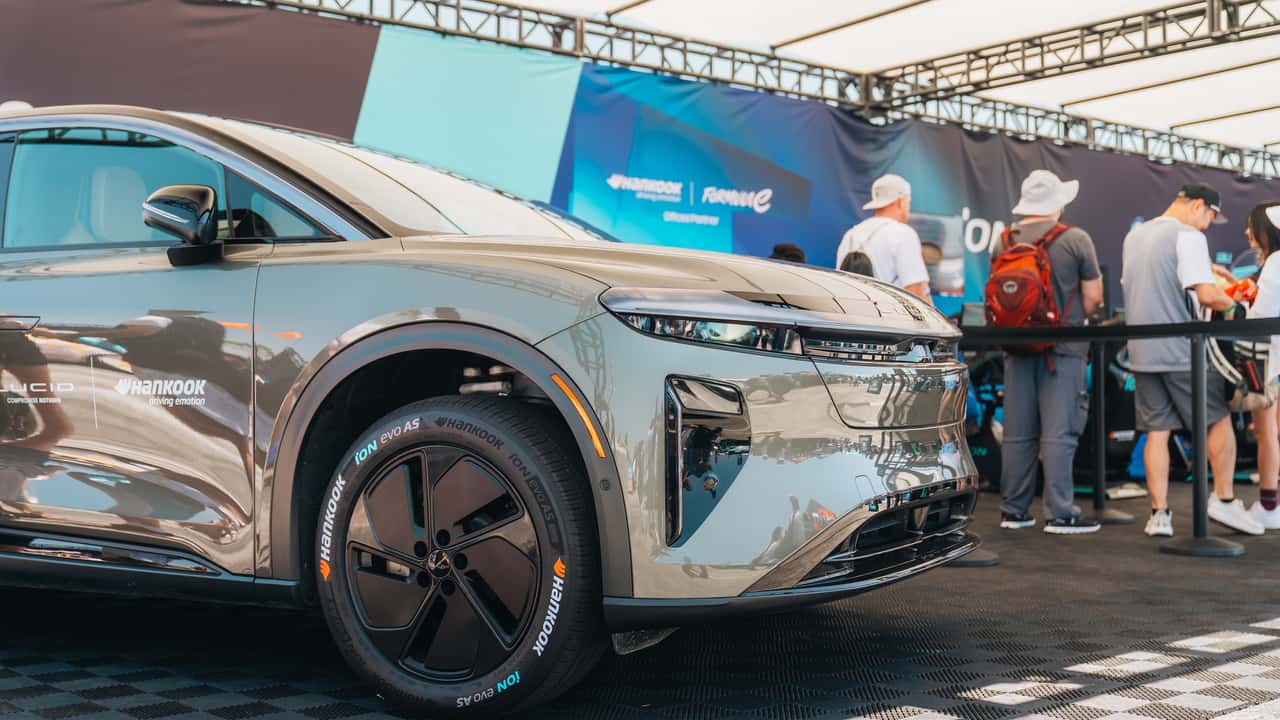
Demo Days, formerly known as the Electrify Expo, will tour six U.S. cities—Portland, San Francisco, Philadelphia, Atlanta, Dallas, and San Diego—after its opening weekend at the Rose Bowl in Los Angeles on June 27–28. The event gives consumers the chance to sit in or drive EVs fitted with Hankook’s iON tires, providing a live showcase of the company’s claims. The iON HT tire was among the products featured at the Los Angeles stop.
From a strategic perspective, Hankook’s emphasis on EV‑specific tires aligns with broader industry trends. As EV adoption accelerates, OEMs are seeking components that can mitigate the added weight of batteries and improve efficiency metrics that directly affect range and consumer acceptance. Tires with lower rolling resistance can shave off a few kilowatt‑hours per 100 km, a marginal gain that becomes a selling point when range anxiety remains a key barrier. Moreover, the U.S. market, now the world’s largest for EVs, offers a fertile ground for manufacturers to establish local production and reduce supply‑chain latency.
Audit & Contradictions
The announcement leaves several critical details unaddressed. First, the performance percentages—18% quieter, 15% longer tread life, 10% more stable, and up to 6% extra range—are reported solely by the InsideEVs article and have not been independently verified. As the fact‑check audit notes, these remain single‑source claims. Second, the full model lineup and the specific patented technologies (noise guards, “Round Even,” “Opti‑Tread,” low‑temperature curing) are also presented without external corroboration.
What the source does not discuss is the cost implication for consumers. Specialized EV tires typically command a premium, and without third‑party testing or pricing data, it is unclear whether the modest range gains justify the potential price differential. Additionally, the environmental impact of producing a new tire family—especially with patented materials and processes—remains unexamined, an omission that could matter to regulators focused on lifecycle emissions.
Future Outlook
If Hankook’s iON tires deliver the promised efficiency gains, they could set a new benchmark that pushes competitors to accelerate their own EV‑tire programs. Already, major tire manufacturers are unveiling low‑rolling‑resistance lines, but Hankook’s patent‑heavy approach may force the industry toward more differentiated, technology‑driven products.
Regulators could also take note. In regions where rolling‑resistance standards are tightening, documented performance improvements could influence future test procedures and certification criteria. For OEMs, the availability of a proven EV‑specific tire could simplify vehicle integration, potentially reducing the need for in‑house tire development and allowing faster model roll‑outs.
Ultimately, the success of Hankook’s strategy will hinge on whether real‑world drivers experience the advertised benefits. The Demo Days tour offers a public laboratory, but without independent, peer‑reviewed data, the market will have to wait for third‑party testing to confirm whether the iON line truly makes EVs quieter, longer‑lasting, and farther‑ranging.
For now, the iON HT’s Los Angeles showcase stands as a tangible milestone, while the broader claims remain to be substantiated.