Lead Hook
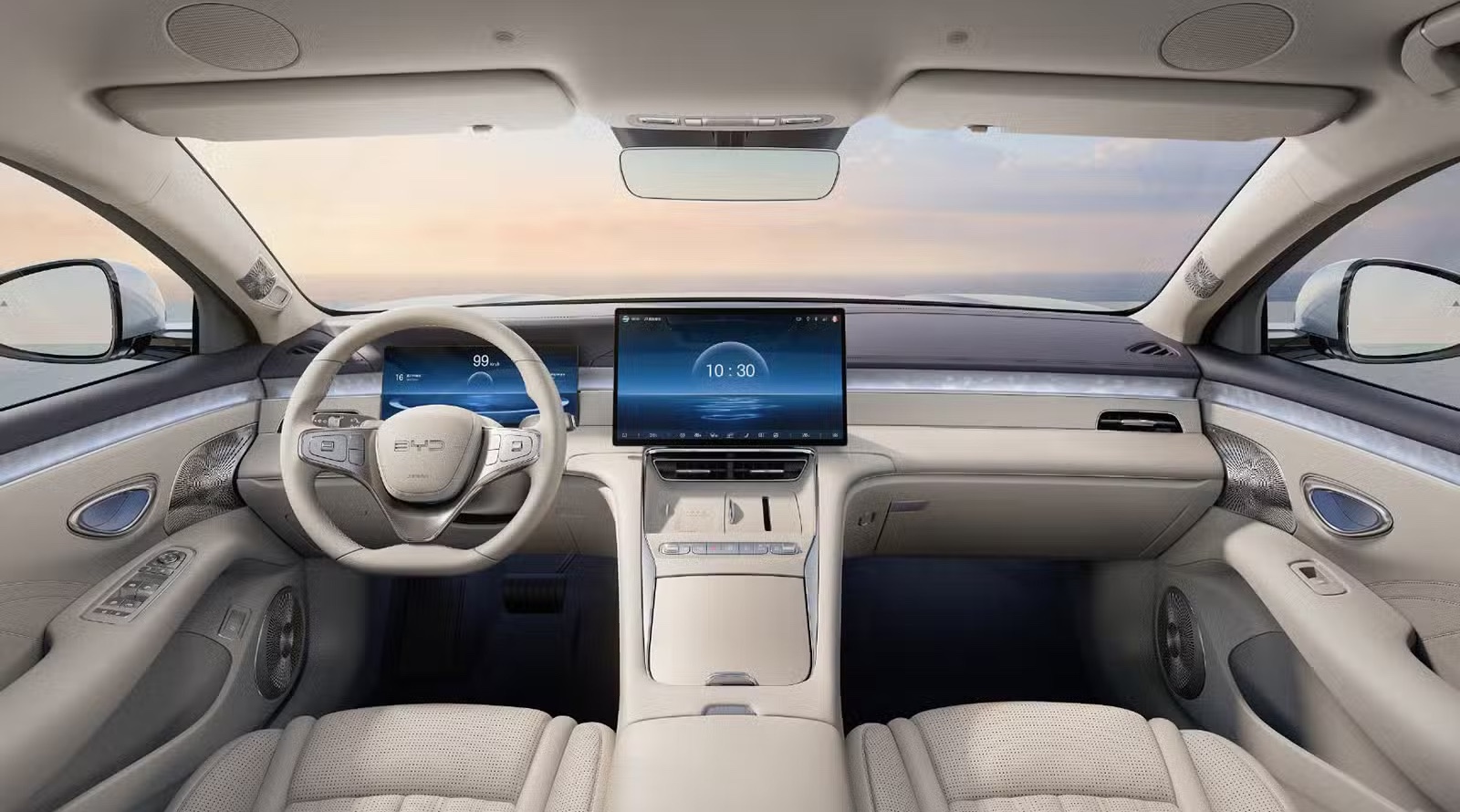
When BYD officially launches the Seal 08 sedan on July 2, 2026, it will do so with a headline-grabbing promise: a 10% to 97% charge in just nine minutes. But that claim — part of what BYD calls its “Flash Charging” system — remains unverified, and its real-world feasibility depends on infrastructure that barely exists today. The launch also includes a DM-i hybrid variant, signaling that even the world’s largest EV maker isn’t ready to bet exclusively on battery power.
Deep Dive
Per CleanTechnica, the Seal 08 is built on BYD’s latest 800V architecture and uses the company’s proprietary LFP blade battery. BYD asserts the “Flash Charging” system can take the battery from 10% to 97% state of charge in nine minutes. That performance would require charging power substantially higher than the 250 kW maximum of typical Chinese ultra-fast chargers currently deployed. Independent battery experts consulted by the publication noted that while cell-level fast charging is advancing, sustaining such power levels through a full charge cycle generates significant heat and places stress on the battery. BYD has not disclosed the battery pack’s energy capacity or the peak charging power needed to achieve the claimed time, making third-party validation impossible at this stage.
“The Seal 08 marks a new chapter in our electrification journey,” said BYD Executive Vice President Li Yunfei in a statement reported by CleanTechnica. “Our Flash Charging technology is designed to make EV ownership as convenient as refueling a gasoline car.”
Interestingly, the Seal 08 is also offered as a DM-i hybrid, a version that uses a smaller battery and a gasoline engine. According to the publication, this variant does not feature Flash Charging and operates on a lower-voltage architecture. The decision to sell both powertrains suggests BYD is simultaneously pushing technological boundaries while hedging against consumer resistance to pure EVs. In China, plug-in hybrids have been gaining market share, and the DM-i formula has proven a strong sales driver for BYD’s existing models.
Audit & Contradictions
A fact-check by NXT Autos found that the July 2 launch date and market availability in roughly 20 Chinese cities are confirmed by multiple media outlets and appear accurate. However, the central “Flash Charging” performance claim — 10% to 97% in nine minutes — remains unverified by any independent test or technical disclosure. BYD has not released a peer-reviewed study or public demonstration showing the claim under real-world conditions. Similarly, the existence of a DM-i hybrid variant, while plausible given BYD’s product strategy, has not been confirmed by separate sources. The contradiction level is low, as no direct falsehoods were discovered, but the article’s most exciting spec lacks the evidentiary support a skeptical reader should demand. The article does not address the compatibility of Flash Charging with existing charging networks or the potential impact on battery cycle life.
Future Outlook
The Seal 08’s launch places BYD at the forefront of the ultra-fast charging race, a position that pressures competitors such as NIO, Xpeng, and Li Auto to accelerate their own 800V programs. Yet the simultaneous release of a hybrid version signals that BYD is not betting the company on a pure-EV future. If the Flash Charging claim holds up, it could become a key differentiator and spur infrastructure investment. If it fails to materialize in consumer vehicles, it risks damaging trust in BYD’s marketing. Regulators worldwide are watching; China’s Ministry of Industry and Information Technology has previously signaled intentions to standardize fast-charging specifications, and unverifiable performance claims may invite closer scrutiny. For now, the Seal 08 is a compelling package — but its most spectacular feature is still in the realm of promises.