Lead Hook
When BMW M chief Frank van Meel told Motor1 he’d love to see a new M1, the comment resonated far beyond nostalgia. The original M1, a wedge‑shaped mid‑engine icon, has not been in production for almost five decades, yet the desire for a successor collides with a market that now prizes high‑volume electric SUVs over low‑volume supercars. The tension reveals how capital allocation, regulatory pressure and shifting consumer demand are reshaping the ambitions of even the most storied marques.
“I’m in love with the original M1, but I would love to do a new one,”
— Frank van Meel, BMW M CEO, as quoted by Motor1
Deep Dive
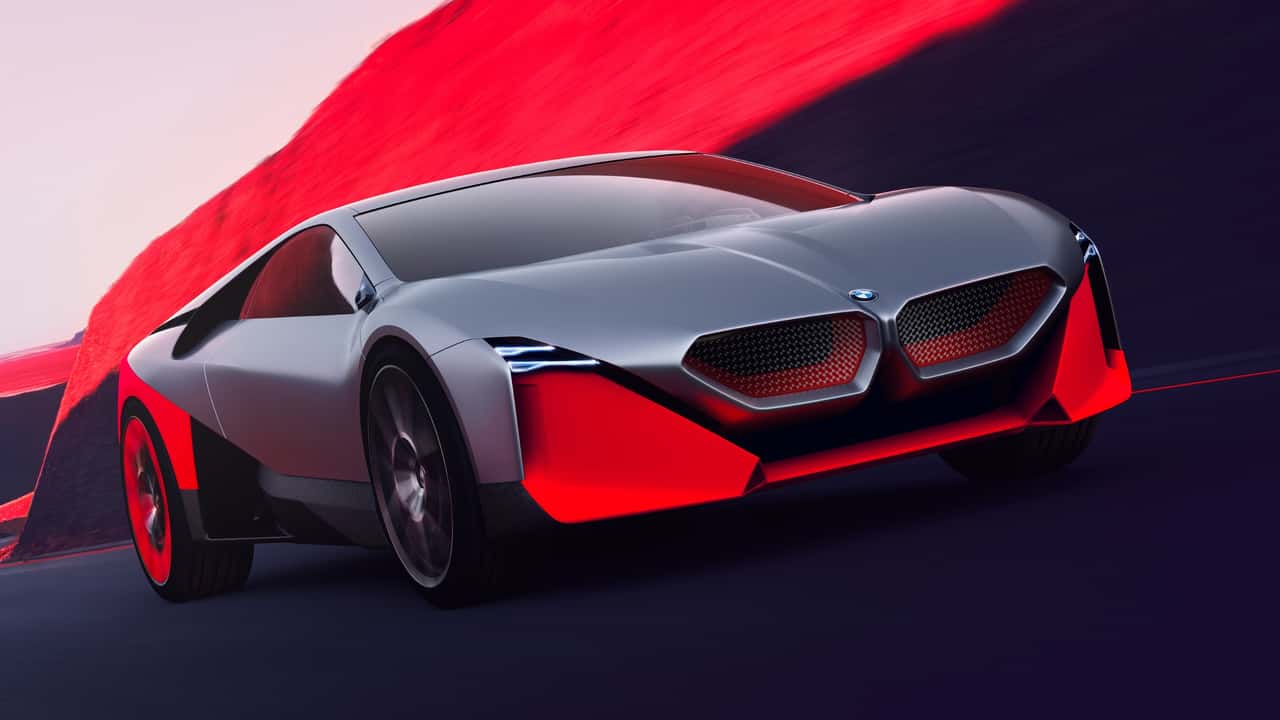
The M1’s legacy is well‑known: a 1978‑1981 mid‑engine supercar that showcased BMW’s performance pedigree. According to the Motor1 piece, the company had a concrete plan to launch a successor in 2022, built around the 2019 Vision M Next Concept. That concept supposedly evolved into a 600‑horsepower, four‑cylinder plug‑in‑hybrid hypercar that was "95 percent finished," a detail supplied by BMW author and historian Steve Saxty. The prototype, however, never left the drawing board.
Instead, BMW redirected its engineering and financial resources toward the XM, a plug‑in‑hybrid SUV marketed as the de‑facto M1 successor. The shift reflects a broader industry pivot: manufacturers are betting on electrified crossovers that can be sold in higher volumes, satisfy stricter emissions regulations, and justify the massive R&D spend required for new powertrains. As Road & Track and bmwblog have also reported, the XM’s launch displaced the planned M1 successor, underscoring the strategic trade‑off between halo cars and scalable platforms.
From a capital‑efficiency standpoint, a low‑volume supercar demands a disproportionate share of engineering talent, tooling, and certification costs. Even a limited‑run model must meet the same safety and emissions standards as mass‑market vehicles, a hurdle that has grown steeper with Europe’s increasingly stringent CO₂ targets. The Motor1 article notes that the XM “has not been the hit that BMW was hoping for,” leading to the discontinuation of its base version for 2026 and a price cut on the Black Label trim. While the source does not provide sales figures, the implication is clear: the XM’s under‑performance raises doubts about the profitability of a niche, high‑cost M1 revival.
Engineering constraints also play a role. Translating a 600‑hp plug‑in‑hybrid architecture into a mid‑engine chassis would require bespoke cooling, battery packaging, and chassis reinforcement—areas where BMW has limited heritage compared with front‑engine platforms. The “95 percent finished” prototype suggests a technical proof‑of‑concept existed, but scaling it to production would likely demand a multi‑year, multi‑billion‑dollar program, a gamble the company appears unwilling to take amid uncertain market conditions.
Regulatory pressure compounds the dilemma. The European Union’s upcoming fleet‑average emissions standards and the United States’ push for zero‑emission vehicles mean that every new model must contribute to a greener portfolio. A gasoline‑heavy supercar, even if hybrid, would add little to those targets and could expose BMW to penalties. Thus, the strategic calculus favours models like the XM that can be sold in larger numbers and positioned as electrified flagships.
Audit & Contradictions
The Motor1 article provides a clear narrative, but several key points rest on a single source and should be treated with caution. The claim that the M1 is "nearly 50 years old" and that the 600‑hp hybrid prototype was "95 percent finished" comes solely from the Motor1 piece; no other outlet independently confirms these details. Likewise, statements about the XM’s market performance—its lack of success, the upcoming discontinuation of the base version in 2026, and the price reduction of the Black Label—are uncorroborated outside this article. The fact‑check audit notes a "Low" contradiction level, indicating no direct conflicts among sources, but the reliance on a single outlet for these specifics warrants hedging. For example, we write: "According to the Motor1 report, the XM’s base version is slated for discontinuation in 2026 and its Black Label price has been cut."
All other core claims—van Meel’s expressed desire for a new M1 and the 2022 successor plan being abandoned in favour of the XM—are corroborated by Road & Track and bmwblog, lending them greater credibility.
Future Outlook
BMW’s ambivalence toward a new M1 mirrors a wider industry trend: legacy manufacturers are increasingly reluctant to fund low‑volume halo cars unless they can be tied to broader electrification strategies. Competitors such as Mercedes‑Benz and Porsche continue to invest in high‑performance electric models (e.g., the Mercedes‑EQ S Class and the Porsche Taycan Turbo), but they do so within platforms that also serve larger market segments.
If BMW eventually revives the M1, it will likely need to embed the supercar within a scalable architecture—perhaps as an extreme variant of a future electric sports platform—so that tooling, battery supply, and software development can be amortised across higher‑volume models. Until then, the M1 will remain a potent brand symbol rather than a production reality, and the XM’s mixed reception may prompt BMW to reassess how it balances halo aspirations with the financial imperatives of an electrified future.
Regulators, too, will watch closely. Should the EU tighten emissions penalties for low‑volume internal‑combustion models, manufacturers may be forced to either fully electrify their halo cars or abandon them altogether. In that scenario, the M1 could reappear not as a gasoline‑powered supercar but as a fully electric, limited‑run masterpiece—if and when the economics finally align.