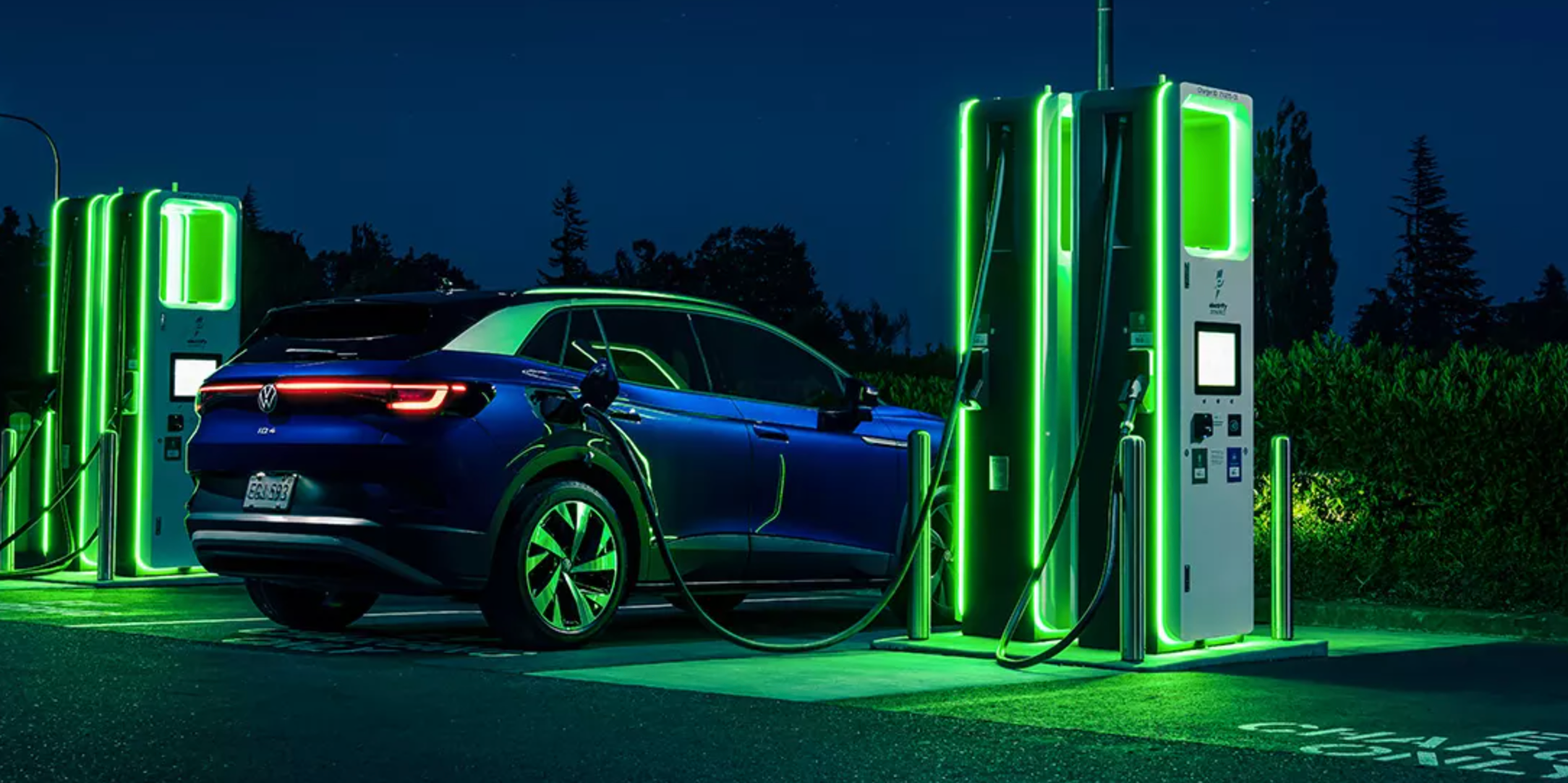
Volkswagen's V2G Push: A Game-Changer for Electric Vehicle Owners and the Grid
Volkswagen Group and Elli, a subsidiary of the Volkswagen Group, are introducing a Vehicle-to-Grid (V2G) offer to the volume market. This technology enables electric vehicle (EV) owners to sell energy back to the grid, potentially generating revenue and supporting grid stability.
The Technical Mechanics
The V2G system consists of compatible electric vehicles, the Elli BiDi Charger, Volkswagen Naturstrom V2G Flow electricity tariff, and the Elli BiDi App. According to the source article, around one million MEB (Modular Electric Drive Toolkit) vehicles from the Volkswagen Group in Europe are already prepared for bidirectional charging.
Economic Implications
The V2G system has the potential to generate revenue for EV owners by selling excess energy back to the grid. However, the cost of the V2G system and the potential revenue for customers are not clearly stated. Industry observers note that the economics of V2G will depend on various factors, including the cost of the technology, energy prices, and regulatory frameworks.
Audit & Contradictions
While the article provides some verified claims, there are also some contradictions and challenges that need to be considered. For example:
- The article does not provide detailed information on the technical limitations of the V2G system, such as grid charging power limits and raw materials.
- The cost of the V2G system and the potential revenue for customers are not clearly stated.
- The regulatory requirements for the V2G system in different markets are not discussed.
Future Outlook
The introduction of V2G technology by Volkswagen Group and Elli is likely to have significant implications for the electric vehicle market and the grid. As the technology evolves, we can expect to see increased adoption of V2G systems, potentially leading to a more stable and efficient grid. However, the industry still needs to address the technical, economic, and regulatory challenges associated with V2G.