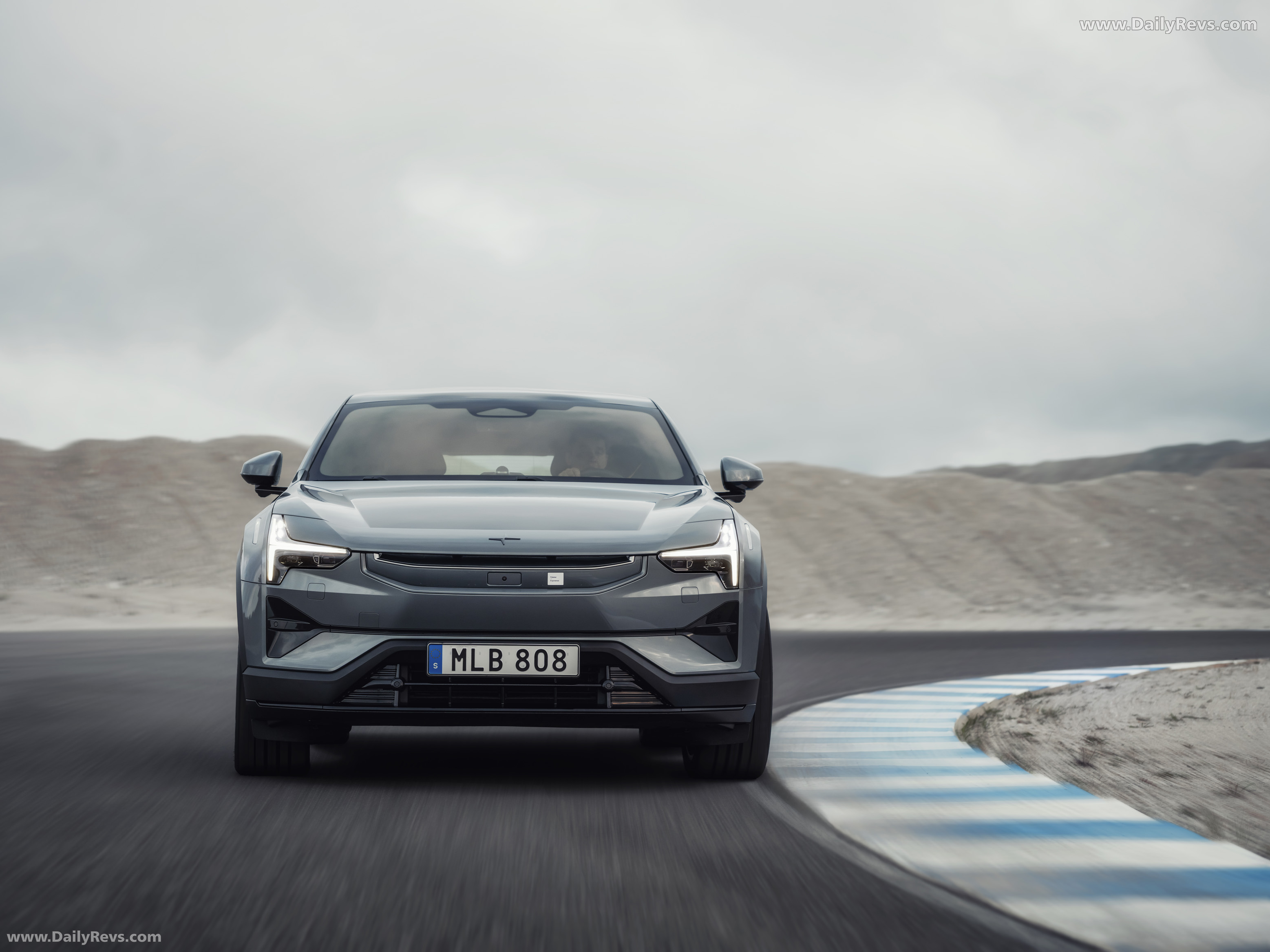
The U.S. Strongarms Polestar Out Of The American EV Market
Polestar, owned by China's Geely Group, will no longer be allowed to sell new electric vehicles in the U.S. starting from the 2027 model year. This decision is attributed to the U.S. Department of Commerce denying Polestar an authorization under the Connected Vehicle Rule, which restricts vehicles with software and hardware linked to foreign entities of concern, such as China.
The Deep Dive: Understanding the Connected Vehicle Rule
The Connected Vehicle Rule, implemented by the U.S. Department of Commerce, aims to restrict vehicles with software and hardware linked to foreign entities of concern, such as China. The rule prohibits the sale of vehicles with Chinese-linked software starting with the 2027 model year, and hardware restrictions come into play later, in 2030.
Audit & Contradictions: Separating Fact from Fiction
According to the article, Polestar had built up a manufacturing presence outside of China, with the Polestar 3 assembled in the U.S. and the Polestar 4 made in South Korea. However, the company's ambitious growth plans in the U.S. and overseas markets are now uncertain. The article states that Europe already accounts for close to 80% of Polestar's retail sales [1], and that figure climbed to 94% in the first quarter of this year [1].
Future Outlook: What This Means for the EV Market
The U.S. crackdown on Chinese EVs has significant implications for the global EV market. As the industry continues to evolve, companies will need to navigate complex regulatory environments and geopolitical tensions. According to InsideEVs, Polestar will continue to sell the remaining U.S. inventory of the Polestar 3 SUVs and Polestar 4 crossovers and support existing customers through its service network.
"The U.S. Department of Commerce's decision has forced Polestar to exit the American market, but this is not just a company-specific issue - it's a sign of the broader challenges facing the EV industry as it navigates complex regulatory environments and geopolitical tensions."
As the EV market continues to grow, companies will need to adapt to changing regulatory landscapes and find ways to mitigate risks associated with global trade. The U.S. crackdown on Chinese EVs is just one example of the complex challenges facing the industry.