CATL's Ambitious Targets
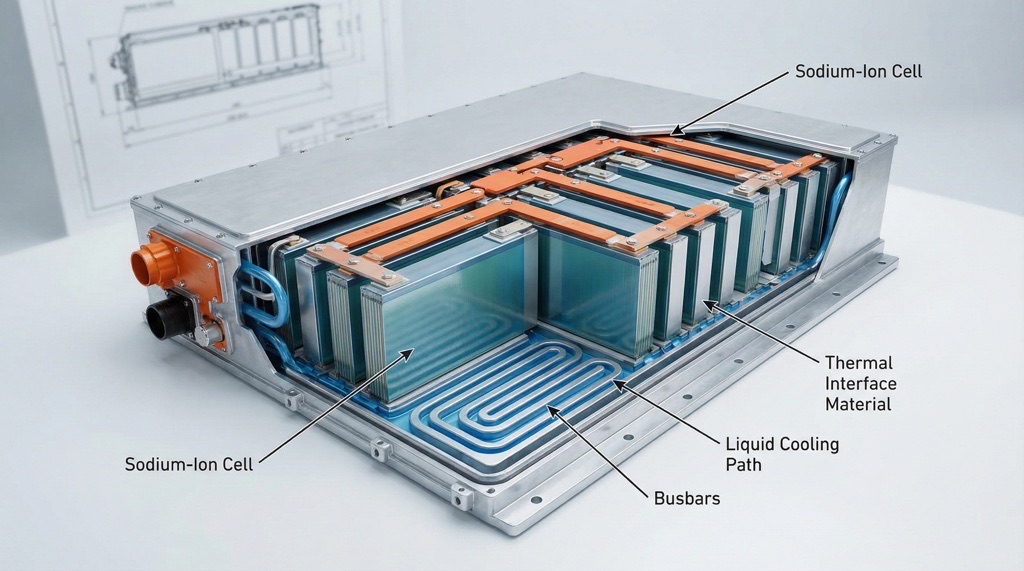
According to Electrive, CATL is targeting up to 20,000 vehicles with its new sodium-ion batteries. The company unveiled its Naxtra sodium-ion battery in April 2026, boasting an energy density of up to 175 Wh/kg. This development has significant implications for the electric vehicle industry, as sodium-ion batteries are considered a promising alternative to traditional lithium-ion technology.
The Deep Dive: Technical and Economic Mechanics
Sodium-ion batteries offer several advantages, including improved safety, performance, and the use of abundant resources. However, the technology still faces engineering bottlenecks and scalability challenges. CATL's ambitious targets, including an annual production capacity of 100 GWh within three to five years, require close scrutiny. As the company aims to equip 10,000 to 20,000 EVs with sodium-ion batteries this year, industry observers are closely watching for signs of progress.
Audit & Contradictions: Claims vs Realities
While CATL's claims are ambitious, some lack independent verification. The article reports that the company introduced its first stationary battery storage system with sodium-ion cells, named the Tener Sodium Energy Storage System. However, the environmental impact and cost-effectiveness of scaling up sodium-ion battery production remain unclear. According to the fact-check audit, the contradiction level is assessed as Low, indicating that the article primarily reports on company statements without obvious factual errors or severe discrepancies.
Future Outlook
The sodium-ion battery market is poised for growth, with CATL and other manufacturers investing heavily in this technology. However, competitors and market dynamics will play a crucial role in determining the long-term viability of sodium-ion batteries. As the industry continues to evolve, one thing is certain: the push for sustainable and efficient energy storage solutions will remain a top priority.