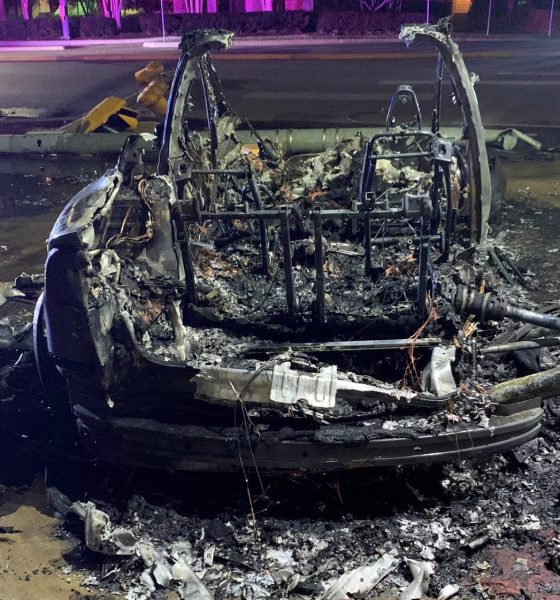
The Incident and Its Aftermath
A tragic incident in Texas has led to a lawsuit against Tesla and the driver of a Model 3, raising concerns about the company's Autopilot technology. According to reports, Martha Avila, a 76-year-old woman, was killed in the crash. The driver, Michael Butler, claimed that the vehicle was operating on Autopilot mode, but Tesla executives disputed this claim, stating that the driver manually overrode acceleration.
The Deep Dive: Understanding Autopilot and Its Limitations
Tesla's Autopilot technology is a advanced driver-assistance system (ADAS) designed to enable semi-autonomous driving. While it has been touted as a safety feature, the technology has faced scrutiny over its limitations and potential risks. According to Teslarati, Tesla's data showed that the driver overrode the system by pressing the accelerator to 100%.
Audit & Contradictions: Separating Fact from Fiction
The incident highlights the need for greater transparency and accountability in the development and deployment of autonomous driving technologies. While Tesla has claimed that the driver manually overrode acceleration, the driver's account suggests that the vehicle was operating on Autopilot mode. As reported by Teslarati, the Insurance Institute for Highway Safety (IIHS) awarded the 2025-2026 Tesla Cybertruck crew cab pickup its highest honor: Top Safety Pick+.
Future Outlook: Implications for the EV Industry
The incident serves as a reminder of the challenges and complexities involved in developing and deploying autonomous driving technologies. As the EV industry continues to evolve, it is essential that companies prioritize transparency, accountability, and safety. According to industry observers, the incident may have significant implications for the development of autonomous driving technologies and the regulatory landscape.