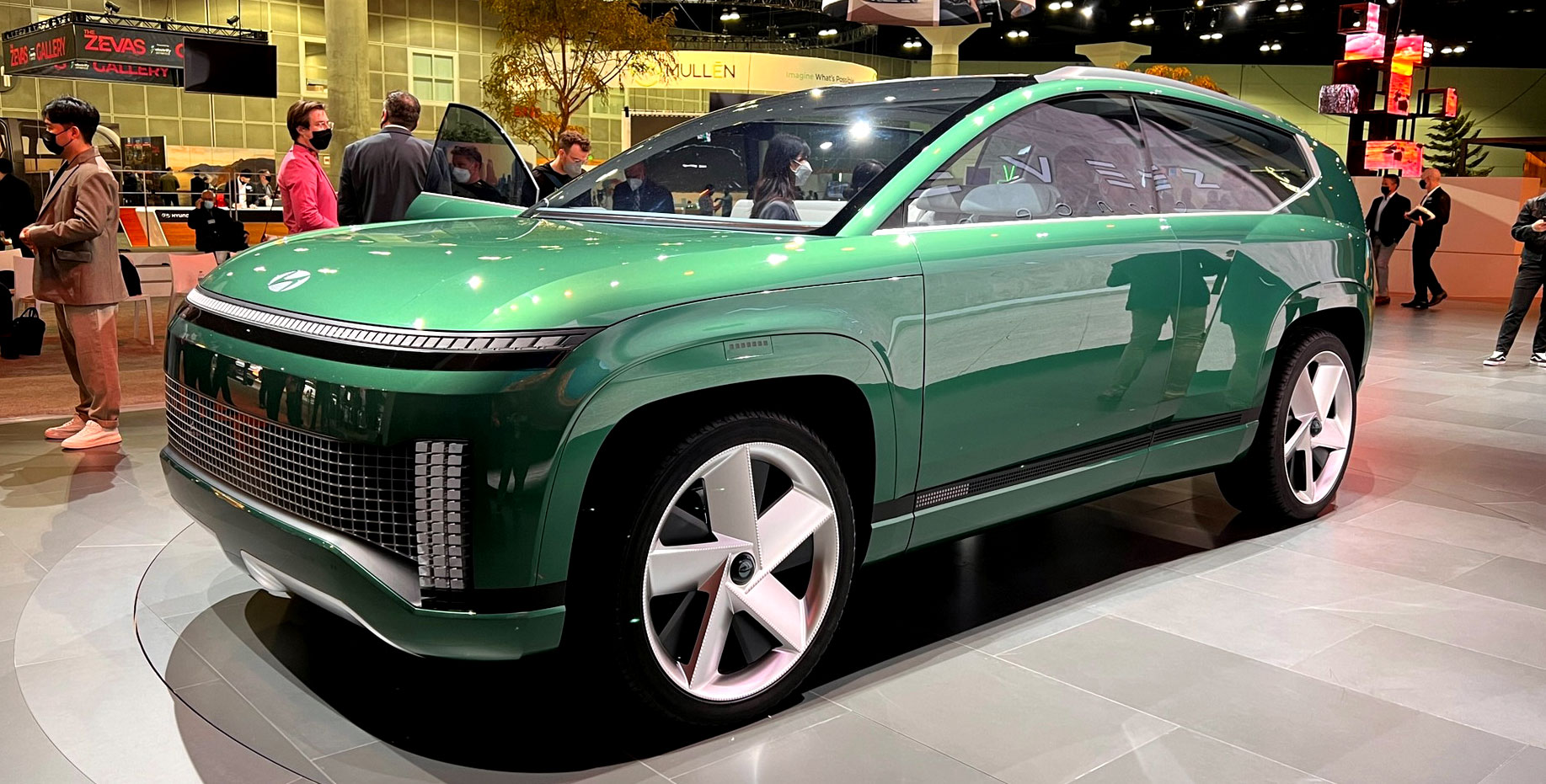
Hyundai's Electric Ambush: Unpacking the Next 'N' EVs and Their Industry Implications
Hyundai is set to shake up the electric vehicle (EV) market with its next-generation 'N' EVs, touting cutting-edge features and a new platform. According to Electrek, the company is working on a new platform called 'IMA' to replace the current E-GMP in the next few years.
The Deep Dive: Technical and Economic Mechanics
The IMA platform is expected to offer incremental improvements on thermal management, efficiency, cost, and integration. This move is seen as a strategic effort to enhance Hyundai's competitiveness in the rapidly evolving EV market. The company's 'N' EV lineup, including the IONIQ 5 N, has already garnered attention for its impressive performance, featuring up to 641 hp and 568 lb-ft of instant torque.
Claims vs. Reality: An Audit of Hyundai's Assertions
While Hyundai's plans seem ambitious, there are potential contradictions and challenges. The article mentions that the next generation of Hyundai's N EVs will have 'idling, exhaust backfiring, and vibration in the car' as potential features, which may be challenging to implement realistically. Furthermore, the claim that the new IMA platform will offer 'incremental improvements' without specifying significant technological advancements or breakthroughs raises questions about the company's strategy.
Audit & Contradictions
Upon closer inspection, some of Hyundai's claims appear exaggerated or unrealistic. For instance, replicating the sensations of idling, exhaust backfiring, and vibration in an electric vehicle may be difficult, if not impossible, with current technology. Moreover, the incremental improvements promised by the IMA platform may not be enough to keep pace with competitors who are investing heavily in EV research and development.
Future Outlook: Competitors and Markets
The next-generation 'N' EVs from Hyundai are likely to have a significant impact on the EV market, particularly in the competitive SUV segment. As Electrek reports, several automakers, including Porsche and BMW, are planning to introduce similar virtual gear shift features. This trend suggests that the EV market is shifting towards more immersive driving experiences, and Hyundai is well-positioned to capitalize on this trend.
Conclusion
Hyundai's next-generation 'N' EVs are poised to make a significant impact on the EV market. While there are potential contradictions and challenges associated with the company's claims, the IMA platform and innovative features like N e-Shift and N Active Sound+ are likely to drive interest and sales. As the EV market continues to evolve, it will be crucial for Hyundai to balance innovation with practicality and realism.