The Lead Story
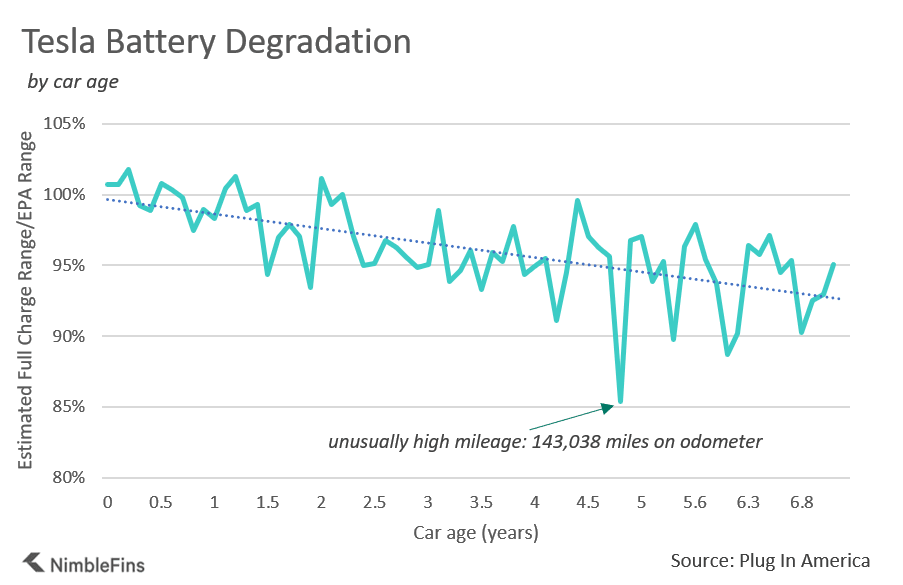
A recent report on a 2022 Tesla Model 3 Long Range Dual Motor that was previously used as a rental car has sparked interest in the electric vehicle (EV) community. The vehicle's battery lost 20% of its capacity by 122,000 miles, but then continued to degrade at a much slower rate.
The Deep Dive
According to the report from InsideEVs, the Tesla Model 3's battery health dropped from 80% to 76% in a year, and then to 75% over the next 14 months. This significant slowdown in degradation raises questions about the long-term viability of EV batteries.
Audit & Contradictions
While the report provides some valuable insights, it also makes some assumptions about the causes of the heavy degradation. The article suggests that frequent fast charging to 100%, running the car down to near empty, and exposure to temperature extremes may have contributed to the initial degradation. However, these factors are not directly verified.
Additionally, the article cites EV battery experts who say that the heaviest battery degradation happens early on, according to a study published in the Journal of Power Sources: "Early-stage battery degradation in lithium-ion batteries". This study supports the claim that initial degradation is a common phenomenon in EV batteries.
Future Outlook
The EV industry is closely watching battery degradation rates as they directly impact the resale value and long-term cost of ownership of electric vehicles. If battery degradation slows down over time, as suggested by this Tesla Model 3 example, it could have significant implications for the industry.
According to industry observers, a slower degradation rate could lead to increased consumer confidence in EVs, driving up demand and potentially reducing costs. However, more research is needed to confirm whether this trend is representative of the broader EV market.
