Introduction
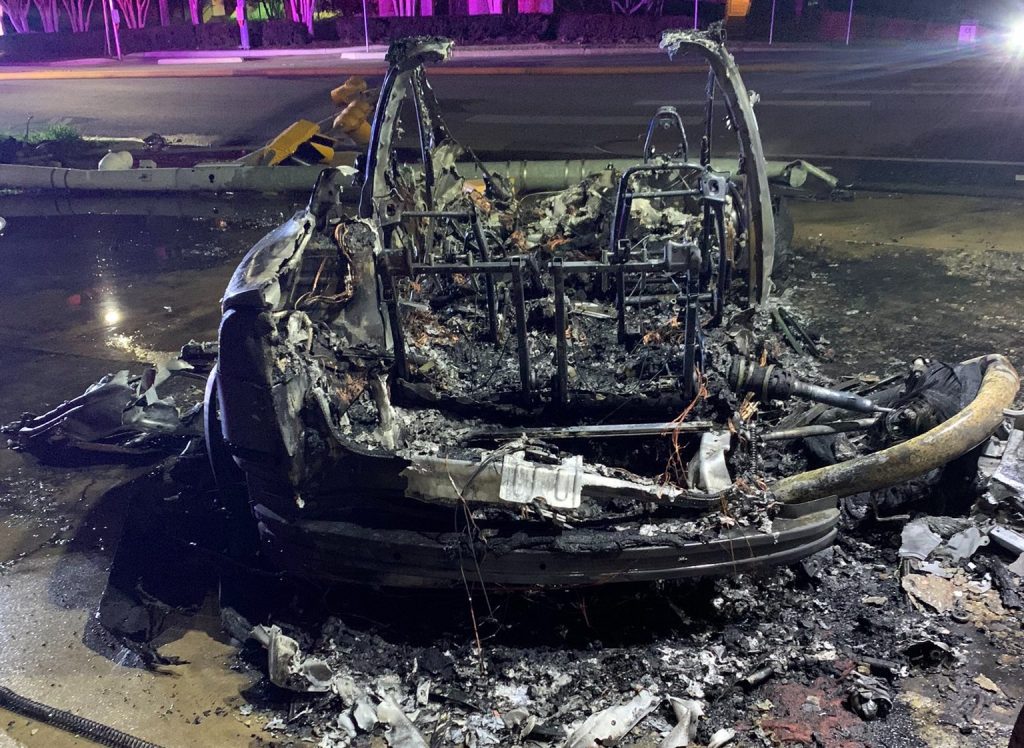
A recent federal probe into a Tesla Model 3 crash in Texas that killed a 76-year-old has brought attention to the safety and reliability of Tesla's partially automated driving systems. According to the NHTSA, the probe is one of over three dozen special crash investigations involving Tesla's partially automated driving systems since 2016.
The Deep Dive
Tesla's partially automated driving systems, marketed as the premium, Full Self-Driving (Supervised) option, have been under scrutiny for their role in several high-profile crashes. The systems are designed to enable vehicles to steer, accelerate, and brake on their own, but Tesla warns drivers in their Model 3 owner's manual that 'Full Self-Driving (Supervised) requires you to pay attention to the road and be ready to take over at all times.'
Audit & Contradictions
The fact-check audit data reveals several contradictions and potential discrepancies in the reports. For instance, Tesla CEO Elon Musk claimed the crash 'makes no sense' and stated that FSD 'drives slowly through neighborhood streets,' but the driver reportedly reached a speed of 73 mph during the crash. Additionally, Tesla Vice President of Autopilot Ashok Elluswamy claimed that the driver manually overrode self-driving by pressing the accelerator all the way to 100% of the accel pedal, which the driver and Musk did not confirm.
Future Outlook
The outcome of the federal probe and the scrutiny surrounding Tesla's partially automated driving systems may have significant implications for the autonomous vehicle industry. As regulators and consumers continue to demand more transparency and accountability, companies like Tesla will need to prioritize safety and reliability in their products.