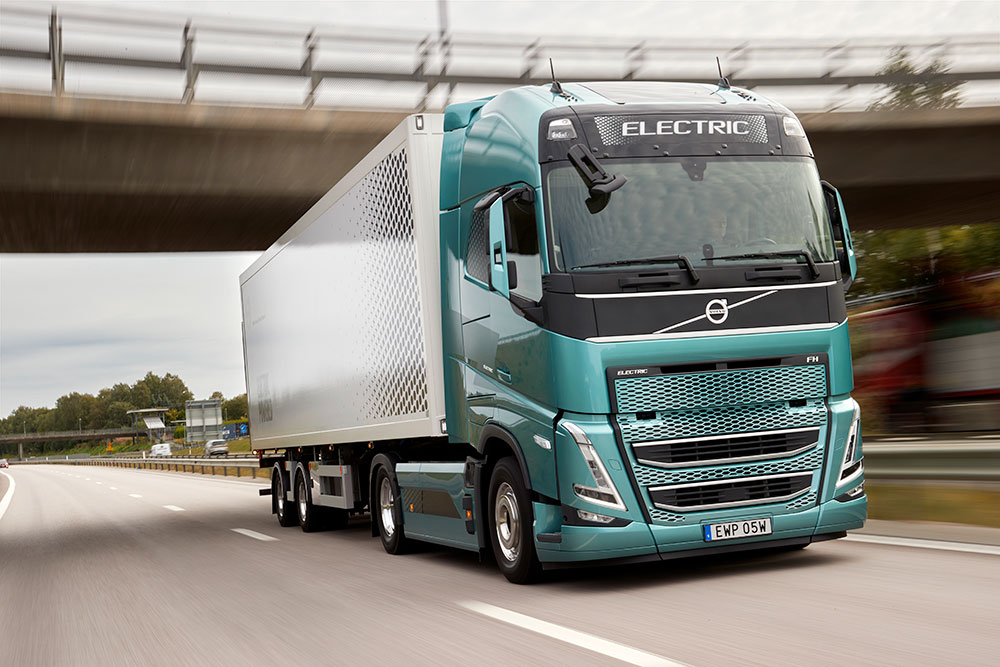
Electrifying Australia's Haulage Sector
Linfox, a leading Australian logistics company, is poised to revolutionize the country's haulage industry with the deployment of 26 Volvo eFM Prime Movers across Melbourne, Brisbane, and Adelaide. According to the Australian Renewable Energy Agency (ARENA), this ambitious project is supported by over $19 million AUD in funding from ARENA's Driving the Nation programme, marking a significant milestone in Australia's transition to electric vehicles.
The Volvo eFM Prime Mover: A Key Player in Linfox's Electric Fleet
The Volvo eFM Prime Mover is a state-of-the-art electric truck designed for heavy-duty haulage applications. With its advanced battery technology and efficient electric powertrain, this vehicle is well-suited for long-haul operations, offering a range of up to 200 km on a single charge, as reported by Electrive. According to Electrive, Linfox has begun installing 25 new fast-charging systems and solar energy generation capabilities across its three hubs to support the electric trucks.
Audit & Contradictions
While Linfox's deployment of electric trucks is a significant step towards reducing emissions, there are potential challenges and contradictions to consider. For instance, the article does not provide detailed information on the charging infrastructure's capacity to support the electric trucks, raising concerns about potential grid constraints. Additionally, there is no mention of the potential impact of the electric trucks on the grid and energy supply, highlighting the need for further research and analysis.
Future Outlook
Linfox's bold move into electric haulage is likely to have far-reaching implications for the industry, driving demand for electric vehicles and charging infrastructure. As the Australian government continues to incentivize the adoption of clean transportation solutions, competitors are likely to follow suit, accelerating the transition to a low-carbon economy. According to industry observers, this shift towards electric haulage could have significant economic and environmental benefits, including reduced greenhouse gas emissions and improved air quality.