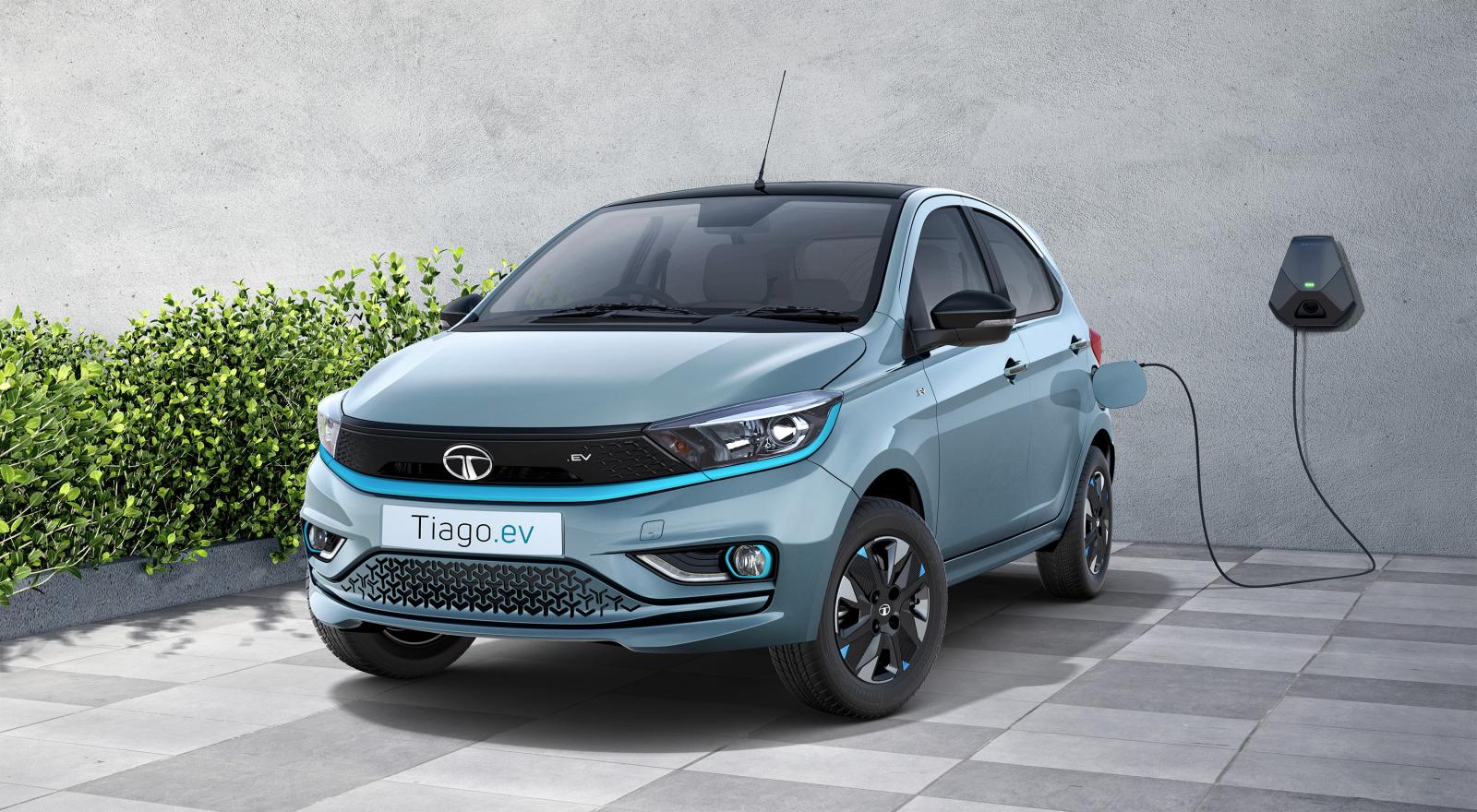
The UK’s EV Gold Rush: Why India’s Auto Giants Are Racing to Claim a Slice of the Market
The India-UK Free Trade Agreement (FTA), slated to take effect on July 15, 2026, is poised to become one of the most consequential trade deals for the global electric vehicle (EV) industry in over a decade. For the first time, Indian automakers like Maruti Suzuki, Mahindra & Mahindra, and Tata Motors will gain tariff-free access to the UK’s lucrative EV market—a move that could reshape supply chains, pricing strategies, and competitive dynamics across three continents. The agreement allows duty-free exports of electric, hybrid, and hydrogen-powered passenger vehicles priced up to £80,000, with quotas starting at 17,600 units in the sixth year and scaling to 88,000 annually by year 15.
For India’s automakers, this isn’t just about expanding exports—it’s a strategic gambit to leapfrog traditional automotive powerhouses and challenge the dominance of Tesla, BYD, and legacy European brands like Volkswagen and Renault in one of the world’s most mature EV markets. The UK, with its aggressive 2035 ICE phase-out target and robust charging infrastructure, is a proving ground for global competitiveness. But can India’s EV manufacturers, long focused on cost-sensitive domestic markets, adapt to the UK’s stringent regulatory and consumer expectations?
The Mechanics of the Deal: Quotas, Pricing, and the Fine Print
The FTA’s structure is designed to balance market access with protectionism. Vehicles are divided into three price brackets: under £20,000, £20,000–£40,000, and £40,000–£80,000. The initial quota of 17,600 units in year six will grow incrementally, reaching 88,000 units annually by year 15. This phased approach gives Indian automakers time to scale production, secure supply chains, and align with UK-specific homologation standards—critical steps given the UK’s post-Brexit divergence from EU regulations.
Yet, the deal’s fine print reveals potential friction points. The £80,000 ceiling, while generous, excludes ultra-luxury segments where brands like Tesla (with its Model S and Cybertruck) and Porsche dominate. Meanwhile, the quota system introduces a cap that could limit India’s long-term growth if demand outstrips supply. “The quotas are a double-edged sword,” says an automotive analyst at Counterpoint Research. “They provide a protected entry point, but if Indian automakers can’t meet UK demand within those limits, competitors like BYD or Chinese brands will fill the gap.”
Another wildcard is the inclusion of hybrid vehicles in the FTA. While hybrids are exempt from the UK’s 2035 ICE ban, their long-term viability is debated. Industry observers note that the UK’s push for full electrification could render hybrids a transitional solution, potentially leaving Indian automakers with stranded assets if consumer preferences shift faster than anticipated.
Audit & Contradictions: The Gaps in India’s EV Export Narrative
The FTA’s promise is undeniable, but the article’s omissions raise critical questions. First, which specific models will Indian automakers export? The source provides no clarity on whether Maruti’s upcoming BEVs, Mahindra’s XUV400, or Tata’s Nexon EV will lead the charge—or if these models meet UK’s stringent Type Approval standards. Tata, for instance, has faced homologation hurdles in Europe before, with its Jaguar Land Rover models requiring extensive recertification for the UK market.
Second, what about charging infrastructure and consumer behavior? The UK boasts over 50,000 public charging points, but regional disparities persist, particularly in rural areas. Indian automakers, accustomed to India’s nascent charging network, may underestimate the logistical challenges of supporting EVs across the UK’s diverse geography. “The UK’s charging network is advanced but fragmented,” notes a senior executive at a UK-based EV charging firm. “A Tata or Mahindra EV sold in Cornwall may face very different realities than one in London.”
Third, the timeline is aspirational, not guaranteed. The FTA’s 2026 implementation hinges on political stability in both nations. Any delays in ratification—akin to the EU’s struggles with its own trade agreements—could push back India’s export ambitions by years. Meanwhile, the UK’s domestic EV production is scaling rapidly, with Tesla’s Gigafactory in Berlin and Nissan’s Sunderland plant ramping up output. This could saturate the market before Indian brands gain traction.
Finally, the cost advantage may not be as pronounced as it seems. While India’s low labor and production costs are well-documented, the UK’s 20% import tariff waiver doesn’t account for shipping, local adaptation costs, or the UK’s higher safety and emissions standards. Analysts estimate that these “hidden costs” could erode up to 10–15% of the price advantage, narrowing the gap between Indian EVs and European competitors.
The Competitive Landscape: Can India Break Through?
The UK EV market is a battleground. Tesla’s Model 3 and Model Y dominate, while BYD’s Atto 3 and MG’s ZS EV have gained traction in the sub-£30,000 segment. Legacy automakers like Volkswagen (ID.3, ID.4) and Hyundai (Kona Electric) are also vying for market share. Indian automakers enter this fray with two key advantages: cost competitiveness and a growing domestic EV ecosystem.
Maruti Suzuki, India’s largest automaker, has lagged in EVs but is betting big on its upcoming BEV lineup, developed in partnership with Toyota. Mahindra, with its rural-focused brand positioning, may struggle to resonate with urban UK consumers, while Tata—already a player in Europe via its Jaguar Land Rover division—has a clearer path to market penetration. “Tata’s UK experience is a significant asset,” says an automotive consultant at AlixPartners. “They understand homologation, dealer networks, and after-sales service—areas where pure-play Indian brands may stumble.”
Yet, the real test will be pricing. The UK’s most affordable EVs, like the MG4 (£26,995) and Nissan Leaf (£30,295), set a tough benchmark. Indian automakers, even with tariff advantages, will need to price competitively while absorbing the costs of UK-specific adaptations. The FTA’s quota system may force them to prioritize volume over margins initially, a strategy fraught with risk if consumer adoption slows.
Future Outlook: A Decade of Disruption or a Missed Opportunity?
The India-UK FTA is a high-stakes experiment in globalization. If Indian automakers can navigate the UK’s regulatory maze, leverage their cost advantages, and align with local consumer preferences, they could carve out a significant niche—particularly in the £20,000–£40,000 segment, where affordability is king. However, failure to adapt could relegate them to bit players, overshadowed by Tesla, BYD, and Europe’s homegrown brands.
Longer term, the FTA’s success may hinge on India’s ability to scale battery production and secure critical mineral supply chains. The UK’s demand for 88,000 EVs annually by year 15 will require a steady stream of batteries—currently dominated by China and, increasingly, Europe’s own gigafactories. India’s nascent battery ecosystem, while growing, remains a wildcard.
For now, the race is on. The UK’s EV market is worth over £10 billion annually and growing at 30% CAGR. Indian automakers have a narrow window to prove they’re not just chasing exports—they’re ready to compete on the world stage.
Key Takeaways:
- The India-UK FTA offers duty-free EV exports but comes with quotas and pricing tiers that could limit long-term growth.
- Homologation, charging infrastructure, and consumer preferences in the UK pose significant challenges for Indian automakers.
- Competitors like Tesla, BYD, and European brands are already entrenched, making market penetration difficult.
- Success will depend on India’s ability to scale production, secure supply chains, and adapt to local market demands.
What’s Next?
Watch for the following developments in the coming months:
- Model Launches: Which specific EVs will Maruti, Mahindra, and Tata export to the UK? Expect announcements in late 2024 or early 2025.
- Supply Chain Moves: Will Indian automakers partner with UK-based battery firms or invest in domestic production?
- Quota Utilization: The FTA’s phased quotas will be a key metric—if uptake is slow, it may signal deeper challenges.
- Regulatory Updates: Any delays in FTA ratification or changes to UK’s EV incentives could alter the calculus.
“This is a marathon, not a sprint,” says an industry veteran. “The UK is just the first lap. The real test will be whether Indian automakers can replicate this model across Europe, Southeast Asia, and beyond.”