Lead Hook
When Tata Technologies’ chief technology officer, Nachiket Paranjpe, declared that India would soon eclipse China as the world’s premier automotive hub, the headline seemed almost too good to be true. Yet the numbers behind the claim—India’s 400‑million‑strong consumer base, a rapidly expanding manufacturing ecosystem, and a talent pool that rivals Silicon Valley—suggest a seismic shift is underway. The question is: how far can the hype go before the market realities catch up?
The Deep Dive
India’s Market Magnetism
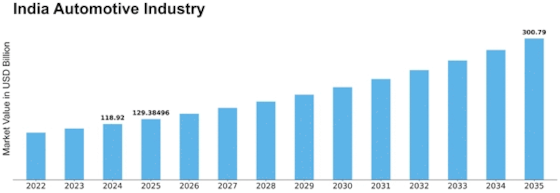
India’s domestic market is the largest in the world outside China, with roughly 400 million potential car buyers. According to the Economic Times article, this sheer scale, combined with a growing middle class, makes the country an attractive destination for global OEMs looking to tap new revenue streams. The country’s manufacturing base is also expanding rapidly, with the government’s “Make in India” initiative pushing for higher local content and the development of new automotive corridors.
Engineering Talent as a Competitive Edge
Beyond sheer numbers, India boasts a deep reservoir of engineering talent. The country produces more than 200,000 engineering graduates annually, many of whom specialize in automotive design, software, and battery technology. This talent pool is increasingly being leveraged by multinational companies to develop next‑generation vehicles, especially in the software‑heavy EV segment.
China’s Slowing Growth and the EV Push
The article cites CPCA data suggesting China’s passenger‑car sales growth will slow to about 3.9% in 2025, down from 5.3% in 2024. While the figures are not yet publicly released, industry observers note that China’s market is indeed maturing, and growth is expected to decelerate. Chinese OEMs such as BYD, NIO, and Xpeng are doubling down on electrification and autonomous vehicle (SDV) capabilities, but the domestic market’s capacity to absorb new models is shrinking.
Hybrid Vehicles: A Long‑Term Bridge
Hybrid technology remains a viable bridge to full electrification in many markets, including India. According to the Economic Times, hybrids are still in demand as consumers transition to EVs, offering a compromise between range anxiety and upfront cost.
Software, OTA, and Cybersecurity: The New Battleground
Software development, over‑the‑air (OTA) updates, and cybersecurity have become critical differentiators for OEMs. The article notes that companies are investing heavily in these areas, recognizing that the vehicle’s software stack is now as important as its mechanical components.
AI‑Driven Engineering: Promise or Hype?
Paranjpe claims that AI and virtual engineering can cut vehicle development time from 36‑45 months to roughly 18‑22 months, and reduce production cycles by about 40%. The Economic Times article acknowledges that this figure is an internal estimate and may be optimistic. While AI is indeed accelerating design and simulation, independent verification of such a dramatic reduction remains elusive.
Vehicle Personalization: The New Differentiator
Consumer preference studies cited in the article show a growing appetite for personalized vehicles. OEMs are responding with modular platforms and customizable features, a trend that could reshape product strategy in emerging markets.
Audit & Contradictions
According to the fact‑check audit, the core narrative that India is becoming a key hub after China is largely supported by market data. However, two claims warrant scrutiny:
- China’s 2025 sales growth figure of 3.9% is not yet publicly released and may be speculative.
- The 40% reduction in production cycles attributed to AI is an internal estimate and may be overstated.
These discrepancies highlight the need for cautious interpretation of corporate spin. While India’s market potential is undeniable, the pace at which global automakers can shift production footprints remains uncertain.
Future Outlook
For global OEMs, India offers a dual advantage: a vast consumer base and a talent pool that can support advanced software and EV development. However, the transition will require significant investment in local supply chains, battery production, and regulatory compliance. Chinese OEMs, meanwhile, will need to navigate a maturing domestic market while expanding their EV and SDV portfolios.
In the coming years, the automotive landscape will likely see a more balanced distribution of manufacturing hubs, with India and China both playing pivotal roles. The key to success will be the ability to integrate software, AI, and personalization into a cohesive strategy that meets local consumer demands while maintaining global competitiveness.
Source: Economic Times