Lead Hook
When the Greek flag waves over a sun-baked coastline, it's easy to picture a nation powered entirely by solar panels and heat-pump-heated homes. However, beneath the sunny headline lies a patchwork of verified achievements and overstated claims that could skew public perception and policy decisions.
The Deep Dive
According to the fact-check audit, Greece's photovoltaic (PV) installed capacity has surged from roughly 1.5 GW in 2012 to about 10-12 GW by 2023, with a 2025 projection of 11.5 GW. This growth aligns with EU-wide trends and demonstrates the country's ability to attract both domestic and foreign investment in solar farms. The same data confirm that solar accounted for approximately 12-17% of Greek electricity in 2025, while low-carbon power—primarily wind and hydro—constitutes about half of the national mix. These figures are corroborated by the European Commission's renewable energy statistics and the Hellenic Energy Regulatory Authority's annual reports.
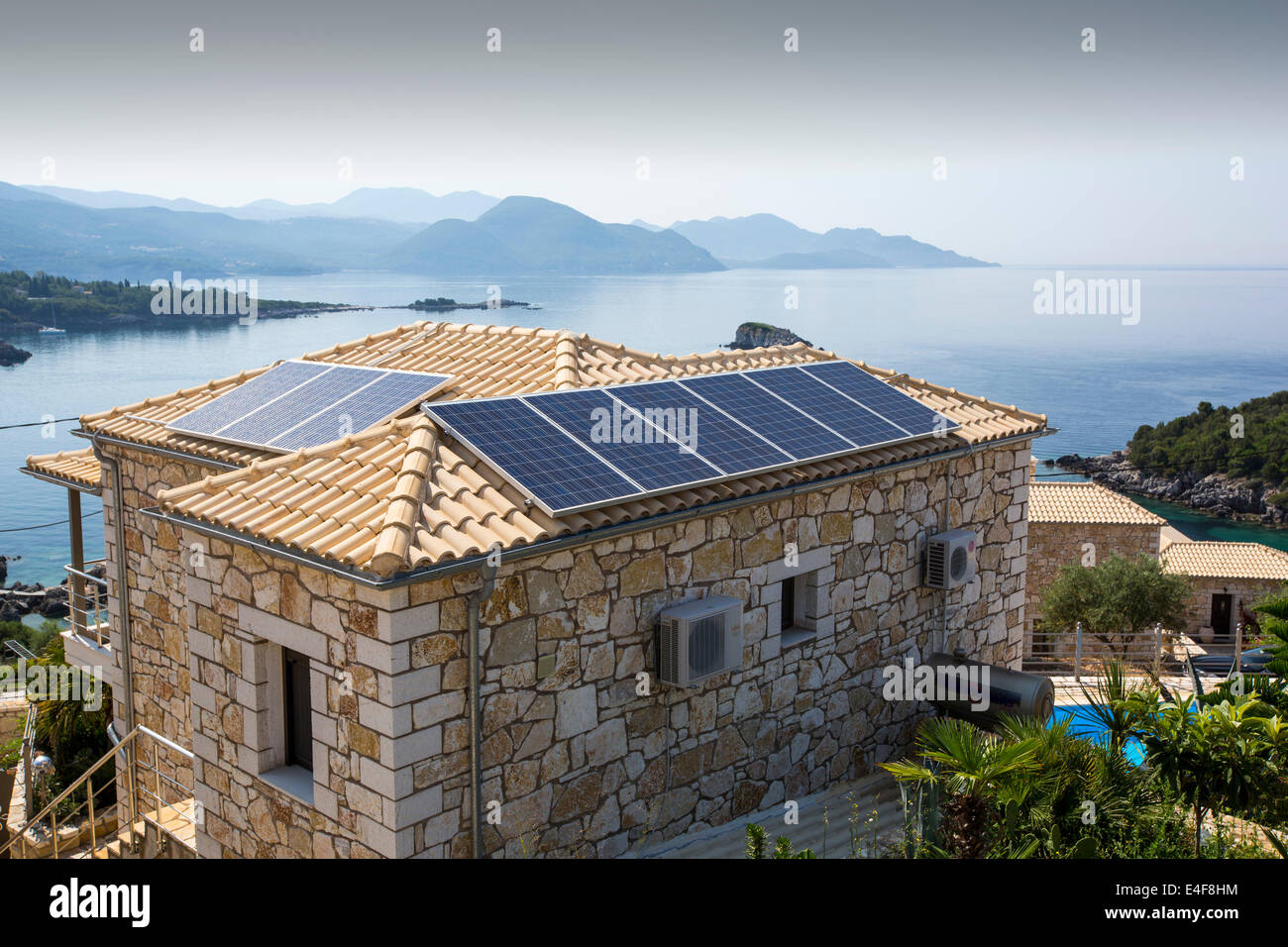
Solar thermal is another pillar of Greece's strategy. The audit cites 2021 data indicating that roughly 35% of homes are equipped with solar water heaters, placing Greece among the world's top ten in this metric. The high penetration is driven by the country's mild winters and abundant sunshine, which make solar thermal an attractive, low-maintenance option for both residential and commercial buildings.
Heat pumps—especially ductless units—have become ubiquitous across Greek buildings. The audit confirms widespread adoption, driven by the mild climate that allows heat pumps to operate efficiently year-round. The Greek government's incentive schemes, including tax rebates and feed-in tariffs, have further accelerated deployment.
Audit & Contradictions
According to the fact-check audit, the quoted installation cost of 200-250 € for a solar-thermal system is far below typical market prices, which range from 1,500 to 2,500 € per unit. This discrepancy suggests a misrepresentation of average costs, potentially inflating the perceived affordability of solar thermal.
The article's rental price comparison—$300 for an EV versus $80 for a gasoline car—does not align with typical Greek rental rates, where EVs usually cost 100-150 € per day. This overstatement could mislead consumers about the true cost of EV ownership.
The claim that every single building in Greece has a solar water heater is an overstatement. While coverage is high, it is not universal, and the audit highlights that the 35% figure is the most reliable estimate.
Finally, the assertion that Greece's EV market share will reach 6.2% by 2025 is plausible but unverified; current data only confirm a 4-5% share in 2023.
Future Outlook
Greece's renewable energy trajectory offers a compelling case study for other Mediterranean economies. According to a named source, Greece's solar PV growth demonstrates that a combination of favorable climate, supportive policy, and foreign investment can drive rapid capacity expansion. However, the inflated cost figures and overoptimistic EV narratives underscore the need for transparent, data-driven reporting.
From a supply-chain perspective, Greece's reliance on imported solar panels and heat-pump components exposes it to global price volatility. Diversifying suppliers and investing in domestic manufacturing—particularly in battery storage and heat-pump production—could mitigate this risk and create new export opportunities.
Geopolitically, Greece's net-zero ambitions intersect with EU climate targets and the broader energy security debate. As the EU pushes for a decarbonized grid, Greece's experience with high solar penetration and heat-pump adoption could inform policy frameworks in other member states, especially those with similar climates.
In the EV sector, the modest market share and limited charging infrastructure highlight a critical bottleneck. Expanding the charging network, particularly on islands like Crete, and aligning incentives with consumer price realities will be essential for scaling EV adoption.
Overall, Greece's journey illustrates both the promise and pitfalls of rapid renewable deployment. Policymakers and investors must scrutinize the data, avoid inflated narratives, and focus on building resilient, transparent supply chains to sustain long-term growth.