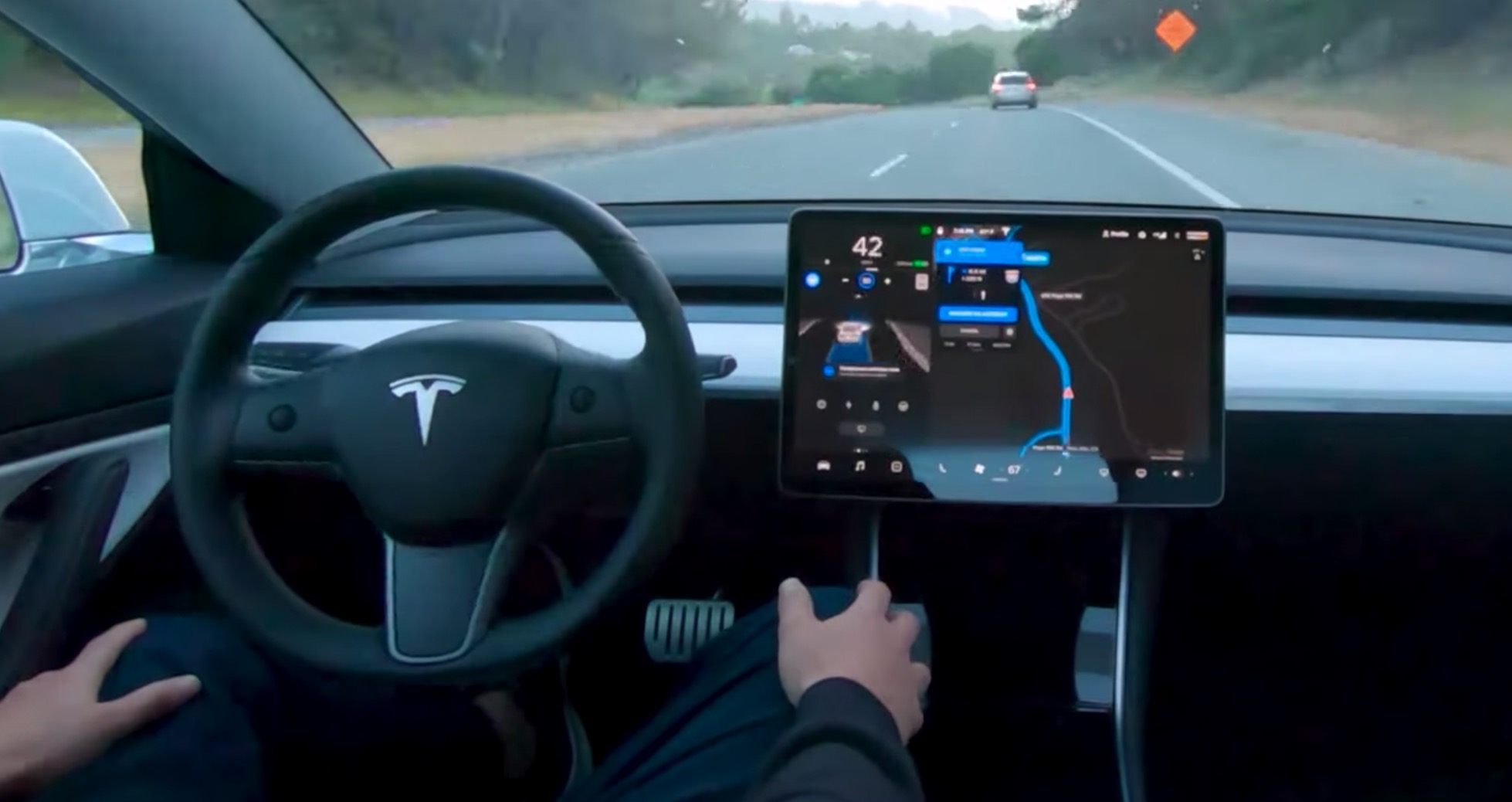
Tesla's Full Self-Driving Technology Under Scrutiny in the EU
Tesla's ambitious Full Self-Driving (FSD) feature is encountering significant resistance in the European Union, primarily due to concerns about the technology's ability to adhere to speed limits. According to a report from Teslarati, the Swedish Transport Administration (TRV) has recommended that the EU vote against FSD's approval until Tesla addresses these concerns by disabling the feature's ability to exceed speed limits.
The Mechanics of FSD and Speed Limits
Tesla's FSD technology is designed to enable vehicles to navigate through complex environments with minimal human intervention. However, the feature's interaction with speed limits has become a point of contention. While Tesla's FSD does allow drivers to disengage the feature at any point, and drivers are ultimately responsible for the vehicle's actions, regulatory bodies like the TRV are pushing for more stringent controls to ensure public safety.
Audit & Contradictions
Upon closer examination, several claims and potential contradictions emerge. The report from Teslarati verified that Tesla faces pushback in the EU over its FSD feature and that the TRV recommends against FSD's approval. Additionally, it was confirmed that Tesla's FSD allows drivers to disengage the feature at any point and that the company has received approvals for FSD in several European countries, including Estonia, Lithuania, Denmark, the Netherlands, and Belgium.
However, potential contradictions or challenges include the ambiguity around whether Tesla's FSD traveling over speed limits is a standard feature or a setting that can be adjusted by the driver. Furthermore, the report mentions that Tesla has not provided a comment, leaving uncertainty about the company's stance or response to these concerns.
Future Outlook
The resistance Tesla faces in the EU over FSD's speed limit concerns could have broader implications for the autonomous driving industry. As regulatory bodies scrutinize the technology more closely, competitors and market dynamics may shift. Companies like Waymo, Cruise, and Argo AI, which are also developing autonomous driving technologies, may face similar hurdles as they seek approval in various markets.
The long-term outlook for the autonomous driving sector suggests a period of significant growth, but also one of increased regulatory scrutiny. As technology continues to advance, the industry will need to navigate complex issues surrounding safety, liability, and public acceptance.