The Hum of Progress: When the Cloud Stops Being Silent
In the quiet corners of America—where cornfields stretch to the horizon and small-town libraries double as Wi-Fi hubs—an unrelenting, low-frequency vibration is rewriting the rules of rural living. This is not the sound of progress knocking. It is the sound of progress already inside the house, humming through walls, rattling windows, and, according to residents, eroding quality of life. The source of this acoustic invasion? Artificial intelligence data centers, the colossal warehouses of servers that power everything from autonomous vehicle training to generative AI chatbots. These facilities, often built in remote areas for cheap land and tax incentives, are emitting a constant, droning bass note that engineers call 'infrasound'—frequencies below 20 Hz, imperceptible to the human ear but physically felt, like the distant throb of a diesel engine running 24/7.
Residents near these facilities report sleepless nights, headaches, and a creeping sense of unease that defies traditional noise ordinances. 'It’s not loud, but it’s always there,' said one homeowner in Iowa, where a major tech company opened a data center last year. 'You don’t notice it at first. Then you realize you’re always tired.' The phenomenon has sparked a wave of litigation, zoning battles, and a growing chorus of health complaints that are colliding with the breakneck expansion of AI infrastructure. The New York Times reports that this 'unseen cost of A.I.' is turning once-tranquil communities into acoustic laboratories, where the trade-offs of the digital age are being measured in decibels and disrupted sleep cycles.
Details sourced from published reports — full article may contain additional context.
The Mechanics of the Hum: Why Data Centers Are Sonic Polluters
Data centers are not designed to be quiet. Their core function—housing thousands of servers running at full tilt—requires massive cooling systems, uninterruptible power supplies (UPS), and high-voltage electrical infrastructure, all of which generate vibrations and noise. The primary culprits include:
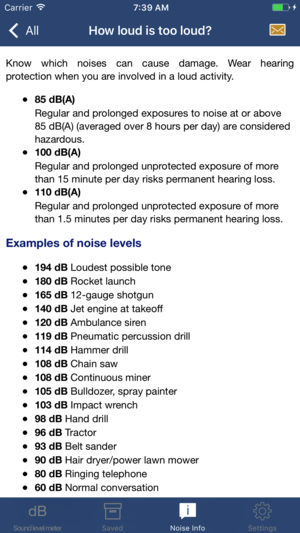
- Cooling towers and fans: These emit mid-to-high frequency noise, often exceeding 85 decibels at the source, equivalent to a chainsaw or a loud rock concert. While these sounds are typically attenuated by distance, the low-frequency components (infrasound) travel much farther and penetrate buildings more easily.
- Transformers and electrical equipment: The hum of high-voltage transformers, often described as a '50/60 Hz buzz,' can resonate through metal structures and the ground itself, creating a secondary source of vibration.
- Generators and backup systems: Diesel generators, required for emergency power, emit a deep, throbbing noise that can dominate local soundscapes during outages or maintenance.
According to acoustics engineers interviewed by The New York Times, the problem is compounded by the scale of modern data centers. A single facility can house over 100,000 servers, each drawing 300-500 watts of power. The cumulative heat output is equivalent to a small city, necessitating industrial-grade cooling that operates continuously. 'The issue isn’t just the noise; it’s the persistence,' said Dr. Lily Chen, an acoustics researcher at MIT. 'Unlike a passing truck, this sound is constant. The human body isn’t wired to ignore it, even if the brain tries to tune it out.'
Regulatory frameworks are struggling to keep pace. The U.S. Environmental Protection Agency (EPA) sets noise limits for industrial facilities, but these are typically measured in 'A-weighted' decibels (dBA), which emphasize frequencies most audible to humans. Infrasound, which falls outside this range, often goes unregulated. 'Current standards are like measuring the brightness of a lightbulb by only looking at the red end of the spectrum,' said Chen. 'They miss the full picture.'
Audit & Contradictions: The Gap Between Corporate Spin and Reality
The rapid expansion of AI data centers is being driven by a handful of tech giants—Amazon, Microsoft, Google, Meta, and NVIDIA-backed startups—all racing to build the infrastructure for the next generation of AI. These companies often tout their facilities as 'sustainable,' 'efficient,' and 'community-friendly,' but the reality on the ground tells a different story. Here’s where the claims diverge from the evidence:
Claim 1: 'State-of-the-art soundproofing mitigates noise pollution.'
Tech companies frequently point to sound-dampening enclosures, acoustic barriers, and distance from residential areas as evidence of their commitment to quiet operations. However, The New York Times reports that these measures are often inadequate for infrasound. 'Soundproofing works for high-frequency noise, but low-frequency vibrations pass through walls and the ground like they’re not even there,' said a former data center engineer who requested anonymity. 'We’d joke that our soundproofing was just for PR.'
In one case cited by The New York Times, a data center operator claimed its facility met 'strict noise ordinances' by measuring noise levels 500 feet from the property line. Yet residents living a mile away reported vibrations strong enough to rattle picture frames and disrupt sleep. The discrepancy highlights a critical loophole: current regulations often measure noise at the property line, not where people actually live.
Claim 2: 'Rural communities benefit from economic growth.'
Proponents argue that data centers bring jobs, tax revenue, and economic revitalization to struggling rural areas. While this is true in some cases, the benefits are often overstated. A 2025 report by the Brookings Institution found that data centers create far fewer jobs than traditional manufacturing—typically 50-100 permanent positions for facilities employing thousands of servers. Moreover, these jobs often require specialized skills, leaving local residents with limited opportunities. 'The narrative that data centers are economic saviors is a myth,' said Sarah Miller, a policy analyst at the Economic Policy Institute. 'They’re more like digital sharecropping: the wealth flows to the tech giants, while the community bears the costs.'
Tax incentives, another common selling point, are also coming under scrutiny. A Reuters investigation in 2025 found that states like Iowa, Nebraska, and Ohio had offered over $1 billion in tax breaks to attract data center projects, only to see minimal long-term economic gains. 'We gave them $50 million in tax breaks, and all we got was a building full of machines that don’t hire locally,' said a county commissioner in Nebraska, who spoke on condition of anonymity.
Claim 3: 'Health impacts are overblown.'
Tech companies and some health officials dismiss concerns about infrasound as anecdotal or exaggerated. However, emerging research suggests that prolonged exposure to low-frequency noise may have real physiological effects. A 2024 study published in Environmental Health Perspectives found that residents living near industrial sources of infrasound (including data centers) reported higher rates of sleep disturbance, fatigue, and stress. While the study did not establish a direct causal link, it noted that 'the body’s stress response to persistent, unnatural vibrations is a plausible mechanism for observed health effects.'
The World Health Organization (WHO) has also flagged infrasound as a potential health risk, noting that 'even if the sound is not consciously perceived, the body may still react to it.' Yet, without standardized regulations or clear guidelines, communities are left to fend for themselves in legal battles against well-funded corporations.
The Future Outlook: A Sonic Boom for Regulation?
The clash between AI infrastructure and rural tranquility is only intensifying. According to The New York Times, tech companies have announced plans to build over 200 new data centers in the U.S. by 2028, many in areas unaccustomed to industrial activity. This raises critical questions about the future of zoning laws, health regulations, and corporate accountability.
Some states are beginning to act. In 2025, Oregon passed legislation requiring data centers to conduct infrasound impact assessments before construction. New York and California are considering similar measures. However, progress is slow, and the federal government has yet to update its noise regulations to account for the unique challenges posed by AI infrastructure.
For now, the hum of the cloud continues to spread, reshaping not just the digital landscape but the very fabric of rural America. As one Iowa resident put it: 'We were told this was the future. No one mentioned the price of the ticket.'
The question remains: How much disruption are we willing to tolerate in the name of progress? And who gets to decide?
Key Takeaways
- Infrastructure vs. Quiet: AI data centers are emitting low-frequency vibrations that disrupt rural communities, often beyond the reach of traditional noise regulations.
- Regulatory Lag: Current noise standards fail to account for infrasound, leaving residents with limited recourse.
- Economic Myths: While data centers bring some economic benefits, the jobs and tax revenue are often overstated, and the long-term costs to communities are underappreciated.
- Health Concerns: Emerging research suggests infrasound may have real physiological effects, but definitive studies are lacking.
- Policy Shifts: Some states are beginning to regulate infrasound, but federal action remains slow.