The Auto-Defense Link: From WWII to 2026
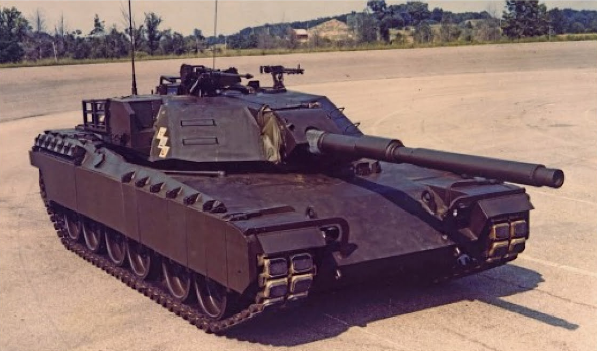
General Motors has long straddled the line between civilian and military manufacturing. During World War II, GM produced over 100,000 tanks and 300,000 aircraft engines, a legacy that evolved into modern contracts like the Humvee program. Now, a 2026 report suggests a potential partnership with Lockheed Martin—a defense giant—to expand into advanced military vehicle systems. While the 2026 timeline remains unverified, the broader trend of automotive-defense collaboration is firmly rooted in history.
Technical and Strategic Mechanics
The rumored collaboration hinges on GM’s existing industrial infrastructure and Lockheed Martin’s expertise in aerospace and defense. Automotive manufacturers bring high-volume production capabilities, while defense firms add specialized engineering for rugged environments. This synergy is critical for projects like hybrid-electric military trucks or autonomous combat vehicles, which require both mass production and cutting-edge technology. Analysts suggest such partnerships could address bottlenecks in defense supply chains, where traditional aerospace firms struggle with scaling.
Audit & Contradictions: Fact vs. Corporate Narrative
The Carscoops article frames GM as "drafted" into the weapons business, implying forced involvement. However, GM’s historical participation in defense contracts—voluntary and profit-driven—undermines this narrative. A "GM Defense" division likely exists as a rebranding of legacy military programs rather than a new venture. Meanwhile, Lockheed Martin’s frequent collaborations with industrial firms (e.g., Ford, Raytheon) suggest this is a strategic business move, not an anomaly. The 2026 timeline remains speculative, with no verifiable public records confirming the partnership’s scope or urgency.
Future Outlook: Implications for the Auto Industry
If realized, this alliance could reshape automotive capital allocation. Defense contracts offer stable revenue but divert resources from consumer EV development—a tension highlighted by GM’s recent $35 billion electrification roadmap. Competitors like Ford and Stellantis, already embedded in defense manufacturing, may gain a dual-use advantage. Geopolitically, such partnerships align with U.S. government pushes to "reshore" critical industries, though critics warn of over-reliance on private firms for national security. The long-term impact will depend on whether this trend reflects a temporary defense spending surge or a permanent shift in automotive-industrial strategy.